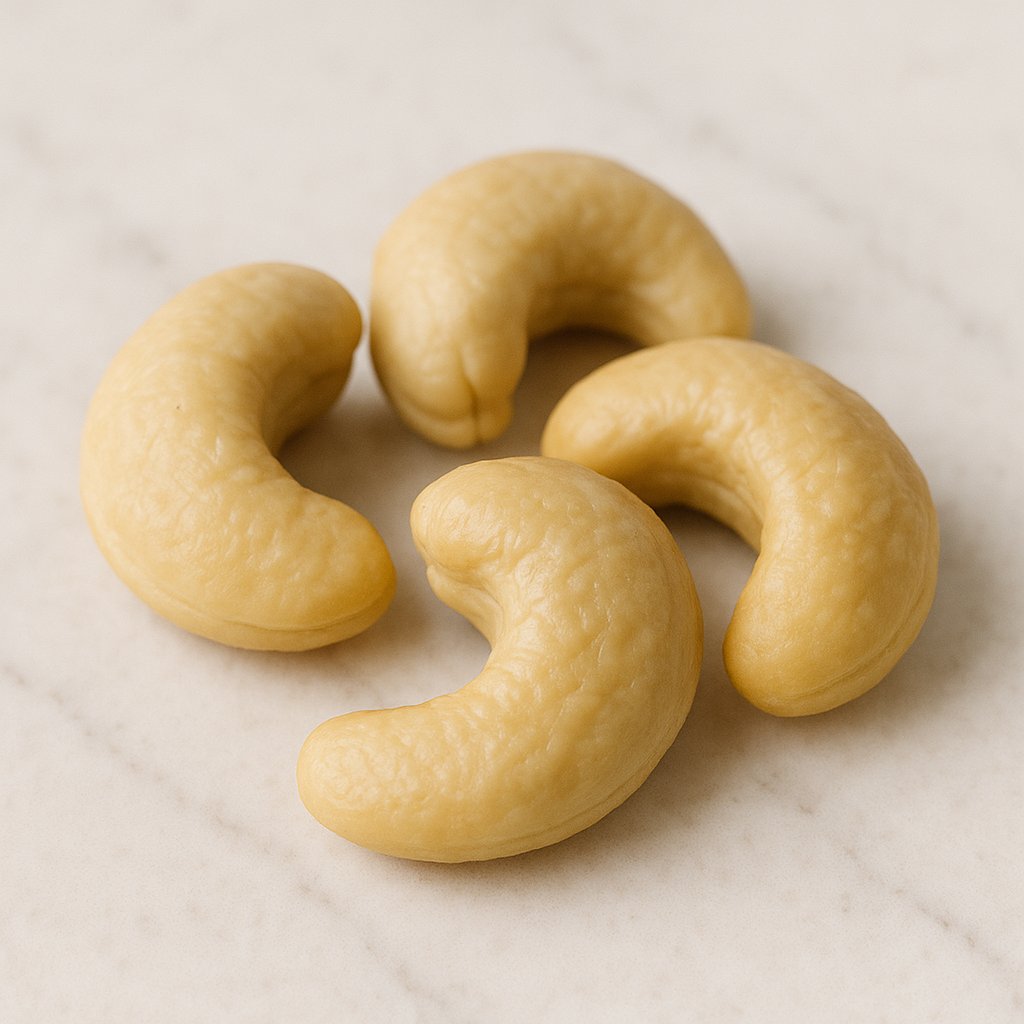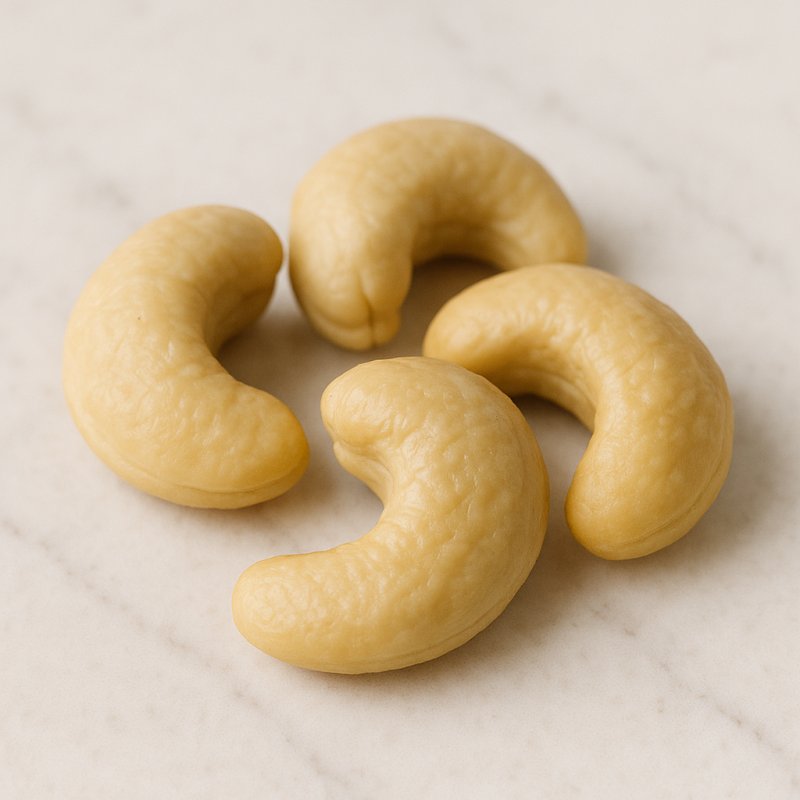
The cashew nut originally comes from the tropical rainforest of Brazil. In the past cashew trees only grew there, but people brought them to other warm countries hundreds of years ago. Today cashew trees grow mainly in warm, humid regions around the equator, because the trees like lots of sun, warmth and rain — similar to many fruit trees in warm countries.
Important growing areas
- Vietnam: A large country in Southeast Asia that today exports many cashews. Many nuts are also processed there (roasted and packaged).
- India: Especially in states like Maharashtra, Goa and Kerala. India is both a producer and a processor.
- West Africa: Countries such as Ivory Coast, Nigeria and Benin grow many cashews.
- Brazil: The origin — there is still cultivation here, but not as much as in Vietnam or India.
- East Africa: Countries like Mozambique and Tanzania also grow cashews.
In addition to the nut, cashew trees bear a fleshy fruit called cashew apples. These apples are juicy and sweet but are often not transported far because they spoil quickly. The nut sits beneath the apple in a hard shell. The shell contains an irritating substance, so it is normally removed in factories before the nuts are ready to eat.
Available types and variants
- Whole cashews: The whole nut is the most attractive and often more expensive. It is enjoyed as a snack or used decoratively on dishes.
- Halves and broken pieces: Often called “pieces”. They are cheaper and used in baked goods or muesli.
- Blanched (skinless): The nuts are briefly heated so that the thin brown skin can be removed. This makes them appear lighter and taste milder.
- Roasted and salted: Many cashews are roasted, sometimes with salt or spices. This changes the taste — similar to popcorn vs. fresh corn.
- Raw: “Raw” often only means they have not been further roasted; but they were usually treated to remove the shell. People like to use raw cashews for nut butter or vegan desserts.
- In cans or as paste: Cashew butter, cashew cream and cashew milk are processed products you can find in many supermarkets.
- Organic vs conventional: “Organic” means fewer or no chemical pesticides were used during cultivation. This is important for some people.
Availability
Cashews are available year-round in stores and online. Freshly harvested nuts are seasonal — after harvest the nuts are dried and stored, which is why you can buy them at any time. Whole, blanched cashews are often more expensive than broken pieces or cashew butter, because shelling and peeling are labor-intensive.
Cashews are available year-round in stores and online. Freshly harvested nuts are seasonal — after harvest the nuts are dried and stored, which is why you can buy them at any time. Whole, blanched cashews are often more expensive than broken pieces or cashew butter, because shelling and peeling are labor-intensive.
In many countries small farmers work on plantations, so cashews are often seen as a well-traveled product: the nut starts on a farm, is processed in factories and finally ends up as a snack in supermarkets. The next time you eat a cashew, you can imagine how many hands and stages were needed before it reached your plate.