Menu & categories

Carrot

Crisp root vegetable with natural sweetness

Wiki about carrot Nutri-Score A Vegan Yes Gluten-free Yes Lactose-free Yes Nut-free Yes
NUTRITION / 100 g
41 kcal 0.9 g Protein 9.6 g Kohlenhydrate 0.2 g Fett

Introduction

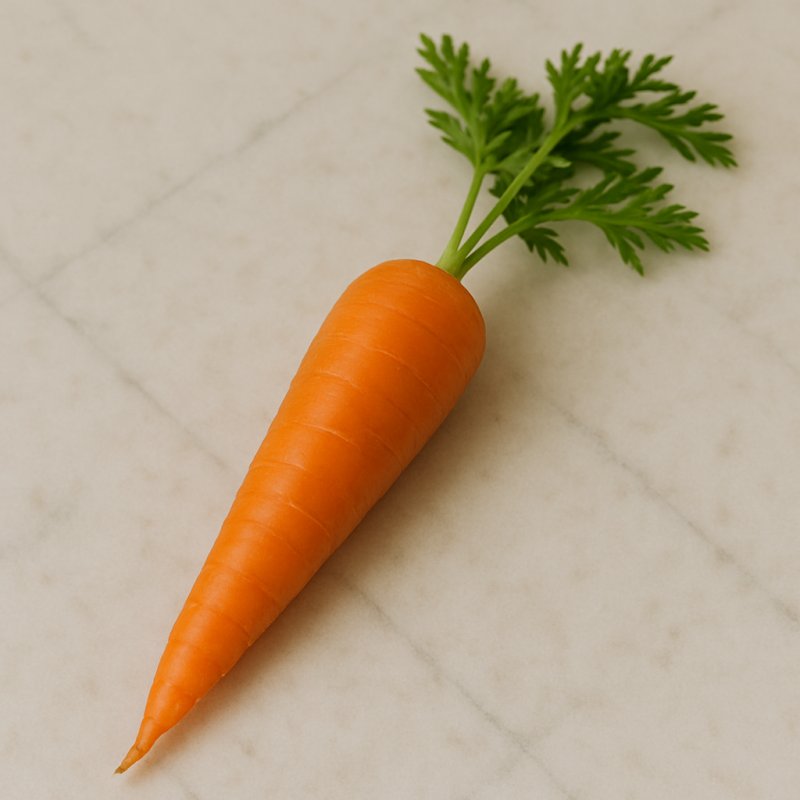
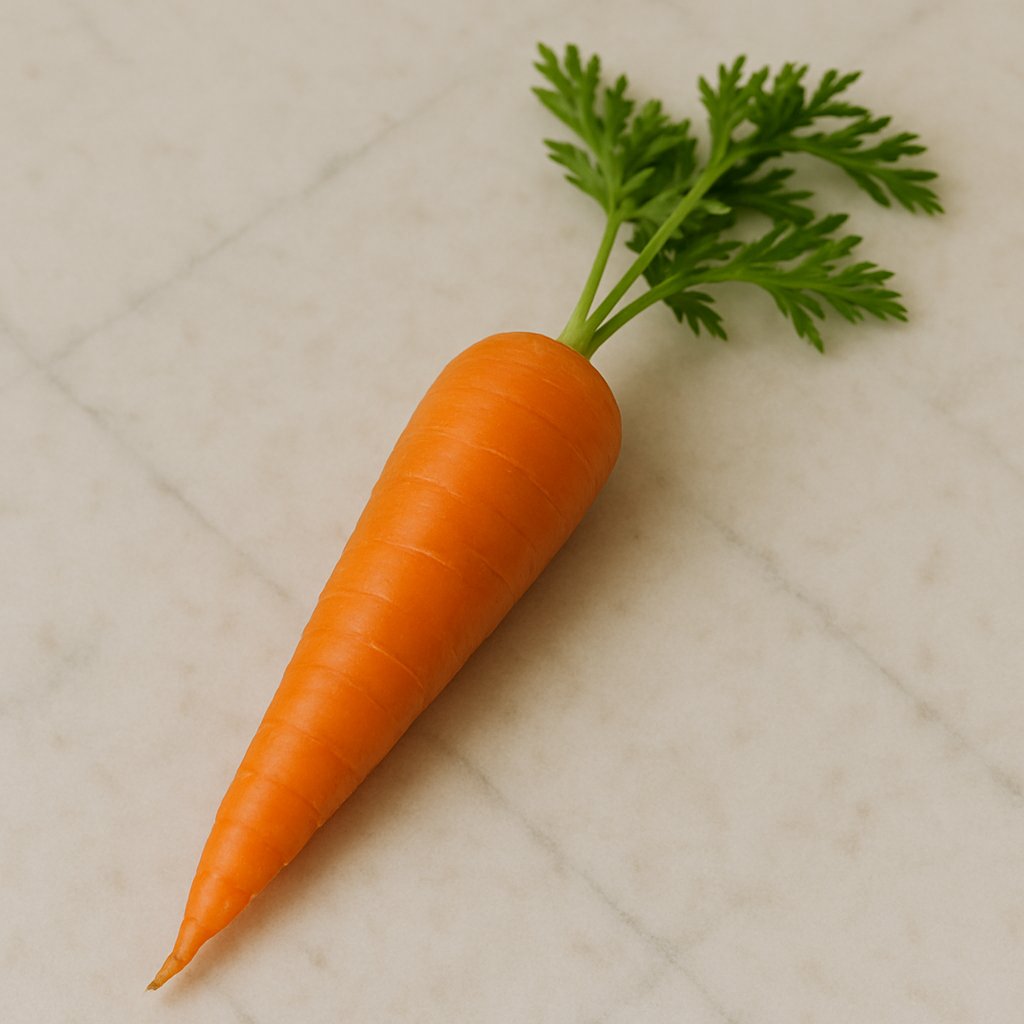
Fresh carrots with greens
Carrot – just that word evokes images for me of bright orange bunch carrots at the farmers' market, the earthy scent of freshly harvested roots and the quiet crunch when you take a hearty bite. As a 35-year-old editor from Europe, over the years I have tested countless recipes, visited producers and conducted interviews with nutrition experts. It has become repeatedly clear to me: the carrot is one of the most versatile ingredients in our kitchen. It connects tradition and modernity, home cooking and fine dining, and it fits equally well into quick everyday cooking as into festive menus.

The carrot, regionally also called möhre, mohrrübe or rüebli, is botanically a type of root vegetable with an impressive range. Its shades run from pale yellow through deep orange to purple and almost black. I remember a tasting at the editorial office where we compared purple carrots with orange ones: a colleague of mine swore by the intense sweetness of the classic variety, while a female colleague preferred the slightly earthy, almost floral note of the purple variety. This flavor diversity makes the carrot an ingredient that quickly adapts to different culinary styles – from Mediterranean lightness to Nordic clarity.

What particularly fascinates me is the role of the carrot in European food culture. In France it is considered an indispensable component of the mirepoix, in Italy it appears in almost every soffritto base, and in Germany or Austria it enriches stews, broths and salads. In Switzerland it appears as a crunchy side dish or grated in the well-known carrot cake (Rüeblikuchen). A chef friend once told me he could hardly open his kitchen without carrots – too many stocks, sauces and vegetable side dishes rely on their gentle sweetness and natural umami.

The culinary uses are almost inexhaustible. Carrots taste good raw as a snack, grated in salad, gently steamed, aromatically braised, caramelized from the oven, pureed into creamy soups or even fermented. I particularly like to combine them with citrus fruits, cumin, ginger, honey and hazelnuts. Another colleague swears by

Availability & types

Availability and types of carrot

Carrots, also called möhren or yellow roots, are one of the most popular vegetables in the world. They belong to the Apiaceae family, like celery, parsley and parsnips. Their origin lies originally in regions of Central Asia and the Near East, particularly in the area of present-day Afghanistan. The first carrots were not orange but mostly purple, yellow or white. The orange carrot known today was probably bred in the Netherlands, because breeders wanted roots that were sweeter, juicier and bright orange. This prevailed, so we most often see the orange-colored ones in the supermarket today.

Availability throughout the year
Carrots are available for almost the whole year. This is because they store well and are grown in many countries. Nevertheless, there are differences:

  • Spring (early carrots/bunched carrots): From late spring tender, young carrots with fresh greens come to market. They are thinner, especially juicy and have a fine, sweetish note. You recognize them by the "bunch" with green tops. They must be used more quickly in the refrigerator because they are not as durable.
  • Summer: In summer there are plenty of carrots from regional open-field cultivation. They are versatile, inexpensive and taste aromatic. Often they are sold without tops and keep longer when chilled.
  • Autumn: In autumn storage carrots are harvested. These are sturdier, larger and ideal for storing. They are perfect for soups, stews and raw consumption.
  • Winter: Thanks to storage facilities and cooling, carrots remain available in winter. They also come from regions with milder climates. The quality is usually good, and they remain a reliable source of vitamins.
Additionally, carrots are available commercially in various forms: fresh, frozen (e.g. in mixed vegetables), pre-cooked in jars or cans, as carrot juice and even as baby food. Fresh carrots are the crunchiest and usually have the best flavor.

Origin and an
Details & nutrition

Property Value
Unit g
Average weight per piece 70
Calories per 100 41
Protein per 100 0.9
Carbohydrates per 100 9.6
Sugar per 100 4.7
Fat per 100 0.2
Saturated fat per 100 0.04
Monounsaturated fat 0.01
Polyunsaturated fat 0.12
Fiber per 100 2.8
Vitamin C (mg) per 100 5
Vitamin D (IU) per 100 0
Calcium (mg) per 100 33
Iron (mg) per 100 0.3
Nutri-Score A
CO₂ footprint 0.25 kg CO2e/kg
Origin Europe, seasonally available regionally
Gluten-free Yes
Lactose-free Yes
Nut-free Yes
Vegan Yes
Note Rich in beta-carotene (provitamin A); best stored in a cool, dark place.

Technical & scientific information

Carrot (Daucus carota subsp. sativus): botanical profile and systematic classification
The carrot, also called möhre, mohrrübe or rüebli, belongs to the Apiaceae family and is a biennial cultivated subspecies of the wild carrot. In the first growing year the plant forms a thickened storage root and a basal leaf rosette; in the second year a flowering shoot with compound umbels. Worldwide the carrot is one of the most economically important root vegetables and is cultivated in temperate to subtropical climates. Cultivars differ in root shape (cylindrical, conical, truncated), length and colour (orange, yellow, purple, red, white), which is genetically due to varieties and pigment profiles.

Morphology and anatomy
The edible storage root is secondarily thickened and anatomically characterized by a high proportion of parenchyma tissue, which serves as a reservoir for carbohydrates. The orange pigmentation is mainly due to carotenoids stored in chromoplasts. The vascular tissue lies centrally (xylem) and peripherally (phloem); the skin (periderm) is thin and protects against water loss. The leaves are pinnate to bipinnate or tripinnate, with aromatic oil canals (secretory ducts) that contain characteristic Apiaceae terpenes.

Constituents and nutritional value
Carrots have a low energy density and typically provide 35–45 kcal per 100 g. The carbohydrate content is about 8–10%, with a relevant share as sucrose, glucose and fructose. Fibre (2–3 g/100 g), mainly pectins, hemicelluloses and cellulose, promotes bowel function. Notable are the high levels of carotenoids, especially beta-carotene (provitamin A), alongside alpha-carotene, lutein and small amounts of zeaxanthin. Other micronutrients include vitamin K1 (phylloquinone), biotin, vitamin C in moderate concentration and potassium as the predominant mineral, complemented by

Wiki entry for: carrot
Active now: 20 visitors of which 2 logged-in members in the last 5 minutes