Menu & categories

Cardamom

Aromatic spice with an intense, slightly sweet flavor

Wiki about cardamom Nutri-Score C Vegan Yes Gluten-free Yes Lactose-free Yes Nut-free Yes
NUTRITION / 100 g
311 kcal 10.8 g Protein 68.5 g Kohlenhydrate 6.7 g Fett

Introduction

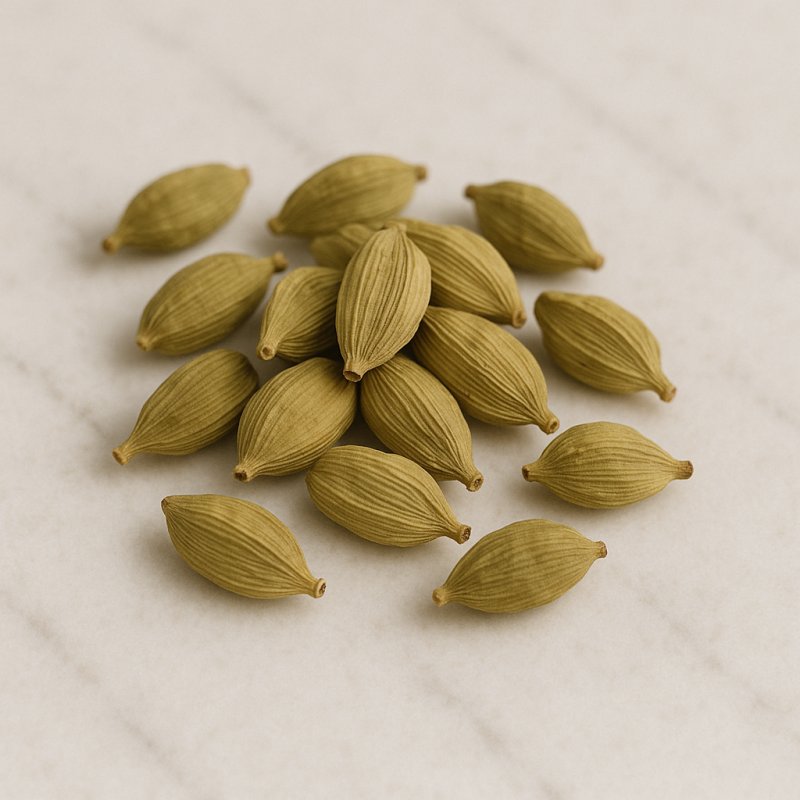
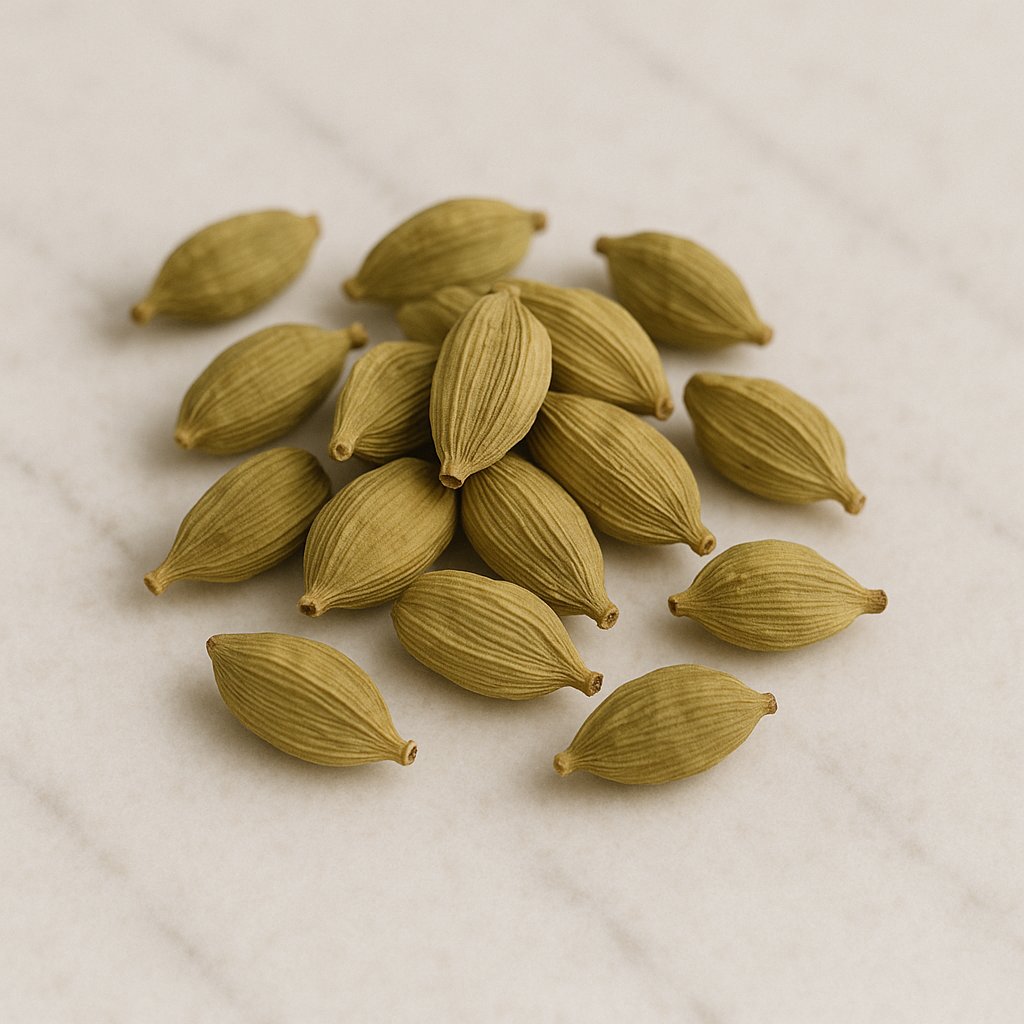
Green cardamom pods and ground cardamom
I still remember the first time cardamom practically enchanted my kitchen: a colleague brought back a small packet from a business trip, and even the scent when opening it felt like a warm welcome from distant regions. Cardamom is for me one of those amazing spice notes that work in both sweet and savory dishes without ever being intrusive. It has a complex mix of floral, citrusy and slightly peppery aromas that make dishes instantly deeper and more interesting.

There are mainly two types: green and black cardamom. Green cardamom is lively, fresh and ideal for desserts, coffee or baked goods; black cardamom has smokier, earthier notes and pairs wonderfully with braised dishes or hearty stews. I've learned that it's best to buy the small green pods whole and open them shortly before use, because the seeds quickly lose their aroma if stored ground.

A specific ritual in my home is to toast cardamom seeds in a dry pan for a few seconds — this releases essential oils and makes the scent incomparable. Sometimes I combine cardamom with cinnamon and cloves into a spice blend that I sprinkle into autumn and winter drinks. In my kitchen I've found that just a pinch is enough to lift flavors without dominating everything.

Here are a few useful tips I've collected over time:

  • Keep it fresh: Whole pods last longer than ground powder.
  • Dosage: Better to dose cautiously — cardamom can quickly overwhelm.
  • Combinations: Pairs well with cinnamon, ginger, vanilla, citrus zest and coriander.
  • Use: Perfect in coffee, chai, rice dishes, baked goods and marinades.
I especially like how cardamom evokes travel memories: a market in a warm city, the hands of a street vendor mixing the pods in a bowl. Such stories come through when I use cardamom, and I hope that the next time you crush a pod between your fingers you also experience that small moment of surprise. Cardamom is more than a spice; it is a culinary mediator between cultures and memories that I happily invite into my everyday cooking.

Availability & types

Availability and types

Cardamom is a spice plant found in many parts of the world. If you're looking for it, you can get it fresh, dried, ground or as an oil. Many supermarkets carry small jars of ground cardamom, but in well-stocked shops or at weekly markets you'll also find whole green or brown pods. Fresh, whole pods retain flavor best — you can open them like little treasure chests and use the seeds inside.

Origin and growing areas
Cardamom originally comes from the tropical regions of Asia. The mountains of southern India, Sri Lanka and parts of Indonesia are particularly known. There the plant grows in moist forests, almost like a shrub or a small palm. Today cardamom also comes from countries such as Guatemala and Tanzania — Guatemala is even one of the largest producers worldwide. You can imagine it as a seed that prefers to live warm, humid and somewhat shaded, similar to many tropical fruits.

Available varieties
There are several varieties of cardamom. The main ones are:

  • Green cardamom (Elettaria cardamomum): This is the most common variety. The pods are greenish and small. They have a fresh, slightly sweet taste, somewhat like a mix of citrus and mint. This variety is often used in sweets, coffee or chai tea.
  • Black (or brown) cardamom (Amomum subulatum): These pods are larger, dark brown and rougher. Their flavor is stronger and smokier, almost like a mix of eucalyptus and smoke. Black cardamom is more commonly used in savory dishes such as stews, curries or meat dishes.
  • White cardamom pods: Sometimes you see white pods. These are usually green cardamom that has been bleached to look lighter. The flavor is similar to green cardamom but often somewhat milder.
  • Ground cardamom: This is the powder made from grinding the seeds. It is convenient because it is ready to use. However, ground cardamom loses its aroma faster than whole pods.
Where and how to find it
If you want to buy cardamom, you can go to different stores:

  • Supermarkets: Mostly ground or in small jars with whole pods.
  • Asian or oriental grocery stores: Often offer fresh whole pods in larger quantities and sometimes special varieties.
  • Health food stores and spice shops: They often offer high-quality options, sometimes even organically grown.
  • Online shops: Ideal if you're looking for specific varieties or need larger quantities.
Tips for choosing
If you want a strong aroma, buy whole green pods and grind the seeds shortly before use. Black cardamom is better suited to savory dishes, green for sweet and aromatic foods or drinks. Check the date or freshness indications when buying — like nuts and seeds, the aroma weakens over time. Remember: whole pods are like whole fruits — they last longer than powder and retain their flavor better.

This helps you quickly find the right type of cardamom for your recipe: green for sweet and fresh, black for strong and smoky, and ground if you need speed. With these options cardamom is very versatile and popular in many cuisines around the world.
Details & nutrition

Property Value
Unit g
Calories per 100 311
Protein per 100 10.8
Carbohydrates per 100 68.5
Sugar per 100 0.0
Fat per 100 6.7
Saturated fat per 100 0.7
Monounsaturated fat 1.0
Polyunsaturated fat 3.0
Fiber per 100 28.0
Vitamin C (mg) per 100 21.0
Vitamin D (IU) per 100 0.0
Calcium (mg) per 100 383.0
Iron (mg) per 100 13.97
Nutri-Score C
CO₂ footprint 5.0
Origin South Asia, often from India, Sri Lanka or Guatemala
Gluten-free Yes
Lactose-free Yes
Nut-free Yes
Vegan Yes
Note Values refer to dried green cardamom, ground; actual intake per portion is considerably lower due to the small amount used.

Technical & scientific information

Cardamom (scientifically: Elettaria cardamomum and closely related species such as Amomum) is a tropical spice obtained from the dried seeds of the capsule fruits. The two most common varieties are green cardamom (Elettaria cardamomum), often called "true cardamom", and black or brown cardamom (various Amomum species). Botanically, cardamom belongs to the ginger family (Zingiberaceae). Harvesting takes place while the capsules are still unripe, followed by drying and, if necessary, gentle cleaning to preserve the essential oils.

Chemical composition and constituents
The characteristic aroma of cardamom is mainly due to a complex mixture of volatile compounds. Dominant components of the essential oils are 1,8-cineole (eucalyptol), α-terpenyl acetate, limonene, terpinyl acetate, sabinene and myrcene. Significant amounts of monoterpenes and sesquiterpenes are also detectable. In addition to essential oils, cardamom contains phenolic compounds, flavonoids, organic acids, tannins as well as small amounts of proteins and dietary fiber.

Nutritional values
Cardamom is usually used in small amounts as a spice; therefore its contribution to daily calories and macronutrient balance is small. Per 100 g of ground cardamom there are approximately 300–350 kcal, around 10–15 g protein, 6–10 g fat (mostly plant fatty acids), 50–70 g carbohydrates (including considerable amounts of insoluble fiber) as well as trace elements and vitamins. Cardamom provides trace amounts of minerals such as potassium, calcium, magnesium and iron as well as small amounts of vitamin C and B vitamins.

Processing and storage
The processing steps significantly influence aroma and shelf life. After harvest the capsules are washed, possibly blanched and slowly dried to avoid enzymatic degradation. Storage in whole pods is often recommended because they conserve the essential oils better than already ground powder. Ground cardamom quickly loses volatile components and should be used in short intervals, protected from light, air and moisture. Industrial processing can include extraction by steam distillation to obtain essential oil, CO2 extraction or solvent methods.

Sensory and technological properties
Cardamom is characterized by a complex bouquet of fresh, citrus-like, slightly mentholic and spicy notes. 1,8-cineole contributes a cooling, eucalyptus-like component, while terpenyl acetates add floral and sweet aspects. Technologically, cardamom is used in the food industry as a flavoring in baked goods, confectionery, beverages and savory dishes. The essential oil is also used in perfumery and cosmetics. As a spice, cardamom can have microbiologically stabilizing effects when used in combination with other preserving measures.

Health aspects and pharmacological findings
Traditionally, cardamom has been used in many cultures as a digestive aid, carminative and breath freshener. In vitro and in vivo studies suggest that extracts and essential oils may possess antioxidant, antimicrobial and anti-inflammatory properties. Studies have shown inhibition of certain bacteria and fungi as well as potential gastroprotective effects in animal models. Clinical data in humans are limited and in many cases small; therefore definitive therapeutic claims are not possible. At normal culinary use cardamom is considered safe. At high doses or in concentrated extract preparations allergic reactions or interactions are possible, especially with concurrent intake of certain medications. Pregnant and breastfeeding individuals should consult a medical professional before using therapeutic doses.

Ecology and origin
Cardamom is predominantly cultivated in tropical regions, especially in India, Guatemala, Sri Lanka and parts of Africa. The plants prefer shady, humid sites with good soil drainage. Sustainable cultivation and appropriate harvesting practices prevent soil loss and promote biodiversity in agroforestry systems.

Cardamom is thus an aromatically and chemically multilayered spice with both culinary and potential health relevance; its effects depend strongly on variety, processing and dosage, and scientific evidence for therapeutic effects continues to grow and remains in part preliminary.

Wiki entry for: cardamom
Active now: 18 visitors of which 2 logged-in members in the last 5 minutes