Menu & categories

Caraway

Aromatic spice with an intensely pungent flavor

Wiki about caraway Nutri-Score A Vegan Yes Gluten-free Yes Lactose-free Yes Nut-free Yes
NUTRITION / 100 g
333 kcal 19.8 g Protein 49.9 g Kohlenhydrate 14.6 g Fett

Introduction

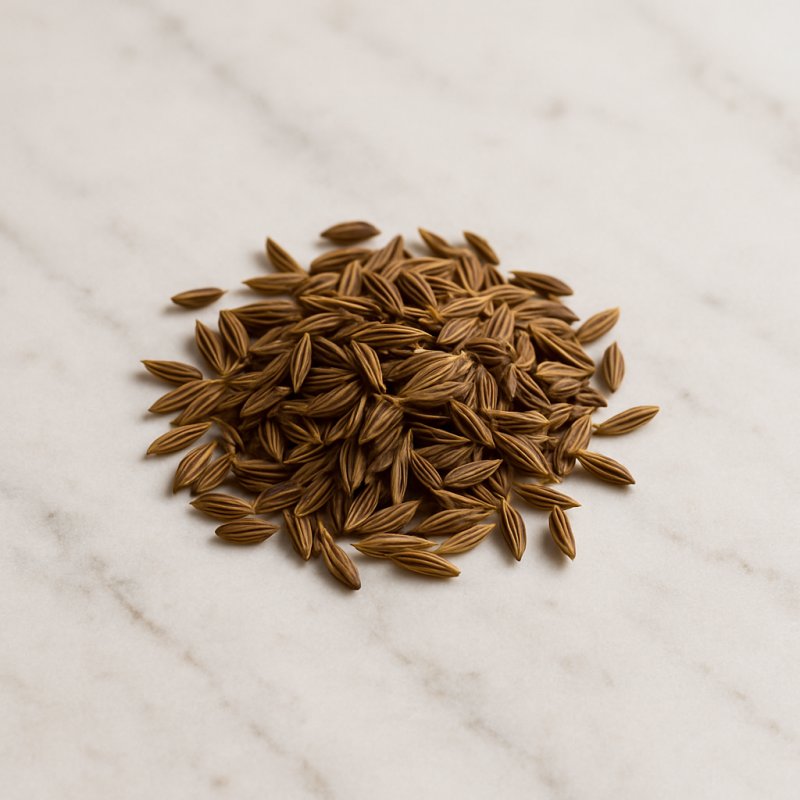
Dried caraway seeds in a bowl
I still remember clearly the first scent of caraway that reached me when I sliced into a freshly baked rye bread: warm, slightly anise-like and surprisingly savory. To me caraway is one of those unobtrusive spice seasons that make dishes unmistakable without ever feeling intrusive. In many households it was always on hand, not only as a spice but as a soothing remedy for an upset stomach after overly rich meals.

What I love about caraway is its versatility. It goes wonderfully with dark bread, sauerkraut and stews, but also with cheese boards and savory pastries. A colleague of mine swears by sprinkling a few crushed caraway seeds over a simple potato salad — and suddenly the dish feels much more considered. The seeds themselves are small, dark brown and oval; their aroma develops best when you briefly toast them in a dry pan or lightly crush them.

I have also experimented with caraway in cooking: once I combined it in a creamy pasta sauce with lemon and white wine. The result was surprisingly fresh because the caraway balanced the acidity. On another occasion I tried caraway oil as a finishing touch over roasted vegetables — just a few drops, and the aroma acted like a secret flavor corridor that redefined the familiar.

Using the right amount is important. Too much caraway can become dominant, too little is hardly noticeable. I recommend starting with a small amount and tasting as you cook. For people who have never worked with caraway, these simple tips are helpful:

  • Toasting: A brief toast in a pan brings out the essential oils.
  • Crushing: In a mortar the aroma unfolds more intensely.
  • Pairings: Works well with cabbage, potatoes, bread and fatty foods.
  • Amount: Use sparingly; it is easier to add more than to tone down an overpowering flavor.
In conclusion, I think caraway is one of those spices you only truly appreciate when you use it deliberately. It has tradition, character and the ability to turn simple recipes into small culinary memories. Next time I smell a piece of rye bread, I will remember how such a discreet seed can bring so much warmth to a kitchen.

Availability & types

Availability and types of caraway

Caraway is a spice many people know from bread, cheese or stews. It originally comes from regions around the eastern Mediterranean and parts of Europe. Today caraway grows in many countries, especially where the climate is warm and not too humid. This means you can find it in Europe, parts of North Africa, West Asia and even North America. Farmers usually grow caraway in fields similar to cereal crops, and it needs well-drained soil and plenty of sun.

There is not just one type of caraway but several varieties and variants that differ slightly in taste, appearance and smell. Here are the main types you can find in shops or at the market:

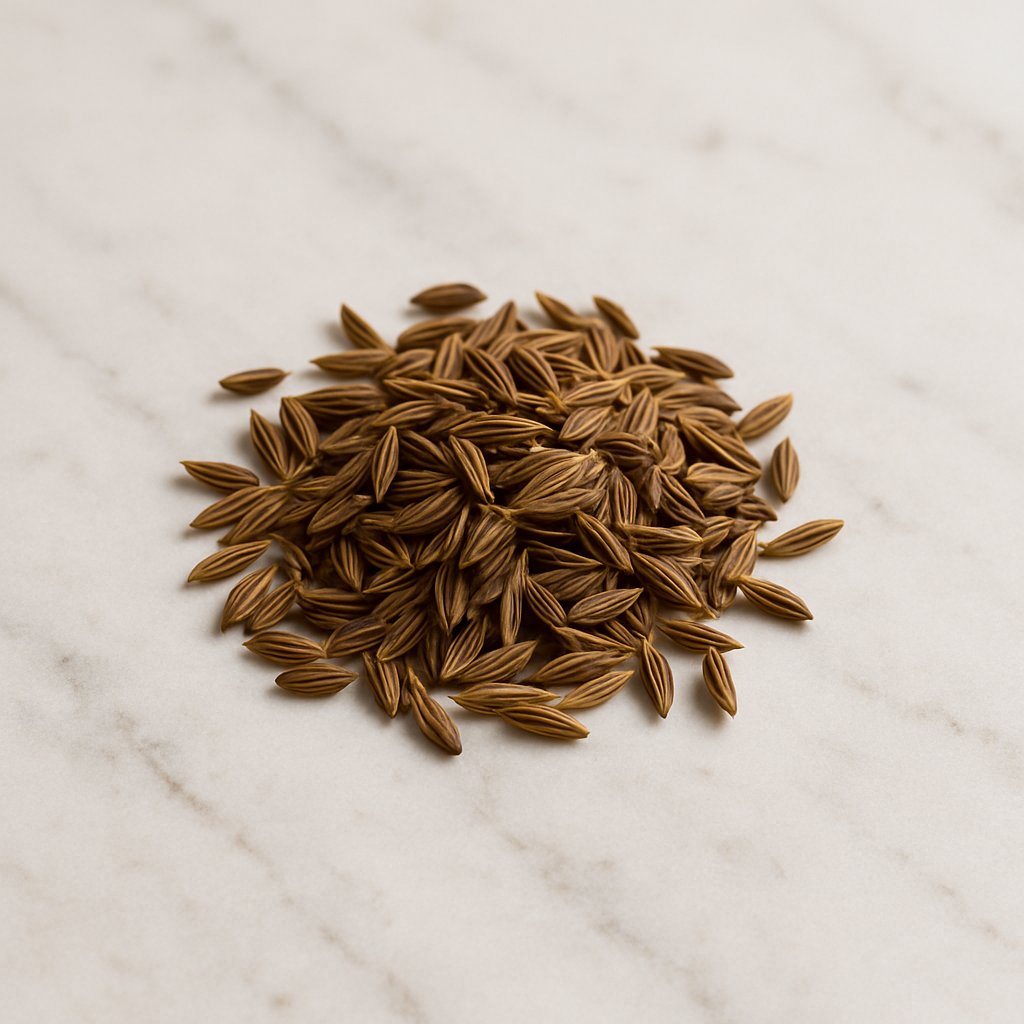
  • Common caraway (also simply “caraway”): this is the best-known variety. The seeds are elongated, brown and have fine striations. They taste warm, slightly sweet and a bit nutty. This variety is often used in bread, cheese and sauerkraut.
  • Black cumin (Nigella or black seed): although called “cumin” or “black cumin,” Nigella is actually a different plant and appears as small black seeds. It tastes somewhat peppery and pungent and is frequently used in Middle Eastern dishes and sprinkled on bread. It is important not to confuse it with common caraway.
  • Fodder caraway: this variety is cultivated specifically for use in animal feed, especially for cattle and other livestock. It resembles common caraway but often has a different composition and is less used for human consumption.
  • Wild varieties: sometimes you find caraway that grows wild. Wild caraway can be stronger or milder in taste than cultivated varieties. It’s comparable to apples: a wild-grown fruit can sometimes taste more intense than a commercially bred one.
In stores caraway is available in different forms:

  • Whole seeds: these keep the longest and release the most flavor when cooking or baking. Many people like whole caraway seeds because they give a pleasant little crunch when chewed.
  • Ground: ground caraway has a finer aroma and blends more easily into dough or sauces. However, it loses its aroma faster than whole seeds, so it’s better to buy it in small quantities.
  • Oil or extracts: oil can also be obtained from caraway. This oil is very potent and is often used dropwise, for example in natural medicine or special recipes.
If you want to buy caraway you will usually find it in supermarkets, weekly markets or specialty delicatessens and spice shops. Fresh caraway from the garden is rarer because the seeds are harvested only at the end of the growing season. A simple tip: if the seeds still smell strong, they are fresh. If the aroma is weak, the caraway has already lost much of its flavor.

In summary: caraway grows in many parts of the world, there are different varieties such as common caraway and black cumin, and you can get it as whole seeds, ground or as an oil. This way you can find the suitable form for every use — from bread baking to a flavorful stew.
Details & nutrition

Property Value
Unit g
Calories per 100 333
Protein per 100 19.8
Carbohydrates per 100 49.9
Sugar per 100 2.3
Fat per 100 14.6
Saturated fat per 100 0.6
Monounsaturated fat 7.0
Polyunsaturated fat 4.0
Fiber per 100 38.0
Vitamin C (mg) per 100 21.0
Vitamin D (IU) per 100 0
Calcium (mg) per 100 689
Iron (mg) per 100 16.2
Nutri-Score A
CO₂ footprint 1.8
Origin Mainly Europe and Western Asia
Gluten-free Yes
Lactose-free Yes
Nut-free Yes
Vegan Yes
Note Information refers to dried caraway seeds (spice). Nutritional values may vary slightly depending on origin and processing.

Technical & scientific information

Caraway (Carum carvi) is a biennial herbaceous plant in the Apiaceae family and is mainly cultivated for its aromatic seeds. The seed grains, often incorrectly referred to as spices, are botanically fruits (schizocarps) that are characteristically spindle-shaped, brown and about 3–4 mm long. Caraway has a pronounced, warm, slightly anise- to carminative-like smell and taste, which is due to a complex mixture of volatile secondary plant compounds.

Chemical composition and constituents: The main components of caraway seeds are essential oils, fatty acids, proteins, dietary fiber and minerals. The essential oil typically makes up 2–7 % of the seed content and consists mainly of carvone (up to 60–70 %), limonene, pinene and smaller amounts of thymol and other monoterpenes. Carvone is responsible for the characteristic aroma and many of the physiological effects. Besides the oil, caraway seeds contain about 15–22 % fat (including linoleic and oleic acids), 15–20 % protein and 20–35 % carbohydrates, mainly in the form of dietary fiber.

Energy value and micronutrients: Per 100 g caraway seeds provide roughly 350–400 kcal, with the energy content mainly determined by oils and proteins. Important minerals include calcium, iron, magnesium and potassium; small amounts of vitamin A (as carotenoids) and B vitamins are also present. Due to the high fiber content, caraway supports bowel function, and the fatty acid composition contributes to a stable energy balance when used in moderate amounts.

Processing and essential oil extraction: Essential oil is mainly obtained by steam- or hydro-distillation of the dried fruits. Alternatively, cold pressing and solvent extraction are used in the food and cosmetic industries, depending on the desired quality profile. The composition of the oil can vary greatly depending on cultivation conditions, harvest time, drying and storage methods. Freshly harvested seeds show higher proportions of sensitive monoterpenes, while improper drying can lead to oxidation, loss of carvone and quality deterioration.

Use in cuisine and the food industry: Caraway is traditionally used in bread, cheese, meat and sauerkraut dishes. Technologically, its essential oils influence aroma, digestibility and in some cases shelf life through mild antimicrobial effects. In alcoholic beverages such as caraway spirit the oil serves as an aroma carrier. Typical dosing is in the range of a few grams per kilogram of food, as the aromas are concentrated and sensitive to overdosing.

Health aspects and pharmacological effects: Caraway has a number of bioactive properties that have been investigated in vitro and in animal models. These include:

  • Carminative effects: By relaxing smooth gastrointestinal muscle, caraway can help reduce bloating and cramps.
  • Antimicrobial and antioxidant activity: Mainly attributed to carvone and other monoterpenes; these effects are dose-dependent and moderate at dietary levels.
  • Inflammation modulation: In experimental studies extracts have shown reductions in inflammatory markers, but concrete clinical evidence is limited.
Oral use in common culinary amounts is generally regarded as safe. With concentrated extracts or essential oil, skin irritation, allergic reactions and toxic effects are possible; pregnant women should avoid high-dose preparations due to insufficient safety data. Interactions with medications are rare, but at very high doses theoretical interactions via enzyme induction or inhibition may occur.

Storage, quality criteria and analytics: Quality control includes organoleptic testing, determination of essential oil content (e.g. by gas chromatography) and detection of contaminants such as mycotoxins or pesticide residues. Properly stored seeds retain aroma and active profile for several years when kept cool, dry and protected from light.

Overall, caraway is a versatile ingredient with clearly defined main chemical components and established traditional health-related effects. Its activity is mainly based on the high carvone content in the essential oil as well as on secondary constituents such as fiber and minerals, while the scientific evidence for therapeutic claims beyond traditional uses remains moderate. When handled well, caraway provides a characteristic aroma and functional contributions to food quality, whereas caution is warranted in concentrated applications.

Wiki entry for: caraway
Active now: 17 visitors of which 2 logged-in members in the last 5 minutes