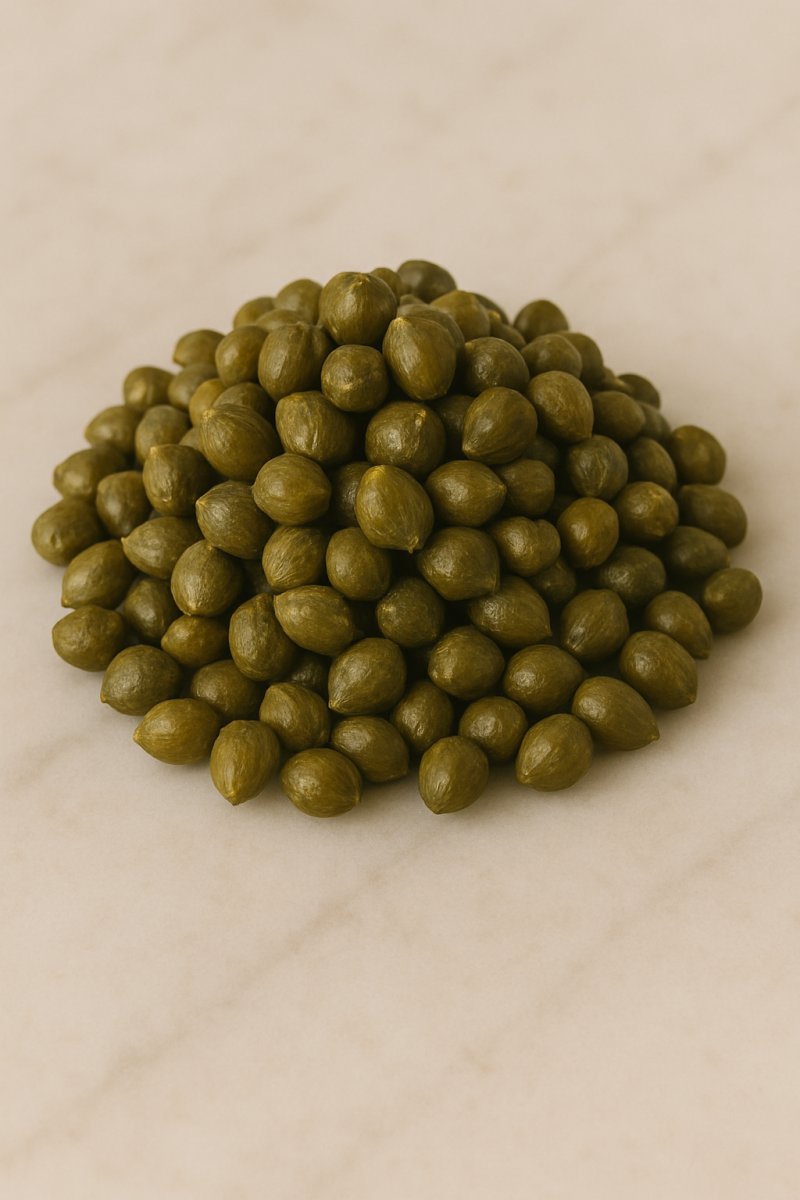
Menu & categories

Capers

Aromatic buds with an intensely piquant flavor

Wiki about caper Nutri-Score A Vegan Yes Gluten-free Yes Lactose-free Yes Nut-free Yes
NUTRITION / 100 g
23 kcal 2.4 g Protein 4.9 g Kohlenhydrate 0.9 g Fett

Introduction

Pickled capers in a small bowl
I still remember the first time I tried capers: on an improvised pasta with sautéed anchovies and a handful of cherry tomatoes, in a small kitchen that smelled of garlic. The sharp, salty bite of the capers enlivened the dish immediately, as if a little culinary spark had been kindled. Since then the small, cured buds have been among my most faithful helpers when I want to give dishes depth and an unexpected piquancy.

Capers come from a Mediterranean shrub and are actually the unopened flower buds. Even when opening the jar a salty, slightly floral scent wafts out, somewhere between olives and lemons. I use capers in different ways:

  • Coarsely chopped for sauces like piccata or a classic puttanesca.
  • Whole as a decorative, aromatic element on crostini or fish.
  • Soaked, to mellow excess saltiness when a subtler flavor is desired.
A colleague of mine swears by mixing capers into his anchovy vinaigrette; the result is so good that he sometimes almost forgets to cook a main course. I myself like to sprinkle them over potato salads or combine them with fresh herbs and lemon for a quick, lively topping. Capers are surprisingly versatile: they go with fish, grilled vegetables, in salad dressings and even in a buttery sauce for pasta.

It's worth paying attention to quality. Cheap capers can seem musty or overly salty, while good capers have a complex, almost umami-like profile. When I wander through Mediterranean villages on my travels, I like to buy locally made varieties – a small jar with the taste of home that always brings a smile to my face.

For me capers are little flavor bombs: unassuming in appearance but powerful in effect. They bring balance to a dish without being loud, and have the rare talent of enhancing other flavors. Every time I open a jar I know the food will gain a little more character.

Availability & types

Availability and types of capers

Capers are small, round buds of a Mediterranean plant that grows particularly in warm, sunny regions. You can think of them as very small flower buds harvested before they open. These buds are not only tasty but also very popular in many dishes because they have a strong, slightly salty and tangy flavor. Capers are sold in jars or tins and are available in many supermarkets, delicatessens and at weekly markets.

Origin
Capers originally come from the Mediterranean region. Countries like Italy, Greece, Spain and Malta are known for their capers. In these areas the caper plant grows on rocky slopes, often near the sea. The mild climate with lots of sun and little rain is ideal for the plant. Capers are also found in countries like Morocco, Tunisia or even parts of California, where similar conditions prevail.

Growing areas
The main growing areas are around the Mediterranean. There are many coastal towns with small farms that have been collecting and processing capers for generations. Because the plant needs little water and grows well in poor soils, it is well suited to such places. Farmers in other warm regions of the world also try to cultivate capers. The origin is often indicated on the label: “from Italy” or “from Greece” reveal where the capers were harvested.

Available varieties and types
Capers differ mainly in size, processing and flavor. Here is an overview so you know what exists:

  • Sizes:
    • Grain size (small): Very small capers, often very aromatic. They are frequently used when an intense taste experience is desired.
    • Nonpareil: A highly prized, very aromatic small to medium size. They are often more expensive because they are considered particularly fine.
    • Capucine and Fines: Larger capers that are somewhat milder in flavor and are good for dishes where you want a bit more caper texture.
  • Processing:
    • Preserved in salt: These capers are stored in coarse salt. The salt preserves them and extends their shelf life. Before eating they are rinsed briefly so they are not too salty.
    • Preserved in vinegar: Often in a vinegar solution, sometimes with herbs and spices. These capers are usually ready to use and have a pleasant acidity.
    • In brine or brine with water: A milder variant that is less salty than pure salt-preserved capers.
  • Special variants:
    • Caper berries: These are the fruits of the caper plant, larger and looking like small berries. They have a different flavor and are sometimes used like olives.
    • Caper sauce or caper paste: Ready-made products that mix capers with oil or other ingredients – convenient when you need seasoning quickly.
Tips for choosing
When you buy capers, check the jar or tin: a label stating origin and whether they are preserved in salt or vinegar helps with the choice. Small capers often have the most intense aroma, larger ones are milder. If you want to avoid a certain level of saltiness, try capers preserved in vinegar or brine first; these are usually less salty than those preserved in salt.

So capers are available in many variants – depending on size, origin and pickling method. This makes them versatile: for salads, pasta or as a special seasoning. That way you're sure to find the capers that best suit your taste.
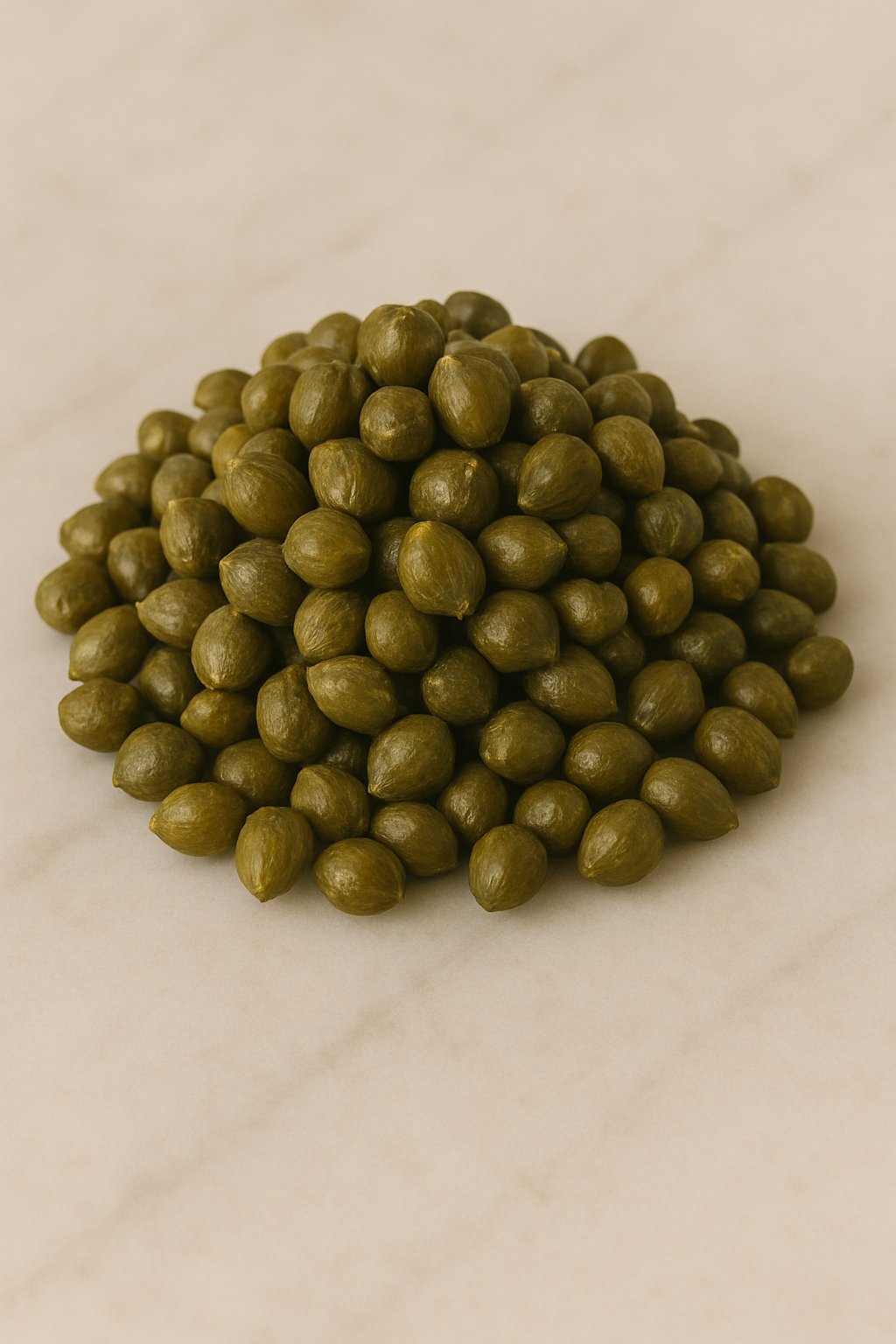
Details & nutrition

Property Value
Unit g
Average weight per piece 1.5
Calories per 100 23
Protein per 100 2.4
Carbohydrates per 100 4.9
Sugar per 100 0.4
Fat per 100 0.9
Saturated fat per 100 0.2
Monounsaturated fat 0.1
Polyunsaturated fat 0.4
Fiber per 100 3.2
Vitamin C (mg) per 100 4
Vitamin D (IU) per 100 0
Calcium (mg) per 100 40
Iron (mg) per 100 1.7
Nutri-Score A
CO₂ footprint 1.3
Origin Mediterranean region
Gluten-free Yes
Lactose-free Yes
Nut-free Yes
Vegan Yes
Note Nutritional values refer to capers preserved in brine; note the high salt content depending on the product.

Technical & scientific information

Capers are the edible buds of the shrub Capparis spinosa and related species that grow wild in Mediterranean and subtropical regions. Botanically they belong to the family Capparaceae. The harvested capers are picked before flowering, typically finger- to pea-sized, and are usually preserved by salt or vinegar treatment to stabilize their flavor. Fresh capers are rather bitter raw; their characteristic aroma only develops through enzymatic and chemical changes during processing.

Chemical composition and constituents. Capers contain water, proteins, carbohydrates, lipids and fiber in small amounts. Dominant secondary plant compounds include glucosinolates (similar to those in cruciferous vegetables), flavonoids such as quercetin and kaempferol and phenolic compounds that have antioxidant properties. The compounds responsible for the pungent, slightly bitter-tangy taste include hydrolyzable glucosinolates and the resulting isothiocyanates as well as sulfur-containing substances. Vitamin C content is low to moderate; trace elements such as iron, calcium and potassium are present at concentrations that depend on variety and preservation.

Nutritional values (typical values, preserved): Per 100 grams of preserved capers (in brine) there are about 20–30 kcal. Protein content is normally around 2–3 g, fat under 1 g, and available carbohydrates (mainly fiber and residual sugars) around 4–7 g. Sodium content is high due to preservation and can amount to several grams per 100 g, which is why capers are used in the diet mainly in small amounts as a seasoning.

Processing methods. After harvest capers are traditionally salted or pickled in vinegar. The two most common procedures are:

  • Salt preservation: Fresh capers are heavily salted and ferment slightly, with salty water and osmotic effects activating enzymes, developing flavors and extending shelf life. This method reduces bitterness and preserves texture.
  • Vinegar- or brine-preservation: Capers are placed in vinegar or in a vinegar-salt-sugar solution. Acidity stabilizes the product microbiologically and fixes flavor components. Longer storage can mellow the aroma.
Sensory and culinary application. Capers have an intense, salty-tangy and slightly floral aroma with plant-like bitterness. They are often used finely chopped or whole as a seasoning, for example in sauces (e.g. tartare sauce), on pizzas, in pasta dishes, salads or with fish and meat. The size of the buds influences their use: smaller capers are considered more aromatic, while larger caper berries (the fruiting berries) are processed differently.

Health aspects and safety. Because of their high sodium content, people with high blood pressure or sodium sensitivity should limit consumption. At the same time capers provide antioxidant polyphenols that show anti-inflammatory effects in vitro; however the clinical relevance of these effects in humans is limited and requires further study. Allergic reactions are rare, but cross-reactions with other plant families should be considered. Microbiologically, preservation by salt and acid is generally effective, though improper storage can allow mold growth or spoilage.

Ecology and cultivation notes. Capparis species are adapted to dry, rocky habitats and show drought resistance, deep taproots and succulent characteristics. Cultivated plants are mostly grown in Mediterranean climates. The sustainability of the harvest depends on harvesting methods and wild collection; controlled cultivation reduces overexploitation of natural populations.

In summary, capers are a strongly flavored seasoning ingredient with a complex chemical profile of glucosinolates, flavonoids and sulfur compounds. They provide only small amounts of macronutrients but contain bioactive secondary plant substances. Because of their high sodium content capers are used in small amounts, while their health benefits are mainly based on antioxidant properties demonstrated in vitro and remain subject to further scientific investigation.

Wiki entry for: caper
Active now: 18 visitors of which 2 logged-in members in the last 5 minutes