Menu & categories

Butter

Creamy delight for any dish

Wiki about butter Nutri-Score D Vegan No Gluten-free Yes Lactose-free No Nut-free Yes
NUTRITION / 100 g
717 kcal 0.85 g Protein 0.1 g Kohlenhydrate 81 g Fett

Introduction

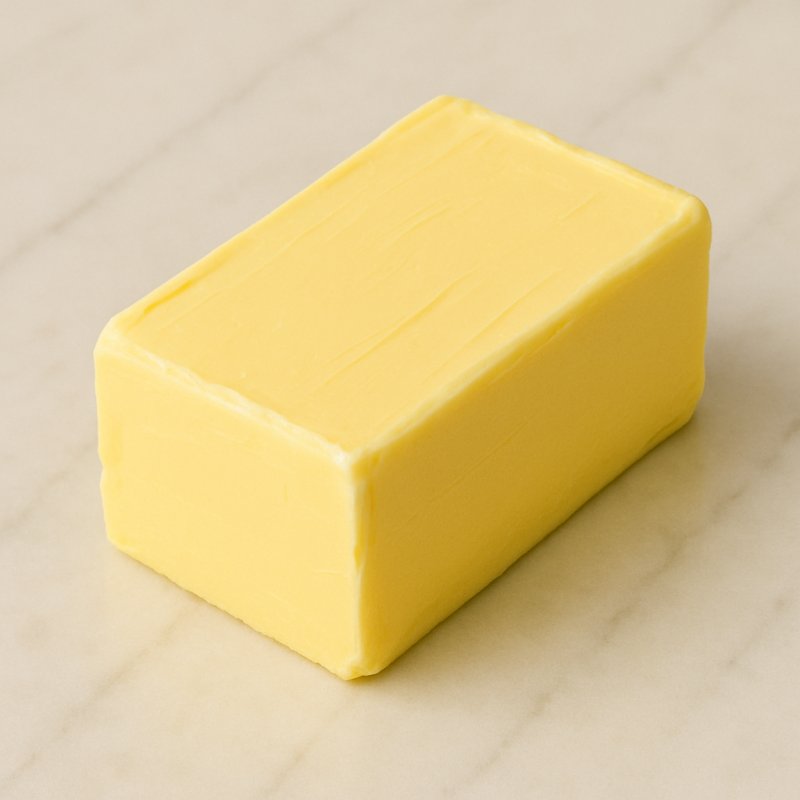
Piece of butter on a plate
I still clearly remember the first day I dove into the world of cooking. We were in the kitchen of old Aunt Hilda, who was known for baking the best cookies in the whole neighborhood. It wasn't just the recipe she kept secret, but also the love and affection she put into every spoonful of butter. This golden ingredient, so often taken for granted, holds a very special meaning for me.

Butter is more than just a simple fat. It is the star in many kitchens around the world. When I think of my own cooking adventures, I repeatedly notice that butter is the secret behind the best dishes. A colleague of mine, who loves making pasta, always says: “The right amount of butter can turn even the simplest dish into a masterpiece.” And I can only agree with him!

I love the versatility of butter – whether in sweet or savory cooking. It not only adds flavor but also a lovely, creamy texture. For example, when I think about preparing a classic French sauce, butter is the key to that silky finish that is so hard to achieve. But that's not all.

  • In the art of baking, butter is indispensable. It ensures the perfect consistency of cookies and cakes.
  • When preparing vegetables it brings out the flavors and turns even the simplest broccoli into a treat.
  • In the breakfast kitchen, a pat of butter on warm toast turns the morning ritual into a small celebration.
I remember one evening when I tried to create a new recipe for a chocolate cake. The instructions were simple: “Melt the butter and mix with the sugar.” But I was so lost in thought that I almost poured the entire amount into the bowl at once. The result was an incredibly fluffy cake that blew my friends away. A small mishap that, thanks to the butter, became a great success.

Today, as many of us switch to alternative fats, I still want to emphasize that butter holds a very special place in my heart. It is a symbol of tradition, of the craft of cooking, and of all the memories associated with preparing food. So next time you stand in the kitchen, don't forget to add a little butter – you'll be surprised how magically it can transform your dishes.

Availability & types

Butter is a very popular ingredient used in many kitchens around the world. It is made from the milk of cows, goats, or sheep. But where does butter actually come from and what different types are there?

Origin:

The history of butter goes back a long way. Thousands of years ago people began processing milk. At first it was simply drunk or turned into cheese. The idea of churning milk to make butter came later. Butter is made by whipping the cream separated from the milk. This separates the solid components from the liquid and forms a creamy mass. Today butter is produced in many countries around the world.

Production regions:

Butter can be made wherever there are cows, goats, or sheep. The largest butter producers are:

  • The United States – There are large dairy farms here that produce a lot of butter.
  • Germany – Butter is also very popular here, and there are many different varieties.
  • France – The French are known for their delicious butter, often used in fine cuisine.
  • New Zealand – This country exports a lot of butter that is known for its high quality.
These countries have ideal conditions for keeping cows that produce a lot of milk. Cows need plenty of grass and water to stay healthy and produce good milk.

Available varieties and types:

There are many different kinds of butter that differ in taste, color, and use. Here are some of the most popular varieties:

  • Regular butter: made from fresh cream and has a mild, creamy flavor. It is excellent for baking and cooking.
  • Salted butter: salt is added, giving the butter a savory taste. It is perfect for bread or for cooking savory dishes.
  • Unsalted butter: this butter contains no salt. Chefs often use it because it allows them to control the salt level in their dishes.
  • Organic butter: this butter comes from cows fed with organically grown feed and grazed on pastures. It is often considered healthier.
  • Ghee: a special type of butter commonly used in Indian cuisine. The butter is heated to remove the water and it has a nutty flavor.
Additionally, different countries have special butter variants. In France, for example, there is Beurre d'Isigny, known for its distinctive taste, while in Ireland Irish Butter is valued for its particularly high butterfat content.

Butter is thus a versatile ingredient available in many different forms.
Details & nutrition

Property Value
Unit g
Average weight per piece 10
Calories per 100 717
Protein per 100 0.85
Carbohydrates per 100 0.1
Sugar per 100 0.1
Fat per 100 81
Saturated fat per 100 51
Monounsaturated fat 23
Polyunsaturated fat 3
Fiber per 100 0
Vitamin C (mg) per 100 0
Vitamin D (IU) per 100 600
Calcium (mg) per 100 24
Iron (mg) per 100 0.02
Nutri-Score D
CO₂ footprint 2.5
Origin Germany
Gluten-free Yes
Lactose-free No
Nut-free Yes
Vegan No
Note Butter is an important ingredient in many recipes.

Technical & scientific information

Butter is an animal fat produced from the milk of cows, goats, or sheep. It is one of the oldest and best-known ingredients in the kitchen and is used in both sweet and savory cooking. The butter-making process involves several steps, including milking, cream separation, churning, and salting if desired.

Chemical composition

The chemical composition of butter is complex but consists mainly of fats, water, and proteins. Typically butter contains about:

  • Fat content: 80-82% (mainly saturated fatty acids)
  • Water content: 16-18%
  • Proteins: 0.5-1%
  • Carbohydrates: less than 1% (mainly lactose)
The main fat components are saturated fatty acids such as palmitic acid and stearic acid as well as monounsaturated fatty acids like oleic acid. These fatty acids contribute to both the texture and flavor of butter.

Processing methods

Butter production takes place in several steps:

  1. Milk collection: Milk is obtained from cows, goats, or sheep and then processed.
  2. Cream separation: In a process known as centrifugation, the cream is separated from the milk. The cream has a higher fat content than the skimmed milk.
  3. Churning: The cream is whipped, causing the fat globules to clump together and separate from the buttermilk.
  4. Salting (optional): Many butter products are salted to improve flavor and extend shelf life.
Nutritional values

Butter is an energy-dense ingredient rich in calories. Per 100 grams it contains approximately:

  • Calories: 717 kcal
  • Fat: 81 g
  • Saturated fatty acids: 51 g
  • Protein: 0.9 g
  • Carbohydrates: 0.1 g
Although butter provides many calories, it also contains important fat-soluble vitamins such as vitamins A, D, E, and K, which are essential for various bodily functions.

Health aspects

The health effects of butter have long been the subject of scientific debate. Some studies suggest that moderate consumption of butter is not harmful and may even offer health benefits, such as supplying vitamins and essential fatty acids. However, it is also pointed out that the high saturated fat content may increase the risk of cardiovascular disease if consumed in excessive amounts.

Wiki entry for: butter
Active now: 20 visitors of which 2 logged-in members in the last 5 minutes