Menu & categories

Butter biscuits

Classic, crispy biscuits with a buttery taste

Wiki about butter biscuit Nutri-Score D Vegan No Gluten-free No Lactose-free No Nut-free Yes
NUTRITION / 100 g
460 kcal 6.5 g Protein 72 g Kohlenhydrate 16 g Fett

Introduction

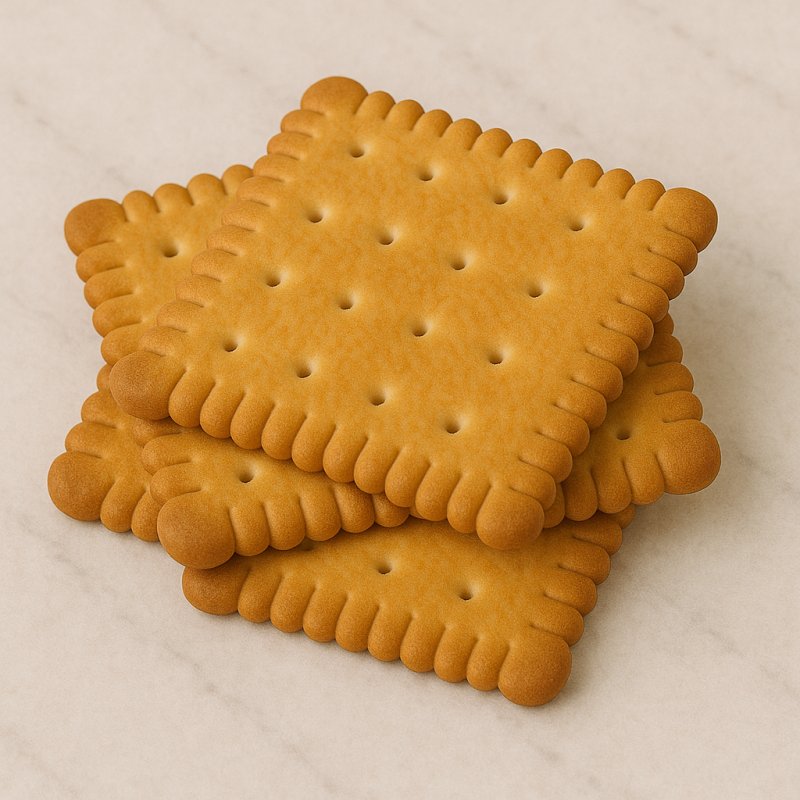
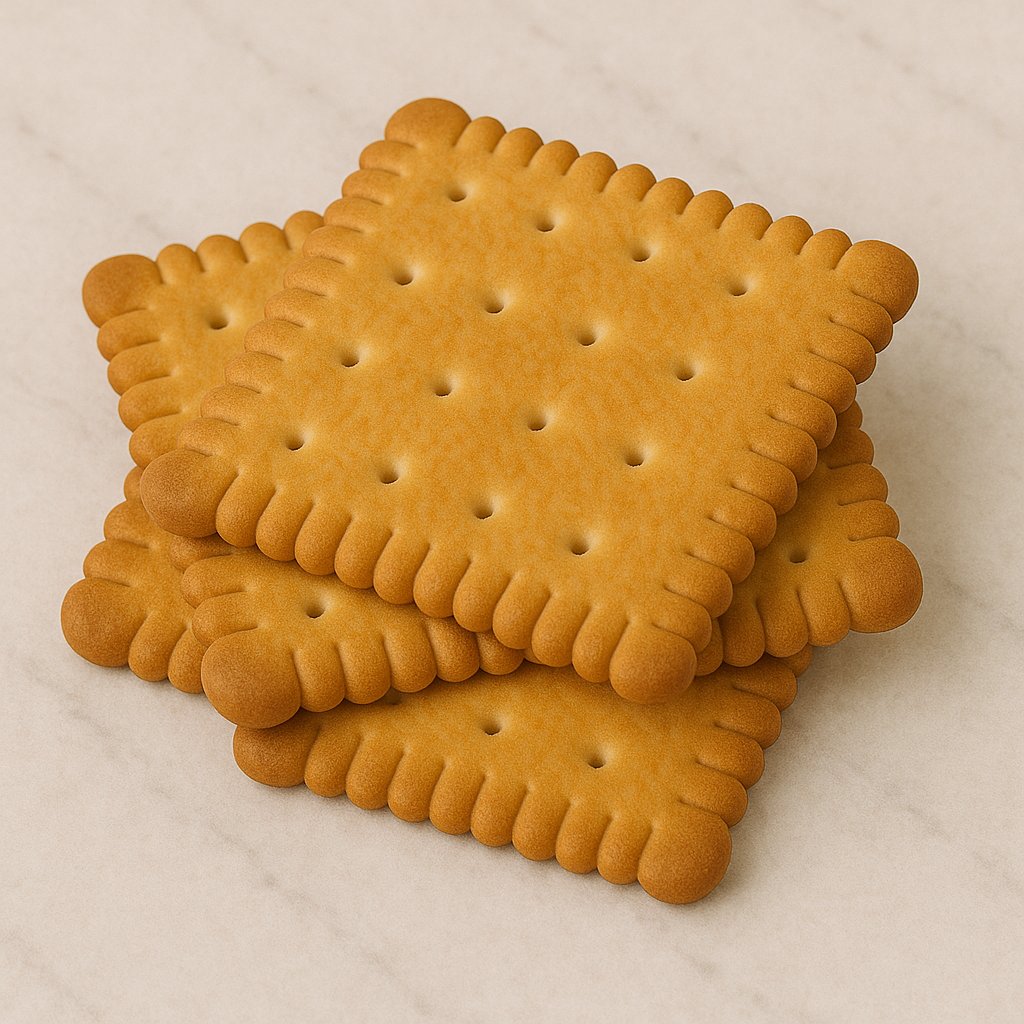
Several golden-brown butter biscuits on a plate
I remember the smell of butter biscuits wafting through my great-aunt's apartment on a rainy Sunday afternoon, as if it had personally ordered the sun. Butter biscuits are for me more than just a simple cookie; they are a familiar, almost comforting constant in the pantry that serves cake-base tricks, tea rituals and childhood memories alike. When I open a pack, I'm not just looking for a snack, but for a little time travel.

What fascinates me about butter biscuits again and again is their simple versatility. They are usually made from a few basic ingredients: flour, sugar, butter, an egg and some leavening agent. This apparent simplicity allows them to be eaten raw, dunked in coffee or even crushed and used as a crunchy base for cakes and desserts. Once I showed a friend how to make a quick no-bake cake in five minutes with crushed butter biscuits, melted chocolate and whipped cream – his eyes lit up as if at a culinary revelation.

It is easy to underestimate the cultural significance of this small type of cookie. In many European households butter biscuits are a standard; they appear as companions at children's birthdays, as an emergency ration for unexpected visitors and as an improvised spoon for creams. I have seen them in small cafés proudly displaying a single pack on the counter as if it were a seal of quality. Their shape and subtle taste make them a perfect stage for creative temptations: with jam, nut butter or a sprinkle of cinnamon, they quickly become a little work of art.

For those who like to bake themselves, butter biscuits are an ideal beginner project. The dough is easy to work, roll out and cut, and it forgives if the baking time is exceeded by a few minutes. At a friend's baking class I watched uncertain beginner hands produce evenly browned, evenly smiling biscuits within an hour – and the group's praise was not only for the result, but for the shared activity.

  • Taste: mild, buttery, slightly sweet
  • Use: enjoy plain, dunk in coffee, as a cake base
  • Practical: long shelf life, versatile to combine
In the end, butter biscuits are for me a small everyday happiness: unspectacular, reliable and always ready to carry a story or an improvised dessert. Next time I open a bag, I will think about how simple baked goods bring people together and how often a plain recipe can spruce up the most beautiful moment.

Availability & types

Availability and types

Butter biscuits are simple, crispy biscuits that can be found easily in many countries. Although their name "butter biscuit" suggests butter, it is less about rare ingredients and more about a traditional type of biscuit that has long been popular. They are sold in supermarkets, bakeries, cafés and even in many vending machines. Because they keep well and do not spoil quickly, they are suitable for taking along, as a break-time snack or for baking and cooking.

Origin
The idea behind butter biscuits comes from Europe, where simple doughs were baked with butter or margarine. The classic butter biscuit as we know it today developed over decades. Many brands and bakers have their own recipes, but the basic principle remains the same: a dough of flour, sugar, fat (usually butter) and eggs or milk. Sometimes the biscuit is called simply "butter biscuit" because it has a mild, buttery flavor, not because it always contains real butter.

Growing regions and ingredients
Butter biscuits don't grow themselves – they are made from ingredients that are grown in fields and farms. The most important ingredients are:

  • Wheat (flour): Wheat is grown in many regions of the world – in Europe, North America, South America, Asia and Australia. Flour is the basis for the dough and makes the biscuit firm and crispy.
  • Butter or fat: Butter comes from cows and is produced in dairy regions. Where butter is expensive, manufacturers sometimes use vegetable fats (margarine). Both give the biscuit flavor and texture.
  • Sugar: Sugar is often derived from sugar beet (in cooler regions like Europe) or sugarcane (in warmer regions like Brazil or India). It provides sweetness and helps the biscuit brown.
  • Eggs and milk (sometimes): These ingredients come from the farm and make the dough smoother and more flavorful.
Because all of these basic materials are produced worldwide, butter biscuits are practically available everywhere.

Available varieties and variants
Butter biscuits come in many shapes and with different extras. Here are the most common types, simply explained:

  • Classic butter biscuit: Round or rectangular, plain, slightly buttery. A good everyday biscuit that goes with milk or tea.
  • Wholegrain butter biscuit: Made from wholemeal flour, it has more fiber and tastes a bit nuttier. It is somewhat "heartier" than the light biscuit.
  • Chocolate-filled or coated: Sometimes butter biscuits are coated with chocolate or have a layer of chocolate in the middle – like an outfit with chocolate as a coat.
  • Biscuits with cinnamon, vanilla or lemon flavor: Small flavors that give the biscuit a special note, similar to spices that change a dish.
  • Mini or XXL versions: Some are very small for nibbling, others extra large to share with friends or to use as a base for cakes.
  • Diet or allergen-free variants: There are also reduced-sugar, gluten-free or vegan butter biscuits for people with special needs.
In many kitchens butter biscuits are also used as an ingredient: crumbled as a cake base, layered with cream in desserts or as a crunchy layer in ice cream. Thus butter biscuits are versatile and suitable for many occasions – from breakfast to birthday parties. Their simplicity makes them familiar and easy to combine, almost like a food building kit with which you can construct many tasty things.
Details & nutrition

Property Value
Unit g
Average weight per piece 6
Calories per 100 460
Protein per 100 6.5
Carbohydrates per 100 72
Sugar per 100 22
Fat per 100 16
Saturated fat per 100 10
Monounsaturated fat 4
Polyunsaturated fat 2
Fiber per 100 2.5
Vitamin C (mg) per 100 0
Vitamin D (IU) per 100 0
Calcium (mg) per 100 30
Iron (mg) per 100 1.2
Nutri-Score D
CO₂ footprint 1.8
Origin EU
Gluten-free No
Lactose-free No
Nut-free Yes
Vegan No
Note Nutritional values are average values for commercially available butter biscuits; exact values may vary by brand.

Technical & scientific information

Butter biscuits are a widely distributed baked product typically made from flour, fat (often butter or butter-like fats), sugar, eggs or egg substitutes as well as leavening agents and salt. Despite the simple ingredients, it is a technically mature product whose properties — texture, fracture strength, moisture content and flavor — can be controlled precisely by composition and processing.

Composition and ingredients
The basic ingredients of butter biscuits provide the essential chemical components: starches and proteins from wheat flour, lipids from butter or baking fat, saccharides from crystalline or cane sugar as well as water and small amounts of minerals. Flour consists mainly of amylose and amylopectin (starch) and gluten proteins (gliadin and glutenin), which during mixing form an elastic network. Fats influence the distribution of fat phases and the matrix structure after baking, while sugar not only sweetens but also acts hygroscopically and promotes surface caramelization. Emulsifiers and leavening agents (e.g. sodium bicarbonate) are often present in industrial formulations to improve texture, volume and shelf life.

Physical-chemical processes during baking
When the dough is heated, several processes run in parallel: water evaporates and leads to pore formation; proteins denature and crosslink, fixing the structure; starch partially gelatinizes and stabilizes the matrix. Fats melt and distribute, giving the fracture surfaces a softer character. Maillard reactions between amino acids and reducing sugars as well as caramelization lead to browning and the formation of flavor compounds in the crust. Baking temperature and time influence the moisture profile and thus the crispness or chewiness of the biscuit.

Nutritional profile
Butter biscuits are energy-dense: a typical value range is about 450–520 kcal per 100 g, depending on fat and sugar content. Macronutrient-wise they consist mainly of carbohydrates (starch, sugars), followed by fat and a moderate amount of protein. Fiber is low in refined wheat flour. Micronutrients such as sodium (from salt and leavening agents), small amounts of B vitamins and minerals are present, but the content of essential micronutrients is usually low compared to more whole-grain cereal products.

Technological variants and processing
Industrial production often follows a continuous process: mixing, dough conditioning, laminating, cutting/forming, baking, cooling and packaging. Differences in recipe and process lead to variants such as thin, crispy or thick, crumbly biscuits. Additives like lecithin improve processability and homogeneous fat distribution. Wholegrain or fiber-enriched variants replace part of the white flour; reduced-sugar or reduced-fat formulations use sweeteners or fat-reduction techniques, but sensory and textural adjustments must be made.

Shelf life and microbiological aspects
Due to the low water activity range in finished baked butter biscuits, microbial growth is limited, enabling long shelf life. Nevertheless, storage conditions, light, oxygen and fat oxidation can impair quality. Rancidity is a central problem in fat-rich recipes; antioxidants and suitable packaging (oxygen barrier, protective atmosphere) are used to slow oxidation. Moisture uptake from the environment leads to softening, which is why dry storage is important.

Health aspects
As processed, energy-dense foods, butter biscuits are not significant sources of vitamins and minerals and provide relatively high amounts of saturated fatty acids and sugars, which when consumed excessively can increase the risk of overweight and metabolic diseases. Classic butter biscuits are unsuitable for people with celiac disease or wheat allergy. Recipe adjustments (e.g. use of vegetable fats, wholemeal flours or sugar substitutes) can improve nutritional profiles but must be carefully tuned sensorily and technologically.

Conclusion
Butter biscuits are a technologically versatile baked product whose physical-chemical properties strongly depend on raw material quality and processing conditions. Their high energy content and low micronutrient levels should be considered in nutrition, while modern formulation and packaging techniques can deliberately influence shelf life and nutritional characteristics.

Wiki entry for: butter biscuit
Active now: 30 visitors of which 2 logged-in members in the last 5 minutes