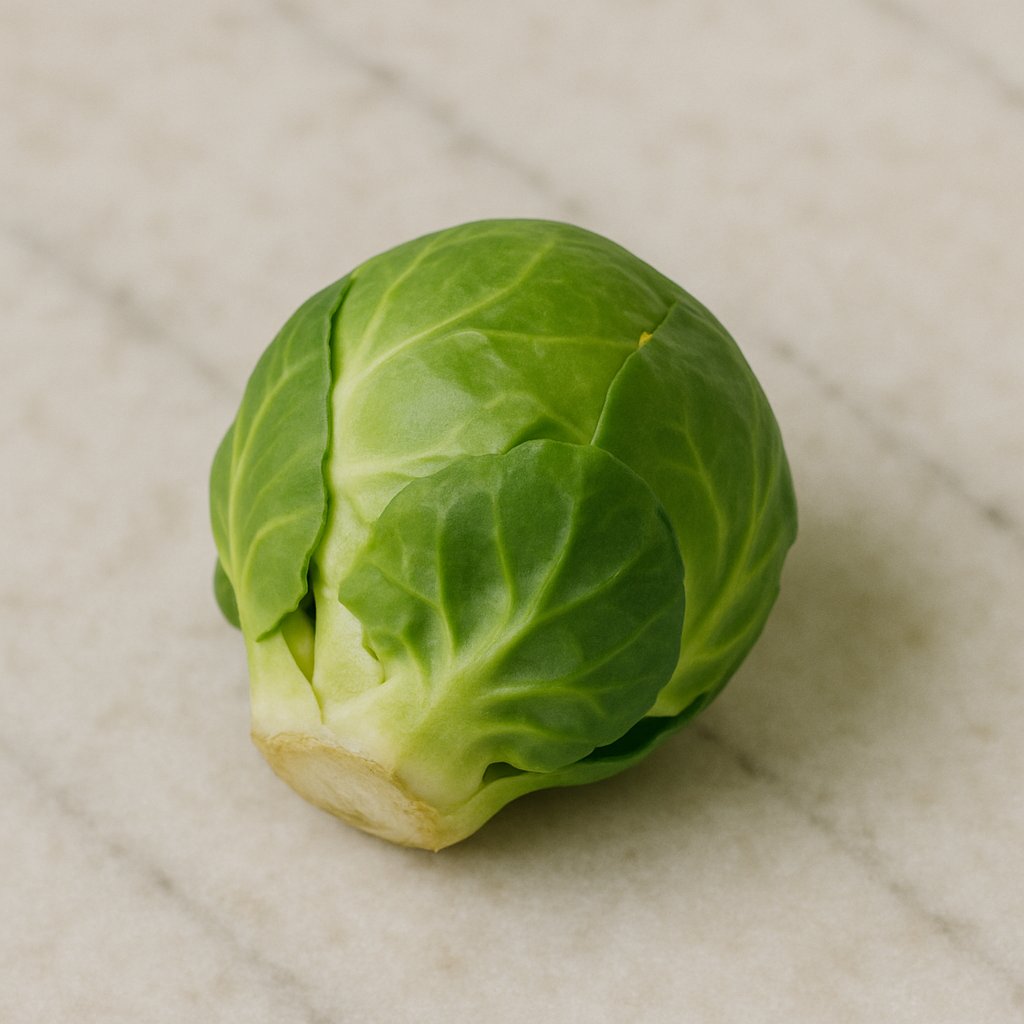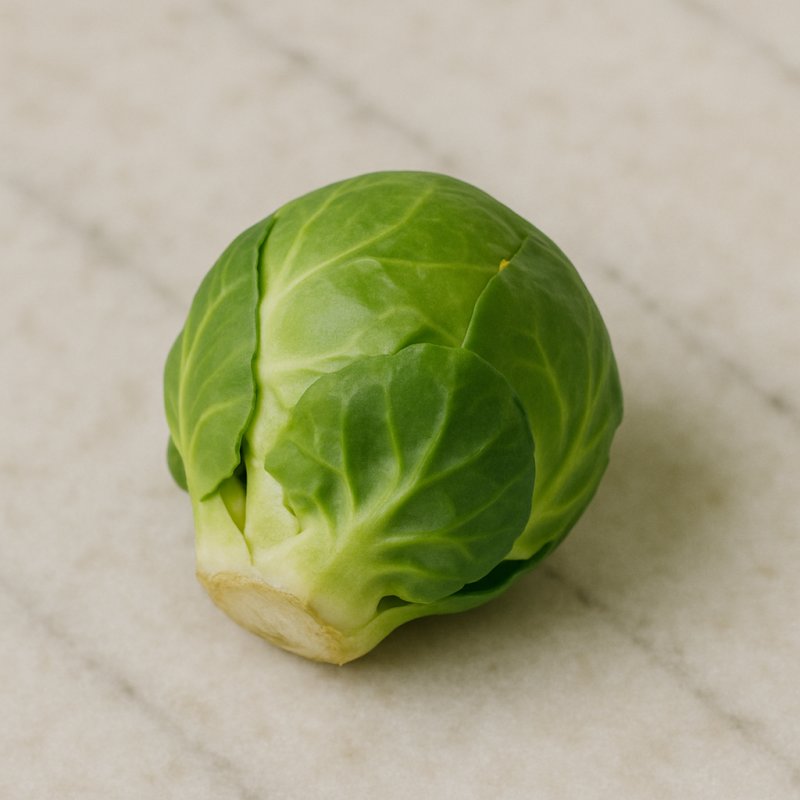
Brussels sprouts, also known as Brussels cabbage, are a small, round vegetable from the large cabbage family. The many mini-cabbage heads grow closely along a tall stalk, like little marbles on a rod. In this section you will learn everything about the availability of Brussels sprouts throughout the year and about the main types, varieties and variants – explained in an easy-to-understand way.
Origin and history
Brussels sprouts originally come from Northwest Europe, especially Belgium. That is also where the name “Brussels cabbage” comes from. They were bred there several hundred years ago because people wanted a vegetable that is fresh from the field even in winter. Today Brussels sprouts are grown in many European countries, for example Germany, the Netherlands, France and Great Britain. They are also cultivated in North America, particularly on cooler coasts. The reason: Brussels sprouts love cool temperatures and even tolerate light frost.
Brussels sprouts originally come from Northwest Europe, especially Belgium. That is also where the name “Brussels cabbage” comes from. They were bred there several hundred years ago because people wanted a vegetable that is fresh from the field even in winter. Today Brussels sprouts are grown in many European countries, for example Germany, the Netherlands, France and Great Britain. They are also cultivated in North America, particularly on cooler coasts. The reason: Brussels sprouts love cool temperatures and even tolerate light frost.
Availability over the year
Brussels sprouts have their main season in autumn and winter. When the days shorten and it gets cooler, they taste best. This is because cold increases the sugar content in the rosettes, making the flavor milder and sweeter.
Brussels sprouts have their main season in autumn and winter. When the days shorten and it gets cooler, they taste best. This is because cold increases the sugar content in the rosettes, making the flavor milder and sweeter.
- Early season (September–October): The first rosettes come from the fields. They are small, crisp and still somewhat bitter.
- Main season (November–December): Now there is especially a lot of regionally grown Brussels sprouts. The cold makes the rosettes more tender and sweeter.
- Late season (January–February): Fresh produce is still available, often from later varieties or from storage. The flavor remains mild as long as it is cool.
- Out of season (March–August): Fresh Brussels sprouts are rare. At that time you will mostly find frozen Brussels sprouts, which have been blanched and frozen immediately after harvest. This way they remain durable for a long time.