Menu & categories

Breadcrumbs

Finely ground breadcrumbs used for coating and binding

Wiki about breadcrumb Nutri-Score D Vegan Yes Gluten-free No Lactose-free Yes Nut-free Yes
NUTRITION / 100 g
365 kcal 13 g Protein 71 g Kohlenhydrate 5 g Fett

Introduction

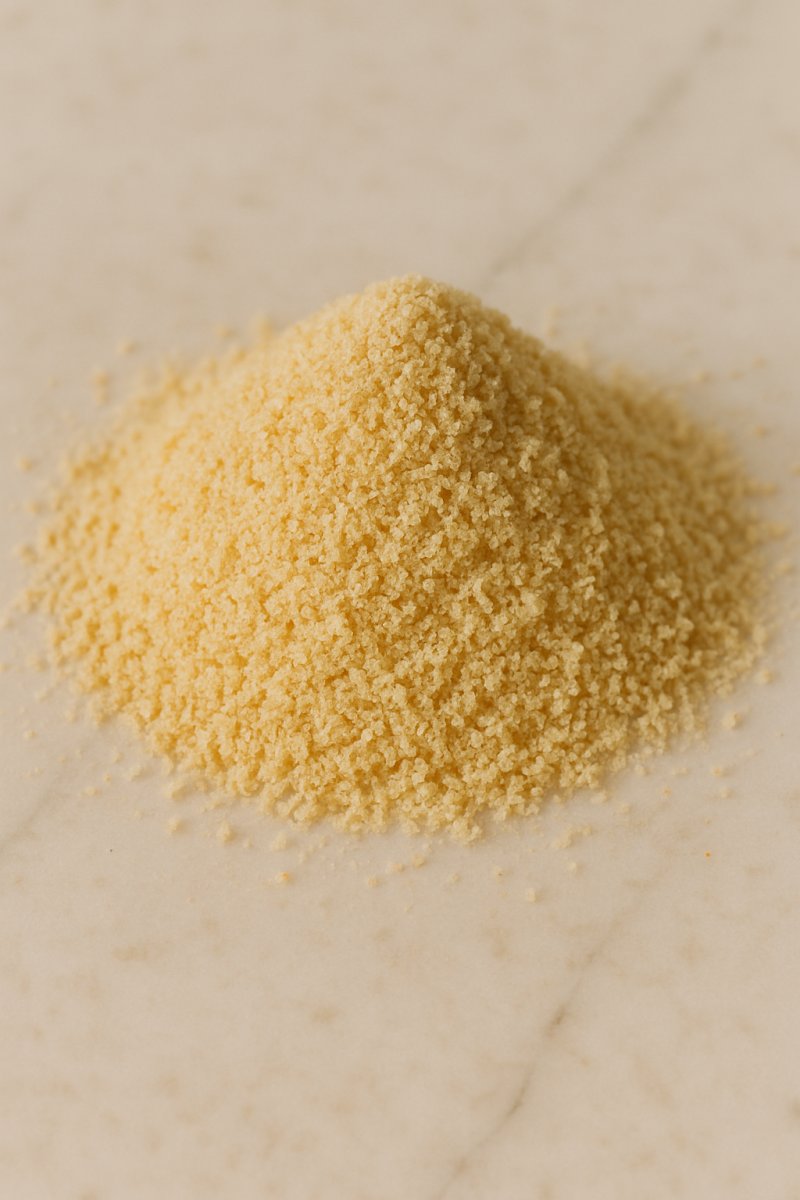
Bowl of light breadcrumbs made from wheat bread
I have a secret fondness for breadcrumbs, that unassuming ingredient that in my kitchen often makes the difference between “pretty good” and “irresistibly crispy.” For me breadcrumbs are more than just a way to use leftovers; they are a universal texture miracle that shines in both sweet and savory recipes. I still remember a rainy Sunday when I spontaneously dried an old loaf in the oven and within an hour, with a pinch of spices, conjured an aromatic topping for roasted vegetables — a simple moment that showed me how transformable breadcrumbs can be.

In my kitchen I use several kinds of breadcrumbs, depending on the desired result. Regular breadcrumbs are the classic choice for even coatings and gratin layers. Panko, those airy Japanese flakes, deliver a feather-light crunch that I especially love with fish or roasted vegetables. Stale bread, coarsely chopped in the blender, makes rustic breadcrumbs with more bite and character. Sometimes I toast them in butter and herbs to give them a nutty, intense flavor — a trick a friend once told me at a village festival.

The uses are surprisingly versatile:

  • Breading: Fish, poultry or vegetables get a crispy crust with breadcrumbs.
  • Fillings: Breadcrumbs bind moisture in meat or vegetable fillings and provide structure.
  • Gratins: Gratins and casseroles acquire a golden, crunchy top thanks to breadcrumbs.
  • Sweet variants: With sugar, cinnamon and butter, breadcrumbs become a delicious crumble for fruit.
A small practical tip I like to share: breadcrumbs absorb flavors very well. So it’s worth experimenting with grated cheese, lemon zest, mustard or chili. Once I had processed too many herbs and quickly bound them with breadcrumbs — the result was a crispy, aromatic crust that went down surprisingly well with guests. Breadcrumbs also freeze very well, so there is always a portion ready when the idea for a last-minute dish strikes.

To me breadcrumbs are a little kitchen miracle: inexpensive, sustainable and incredibly versatile. They turn leftovers into flavor carriers, rescue textures and deliver big impact on the plate with little effort. Every time I scatter a handful of crunchy breadcrumbs over a casserole and pull the golden result from the oven, I feel like a child — and I think this simple ingredient rarely gets the stage it deserves.

Availability & types

Availability and types

What are breadcrumbs?
Breadcrumbs are small, dry crumbs usually made from bread. You can think of them as very fine, dry bread broken into many small pieces. Breadcrumbs are often used to bread schnitzel, fish or vegetables because they form a crispy outer layer.

Origin
Breadcrumbs originally come from bread. When bakers or households do not want to throw away old or dry bread, it is broken down and reused. This way something new is made from old bread. Many countries have a long tradition of reusing leftovers — breadcrumbs are a simple example. Industrial breadcrumbs are made in factories from fresh or baked bread which is then dried and ground.

Production areas (more precisely: producing countries)
Because breadcrumbs are made from bread, there are no “growing regions” like for vegetables. Instead, production locations can be named. Breadcrumbs are produced wherever bread is baked. Large manufacturers are often located in Europe, North America and Asia, because a lot of bread is consumed and processed there. Nearby you can buy breadcrumbs in supermarkets or make them yourself at home from dried bread.

Available types and variants
There are several kinds of breadcrumbs. Here are the main ones, explained simply:

  • Breading breadcrumbs (regular breadcrumbs): These are very fine and are often used for breading so that schnitzels or nuggets become nicely crispy. You can imagine them as a thin, golden blanket around the food.
  • Panko: Panko comes from Japan and is somewhat coarser and flatter than regular breadcrumbs. This makes the coating extra crispy and airy, almost like small flakes. Panko often stays crisper than regular breadcrumbs when fried.
  • Seasoned breadcrumbs: Salt, pepper or herbs are already mixed in. This saves time in cooking because you don’t have to season separately. Imagine the breadcrumbs already having a little spice party built in.
  • Gluten-free breadcrumbs: These are made from gluten-free bread or other ingredients like rice or corn. They are intended for people who cannot tolerate gluten. They can be used just like regular breadcrumbs.
  • Crumbly vs. fine breadcrumbs: Some breadcrumbs are very fine (almost powder), others are coarser. Fine crumbs are good when you want a smooth coating; coarser ones give extra bite.
  • Homemade breadcrumbs: If you dry bread at home and grind it in a blender, you can make your own breadcrumbs. You can choose the bread type and even mix in herbs or cheese.
When are breadcrumbs easy to find?
Breadcrumbs are available in almost every supermarket, bakery or online. If you want a special type like panko or gluten-free breadcrumbs, you will often find them in well-stocked stores or in the organic section. Homemade breadcrumbs are the simplest option: dry an old roll and grind it — done!

Summary
Breadcrumbs are simple, useful crumbs made from bread and available in many variants. Whether fine regular breadcrumbs, airy panko, seasoned or gluten-free — there is a suitable type for every purpose. You can easily buy them in stores or make them yourself, and this ingredient helps to use leftovers and create crispy dishes at home.
Details & nutrition

Property Value
Unit g
Calories per 100 365
Protein per 100 13
Carbohydrates per 100 71
Sugar per 100 5
Fat per 100 5
Saturated fat per 100 1
Monounsaturated fat 2
Polyunsaturated fat 1
Fiber per 100 4
Vitamin C (mg) per 100 0
Vitamin D (IU) per 100 0
Calcium (mg) per 100 80
Iron (mg) per 100 3
Nutri-Score D
CO₂ footprint 0.7
Origin Varies by manufacturer, predominantly Europe
Gluten-free No
Lactose-free Yes
Nut-free Yes
Vegan Yes
Note Breadcrumbs are typically made from dried wheat bread; specialty products may contain additional allergens such as egg or milk.

Technical & scientific information

Breadcrumbs are ground or crushed bread crumbs used in the kitchen as a versatile ingredient and as coating material. In their simplest form breadcrumbs are produced by drying bread and then grinding it into fine or coarser particles. The physical properties vary depending on the source bread, drying degree and milling method and affect application properties such as adhesion, crispness and liquid uptake.

Production and processing
Breadcrumbs are produced industrially or at home. Industrial methods include drying bread leftovers in drying tunnels or hot-air ovens, grinding in roller or hammer mills, and subsequent sieving to classify particle size. For special products breadcrumbs may be treated with spices, oils or yeast before drying. Homemade breadcrumbs result from hardening bread in the oven and crushing it in kitchen machines. Depending on temperature and residence time during drying, physicochemical properties change: higher temperatures lead to darker color and stronger Maillard reaction, which affects flavor and antioxidant compounds.

Chemical composition and constituents
The main components of breadcrumbs largely correspond to the composition of the source bread. Typical proportions are:

  • Carbohydrates: predominantly starch from wheat or other cereal grains; after baking part of the starch is partially modified but remains nutritionally relevant.
  • Proteins: mostly gluten proteins in wheat bread, along with trace amounts of other storage proteins; the protein fraction influences structure and browning during heating.
  • Fats: derive from added fats or seeds in the bread; fat contents are generally low but can be higher in enriched breads.
  • Fibers: depending on the flour type the crude fiber and dietary fiber contents vary; whole grain breadcrumbs contain significantly more indigestible polysaccharides.
  • Minerals and vitamins: trace elements such as sodium, potassium, magnesium and B vitamins are present in small amounts, with industrially fortified breads possibly showing higher levels.
Nutritional values
Nutritional values for breadcrumbs depend on the starting product; energy values typically range from 300–420 kcal per 100 g. The carbohydrate portion accounts for the majority of calories, followed by moderate protein and low fat. Whole grain breadcrumbs provide more fiber and generally higher micronutrient content than those made from white flour. Salt content can vary significantly by recipe and affects both flavor and nutritional assessment.

Functional properties and applications
Breadcrumbs serve in gastronomy as coating, filler, binder and texture provider. Important functional parameters are water absorption, oil binding, particle size and browning behavior. Fine breadcrumbs produce smoother coatings and seal contact surfaces better, while coarser crumbs provide crunchy textures. Breadcrumbs are also used in prepared mixes, gratins, minced meat products and as a topping.

Health aspects and food safety
Breadcrumbs are unsuitable for people with celiac disease or gluten sensitivity if they are made from gluten-containing cereals. In industrial products there is a risk of contamination with molds or their mycotoxins if raw materials or storage conditions are not controlled. Furthermore, Maillard reaction products can form during drying and heating; some contribute to the desired roasted note, others — such as certain advanced glycation end products — are discussed for potential health effects when consumed in high amounts. Salt and fat contents as well as additives like preservatives or flavorings should be considered in processed breadcrumbs, especially for people with specific dietary restrictions.

Storage and shelf life
Dried breadcrumbs stored in a cool, dry and dark place remain stable for several months. Moisture leads to caking, microbial activity and quality loss. Oxygen and light promote oxidative processes in fatty fractions, which is why low-oxygen packaging and protective atmospheres can be used to improve shelf life and sensory quality.

In summary, breadcrumbs are a functionally versatile food with a relatively simple composition whose properties depend strongly on the source bread and processing conditions. For consumers product choice, labeling and storage conditions are important to meet nutritional needs and ensure food safety.

Wiki entry for: breadcrumb
Active now: 18 visitors of which 2 logged-in members in the last 5 minutes