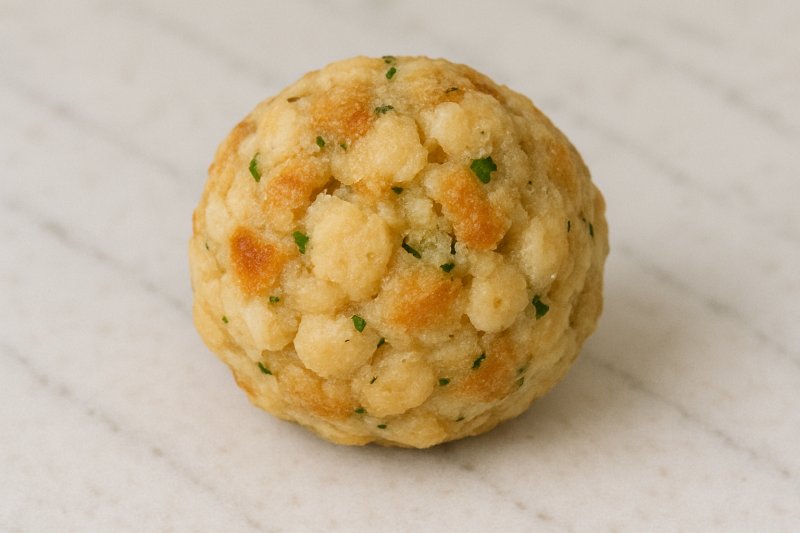
Availability and types of Semmelknödel
Semmelknödel are a traditional side dish from Central Europe, particularly popular in Germany, Austria and parts of the Czech Republic. The name comes from "Semmel," an old word for roll, and "Knödel," which are round dumplings. They were originally invented to reuse stale rolls – so as not to throw bread away. This makes Semmelknödel a very practical and economical dish.
Where do Semmelknödel come from?
Semmelknödel originate in the peasant cuisine of Central Europe. In earlier times many families lived in rural areas and had little – so it was important to use everything available. Leftover, dried bread was crumbled, mixed with milk, eggs and herbs and formed into dumplings. This is how the classic Semmelknödel were created, which are still eaten in many homes and restaurants today.
Semmelknödel originate in the peasant cuisine of Central Europe. In earlier times many families lived in rural areas and had little – so it was important to use everything available. Leftover, dried bread was crumbled, mixed with milk, eggs and herbs and formed into dumplings. This is how the classic Semmelknödel were created, which are still eaten in many homes and restaurants today.
Where are the ingredients grown or produced?
Semmelknödel consist mainly of bread, which is baked from flour. Flour comes from cereals like wheat or rye that grow in fields. These fields exist in many countries, especially in Europe, North America and parts of Asia. Other ingredients such as eggs, milk and herbs often come from local farms: cows provide milk, hens lay eggs, and herbs (parsley, chives) grow in gardens or fields.
Semmelknödel consist mainly of bread, which is baked from flour. Flour comes from cereals like wheat or rye that grow in fields. These fields exist in many countries, especially in Europe, North America and parts of Asia. Other ingredients such as eggs, milk and herbs often come from local farms: cows provide milk, hens lay eggs, and herbs (parsley, chives) grow in gardens or fields.
Available kinds and variants
There are many types of Semmelknödel because families and regions have their own recipes. Here are some simple examples to give you an idea:
There are many types of Semmelknödel because families and regions have their own recipes. Here are some simple examples to give you an idea:
- Classic Semmelknödel: made from stale rolls, milk, eggs, onions and parsley. These are the best known and are often served with meat dishes or sauces.
- Bacon Semmelknödel: small cubes of fried bacon are mixed into the dough. They taste savory and slightly smoky, almost like bread with small pieces of meat.
- Herb dumplings: many fresh herbs such as parsley, chives or marjoram are used. They are particularly aromatic and fresh in flavor.
- Whole grain or rye Semmelknödel: darker bread is used instead of white wheat bread. This variant is a bit heartier and has more bite.
- Vegan or dairy‑free variants: for people who do not eat milk or eggs there are recipes with plant milks (e.g. oat milk) and binding alternatives such as mashed potatoes or flour. They work similarly but may feel a bit softer.
- Ready‑made dumplings from the supermarket: Semmelknödel can also be bought ready – fresh packed, frozen or as a mix to prepare at home. These are practical when you want to prepare something quickly.
What to watch for when buying
When you buy Semmelknödel you can consider: do you want handmade or packaged dumplings? Do you prefer light or dark variants, with or without bacon? Fresh or frozen dumplings often taste best, while ready mixes are convenient. At markets or farm shops you often find regional varieties that are especially traditionally prepared.
When you buy Semmelknödel you can consider: do you want handmade or packaged dumplings? Do you prefer light or dark variants, with or without bacon? Fresh or frozen dumplings often taste best, while ready mixes are convenient. At markets or farm shops you often find regional varieties that are especially traditionally prepared.
In summary: Semmelknödel are simply made dumplings from bread that originated in the frugal cuisine of Central Europe. They are widely available in regions with cereal cultivation and come in many variants – classic, with bacon, with herbs, made from dark bread or even vegan. This makes them a tasty and versatile side dish for many meals.
