Menu & categories

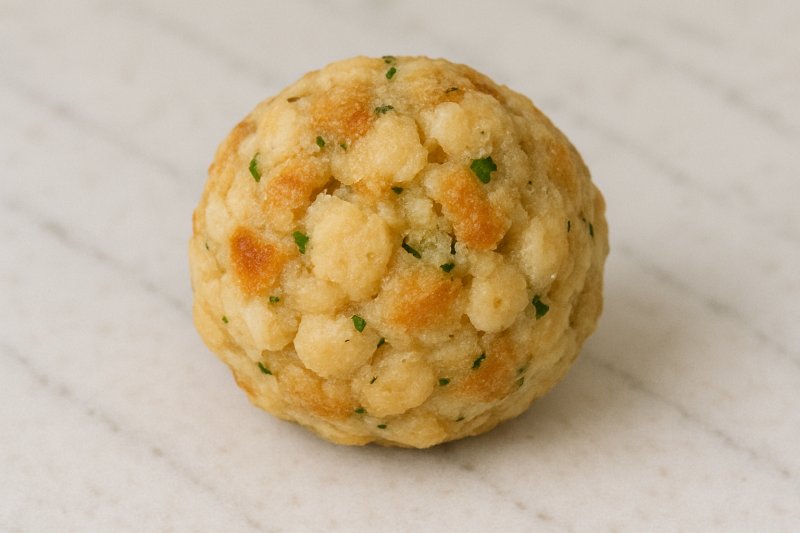
Bread dumplings (Semmelknödel)

Classic side dish made from bread, egg and milk

Wiki about bread dumpling Nutri-Score D Vegan No Gluten-free No Lactose-free No Nut-free Yes
NUTRITION / 100 g
190 kcal 7.0 g Protein 28.0 g Kohlenhydrate 5.0 g Fett

Introduction

A plate with classic bread dumplings
I have a particular weakness for simple things that still carry heart and memories – and Semmelknödel definitely belong to that group. For me they are not merely a side dish, but a small culinary memory: bread that becomes something warm, creamy and comforting. I still remember a rainy Sunday when a neighbor brought me a bowl; the scent of browned onion and parsley was almost like a hug.

What makes Semmelknödel so likeable is their down‑to‑earth nature. They are usually made from stale white rolls, milk, eggs and seasonings, sometimes refined with herbs or bacon. Preparation is uncomplicated, but it requires a feel for consistency: too firm and the dumplings become tough; too loose and they fall apart. Once at a family dinner I tried to calculate the amount generously – my colleague laughed when I later explained that dumplings needed "emotional space" to rise.

The charm lies in the variety. There are regional variants ranging from delicate to rustic. Some prefer airy dumplings, others like them denser and more robust. I like them when they are lightly fried on the outside and stay moist inside. The first time I experimented myself, I added a little nutmeg and freshly chopped parsley; it was a small aha moment that lifted the flavor to a new level.

Semmelknödel are also wonderfully practical: they can be prepared in advance, frozen and reheated quickly later without losing much quality. That is a blessing on hectic days. I often keep a few frozen dumplings on hand that in no time turn into a filling meal, accompanied by a hearty mushroom sauce or, classically, roast jus.

  • Simplicity: basic ingredients are usually available.
  • Versatility: pairs with vegetables, mushrooms, meat or vegetarian sauces.
  • Comfort factor: brings warmth and satiety on cool days.
In the end Semmelknödel are a small ritual for me: kneading, shaping, the quiet simmering in the pot and then eating together. They connect generations and seasons, invite sharing and storytelling. When I have guests today, it is very likely that somewhere on the table there is a plate of steaming dumplings – and usually that bowl is the first to be emptied.

Availability & types

Availability and types of Semmelknödel

Semmelknödel are a traditional side dish from Central Europe, particularly popular in Germany, Austria and parts of the Czech Republic. The name comes from "Semmel," an old word for roll, and "Knödel," which are round dumplings. They were originally invented to reuse stale rolls – so as not to throw bread away. This makes Semmelknödel a very practical and economical dish.

Where do Semmelknödel come from?
Semmelknödel originate in the peasant cuisine of Central Europe. In earlier times many families lived in rural areas and had little – so it was important to use everything available. Leftover, dried bread was crumbled, mixed with milk, eggs and herbs and formed into dumplings. This is how the classic Semmelknödel were created, which are still eaten in many homes and restaurants today.

Where are the ingredients grown or produced?
Semmelknödel consist mainly of bread, which is baked from flour. Flour comes from cereals like wheat or rye that grow in fields. These fields exist in many countries, especially in Europe, North America and parts of Asia. Other ingredients such as eggs, milk and herbs often come from local farms: cows provide milk, hens lay eggs, and herbs (parsley, chives) grow in gardens or fields.

Available kinds and variants
There are many types of Semmelknödel because families and regions have their own recipes. Here are some simple examples to give you an idea:

  • Classic Semmelknödel: made from stale rolls, milk, eggs, onions and parsley. These are the best known and are often served with meat dishes or sauces.
  • Bacon Semmelknödel: small cubes of fried bacon are mixed into the dough. They taste savory and slightly smoky, almost like bread with small pieces of meat.
  • Herb dumplings: many fresh herbs such as parsley, chives or marjoram are used. They are particularly aromatic and fresh in flavor.
  • Whole grain or rye Semmelknödel: darker bread is used instead of white wheat bread. This variant is a bit heartier and has more bite.
  • Vegan or dairy‑free variants: for people who do not eat milk or eggs there are recipes with plant milks (e.g. oat milk) and binding alternatives such as mashed potatoes or flour. They work similarly but may feel a bit softer.
  • Ready‑made dumplings from the supermarket: Semmelknödel can also be bought ready – fresh packed, frozen or as a mix to prepare at home. These are practical when you want to prepare something quickly.
What to watch for when buying
When you buy Semmelknödel you can consider: do you want handmade or packaged dumplings? Do you prefer light or dark variants, with or without bacon? Fresh or frozen dumplings often taste best, while ready mixes are convenient. At markets or farm shops you often find regional varieties that are especially traditionally prepared.

In summary: Semmelknödel are simply made dumplings from bread that originated in the frugal cuisine of Central Europe. They are widely available in regions with cereal cultivation and come in many variants – classic, with bacon, with herbs, made from dark bread or even vegan. This makes them a tasty and versatile side dish for many meals.

Details & nutrition

Property Value
Unit g
Average weight per piece 80
Calories per 100 190
Protein per 100 7.0
Carbohydrates per 100 28.0
Sugar per 100 2.5
Fat per 100 5.0
Saturated fat per 100 2.2
Monounsaturated fat 1.7
Polyunsaturated fat 0.7
Fiber per 100 2.0
Vitamin C (mg) per 100 0.0
Vitamin D (IU) per 100 20
Calcium (mg) per 100 60
Iron (mg) per 100 1.5
Nutri-Score D
CO₂ footprint 1.8
Origin Central Europe
Gluten-free No
Lactose-free No
Nut-free Yes
Vegan No
Note Nutritional values for classic water‑cooked bread dumplings based on wheat rolls, eggs, milk and butter; recipe-dependent variations possible.

Technical & scientific information

Semmelknödel are a traditional Central European side dish based on stale rolls (Semmeln) and are considered both culinarily and nutritionally a simple source of starch and protein. Classically Semmelknödel consist of diced or grated rolls, liquid (milk and/or water), eggs, fat (butter or lard) and seasonings; optionally onions, parsley or bacon are added. The preparation relies on physical‑chemical processes such as starch swelling, protein coagulation and gel formation through starch‑water interactions, which together create the firm yet elastic structure of the dumpling.

Composition and ingredients: The main components are carbohydrates (predominantly starch from wheat flour in the roll), proteins (gluten, milk and egg proteins), lipids (added fat and to a lesser extent from the roll), water and small amounts of minerals and vitamins. Dried bread crumbs contain about 60–75% carbohydrates, 8–12% protein and 3–6% fat, with exact composition depending on roll type and additives. Eggs provide albumin and lipoproteins which, upon heating, promote coagulation and strengthen structural binding.

Nutritional values (typical per 100 g of prepared Semmelknödel):

  • Energy: approximately 150–230 kcal, depending on fat content and the ratio of bread to egg/milk.
  • Macronutrients: 20–30 g carbohydrates, 4–8 g protein, 3–10 g fat.
  • Fiber and micronutrients: moderate fiber content, small amounts of calcium, phosphorus, iron and B vitamins from the grain.
Physicochemical processes during preparation: When soaking the bread cubes, starch particles absorb water and swell, forming a cohesive matrix system. The addition of eggs provides proteins that denature during heating and form a network that binds moisture and increases mechanical stability. Fats act as plasticizers, reduce local water activity and influence mouthfeel. Salt and acids (e.g. from milk) alter protein functionality and can modulate gas formation during cooking, affecting porosity.

Processing methods: Common practice is shaping by hand or with ring molds, followed by cooking in simmering water (poaching) or steaming. Important process parameters are dough moisture, temperature during cooking (typically 80–100 °C at the water surface) and cooking time (15–30 minutes depending on size). Excessive dough moisture leads to soft, disintegrating dumplings; too dry mixes yield compact, crumbly structures. Industrial production uses standardized mixing and forming methods, temperature monitoring and pasteurization of raw ingredients for product safety.

Sensory properties and structure: The desired texture is firm outside, soft and porous inside. The pores form by steam expansion and trapped air during cooking. Flavor is largely influenced by Maillard reactions in used toasted bread residues, the presence of fat and onions and the seasonings. Surface color remains relatively pale during classic cooking, as no strong browning occurs.

Health aspects: Semmelknödel are unsuitable for people with celiac disease or gluten intolerance, since wheat starch and gluten are the main components. The glycemic index is moderate to high, depending on starch content and fat/protein additions, so blood sugar rise should be considered in sensitive individuals. Using whole grain rolls or adding fiber‑rich ingredients can improve nutritional value. With high fat addition or pairing with very fatty sauces, energy density increases significantly, which is relevant for calorie‑conscious diets.

Shelf life and food safety: Freshly prepared Semmelknödel are sensitive to microbial contamination, especially if left at room temperature for a long time before cooking. Cooling and rapid cooking reduce the risk. Industrial products are often pasteurized or offered frozen to prevent spoilage. Allergen labeling is important because of gluten, milk and eggs.

Overall, Semmelknödel represent a technically simple but chemically well‑understood combination of starch swelling, protein network formation and fat modification that leads to their characteristic texture and nutritional composition. Variations in recipe and process allow adjustments to nutritional requirements and sensory preferences, while hygiene and allergen labeling measures should always be observed.

Wiki entry for: bread dumpling
Active now: 12 visitors of which 2 logged-in members in the last 5 minutes