Menu & categories

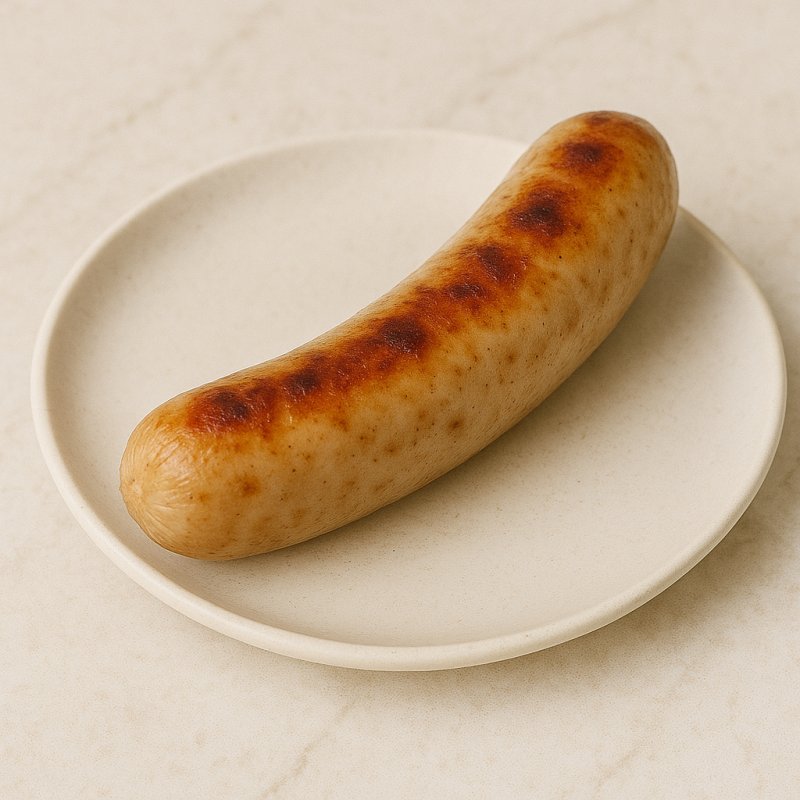
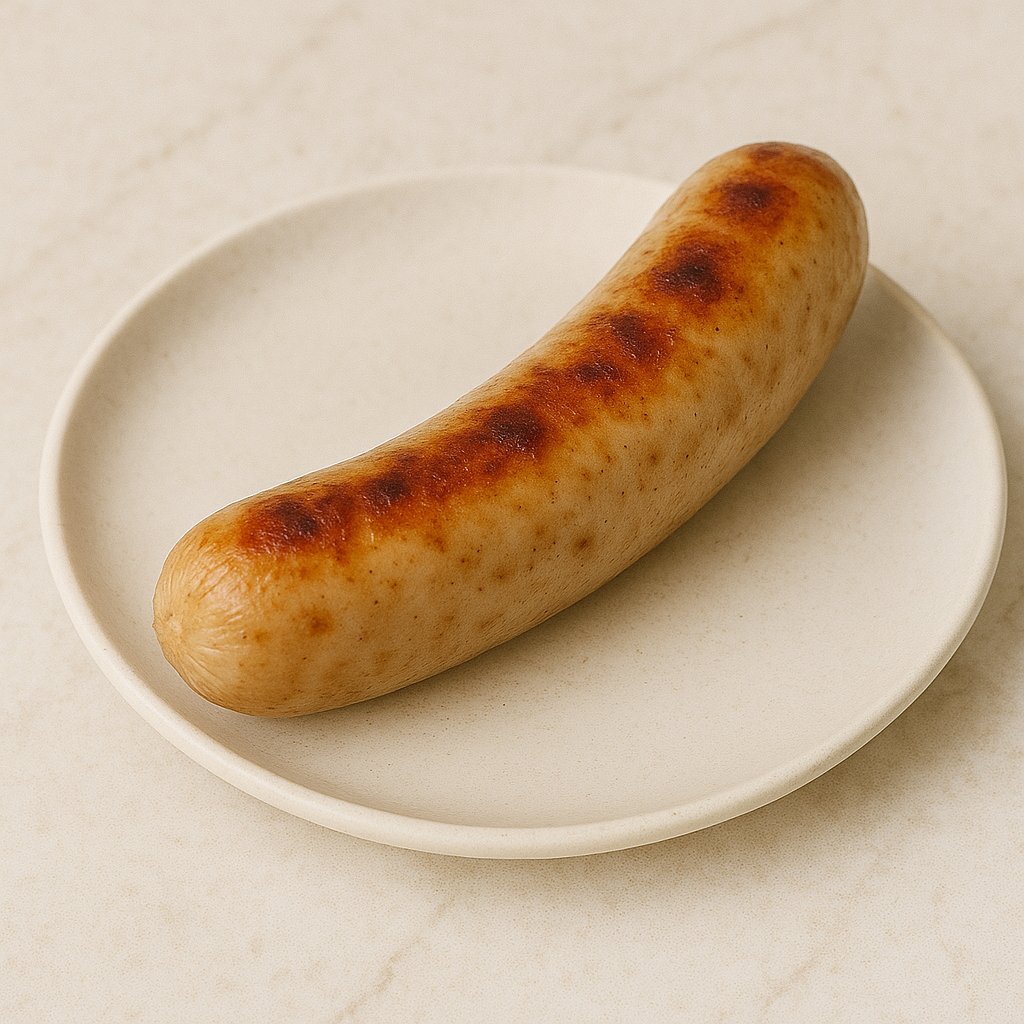
Bratwurst

Hearty, seasoned sausage made from meat, usually pork

Wiki about bratwurst Nutri-Score D Vegan No Gluten-free No Lactose-free Yes Nut-free Yes
NUTRITION / 100 g
270 kcal 14 g Protein 1 g Kohlenhydrate 24 g Fett

Introduction

Raw and fried bratwursts on a wooden board
I have a secret relationship with the bratwurst, and no, it is not just a quick snack from the market stall. For me the bratwurst is a piece of culture that manifests itself in taste, smell and memory. I still remember a rainy autumn market where the scent of bratwursts hung in the air like a promise; a colleague of mine insisted that the best bratwurst always comes when the fire is a little unpredictable.

The bratwurst is amazingly versatile and ranges from coarsely spiced, hearty-peppery varieties to fine, mildly seasoned ones. I particularly appreciate the simple art of preparation: good heat, patience and a sensitive eye for the right browning. Once I experimented while grilling and noticed the casing beginning to crackle — that moment is for me the culinary equivalent of an applause.

I also love the regional differences. In some areas marjoram dominates, elsewhere garlic plays the leading role. There are versions with veal, with pork or even with beef, and increasingly I discover vegetable and seitan alternatives that try to imitate the savory texture. A friend once surprised me with a bratwurst made from goat meat; I was skeptical, but was proved wrong.

  • Taste: robust, spicy, often smoky
  • Preparation: grilling, frying, gentle simmering
  • Sides: sauerkraut, mustard, potato salad or simply fresh bread
What fascinates me again and again is how the bratwurst sparks conversations. Whether at a street festival or at Sunday roast at home: it brings people together. I remember an evening when a heated discussion about the best type of mustard ended with sharing a bratwurst — as if sausages had diplomatic skills.

For me the bratwurst remains a culinary companion that faithfully adheres to classic techniques while leaving room for creativity. It is down-to-earth, convivial and surprisingly adaptable, and every time I slice one and the juice shines inside, I am convinced: it is worth paying attention to this simple but great ingredient.

Availability & types

Availability and types

The bratwurst is a very common sausage that you can find almost everywhere in Germany and in many other countries as well. It is not grown like vegetables but produced: pieces of meat are finely minced, mixed with spices and stuffed into a casing. Nevertheless, one can say that the "origin" of bratwurst is linked to certain regions and traditions.

Origin
Many types of bratwurst have their roots in specific regions. For example, the Nürnberger Rostbratwurst comes from Nuremberg, the Thüringer Rostbratwurst from Thuringia and the Schwäbische Bratwurst from southern Germany. Each region has its own way of seasoning the sausage and how thick or thin it is. You can imagine it like different people who all have the same cake recipe but use different spices or shapes — the result then tastes a little different.

Growing areas (better: production areas)
Because bratwurst is made from meat, we speak of production areas rather than cultivation. Many butchers and meat producers across Germany and Europe produce bratwurst. In rural areas, where more animals are kept, there are often small butcher shops using traditional recipes. Large manufacturers produce bratwursts in factories and supply them to supermarkets. At weekly markets or local festivals you often find handmade bratwursts with regional character.

Available types and variants
There are many different kinds of bratwurst. Here are some of the most common, simply explained:

  • Nürnberger Rostbratwurst: Small and thin, therefore several pieces are grilled together. It is spicy because marjoram (an herb) is often used.
  • Thüringer Rostbratwurst: Longer and a bit thicker, with a hearty flavor. Often grilled over an open fire.
  • Schwäbische Bratwurst: Finer in taste, sometimes milder and seasoned with different herbs.
  • Pork bratwurst: The classic variant, usually juicy and fattier in taste.
  • Beef bratwurst: Somewhat leaner and firmer. For people who want to eat less fat.
  • Poultry bratwurst (e.g. chicken): Lighter in taste and less fatty.
  • Vegetarian or vegan bratwursts: These are made from plants, for example from soy, peas or seitan (a wheat protein). They are meant to taste like bratwurst but contain no meat.
In addition there are sausages with special ingredients, e.g. filled with cheese, with garlic, with paprika or with hot spices. Sometimes regional ingredients are also added, like beer in some recipes or special herbs.

How easy are they to get?
Bratwursts are easy to find: supermarkets, snack bars, weekly markets, beer tents and butcher shops sell them. Some specialty types are only available locally (that is, only in one region), while standard types are sold throughout Germany. If you want to try a special variety, it's worth visiting the local butcher or market — there you often get fresh bratwursts with genuine artisanal flavor.

In summary: bratwursts exist in many regions with different recipes. They are easy to find in everyday life, and there are variants for different tastes — from classic meaty to plant-based alternatives. So there is something for almost everyone.
Details & nutrition

Property Value
Unit g
Average weight per piece 100
Calories per 100 270
Protein per 100 14
Carbohydrates per 100 1
Sugar per 100 0.5
Fat per 100 24
Saturated fat per 100 9
Monounsaturated fat 11
Polyunsaturated fat 2
Fiber per 100 0
Vitamin C (mg) per 100 0
Vitamin D (IU) per 100 40
Calcium (mg) per 100 15
Iron (mg) per 100 1.4
Nutri-Score D
CO₂ footprint 5.0
Origin Varies by manufacturer, often Germany or the EU
Gluten-free No
Lactose-free Yes
Nut-free Yes
Vegan No
Note Nutritional values refer to an average raw pork bratwurst; exact values may vary depending on recipe, fat content, and manufacturer.

Technical & scientific information

Bratwurst refers to a widespread, mostly coarse sausage product that is traditionally made from finely chopped or coarsely ground pork, beef or a mixture thereof. The composition varies considerably by region; classic German variants typically include, in addition to muscle meat, lard portions to improve texture, salt and spices such as pepper, nutmeg, marjoram or caraway. Ingredients and processing aim to produce a binding emulsion or a stable meat batter structure that retains shape and juiciness when heated.

Chemical composition and nutritional values
Bratwurst consists mainly of water and protein (mainly myofibrillar proteins such as myosin and actin) as well as lipids, which are responsible for flavor and mouthfeel. Typical macronutrient distribution depends on the recipe and is about 12–25 g protein, 20–35 g fat and under 5 g carbohydrates per 100 g product; the energy content is usually between 200 and 350 kcal/100 g. In addition to the main nutrients, bratwurst contains minerals such as sodium (due to the addition of table salt), phosphate from meat as well as iron and zinc that occur naturally in meat. Micronutrients like B vitamins (especially B12 and niacin) are also present.

Function of the ingredients
Salt serves several purposes: flavor enhancement, protein cross-linking for better water binding and inhibition of unwanted microorganisms. Fat acts as a flavor carrier and influences juiciness; the distribution between intramuscular fat and added lard affects texture and melting behavior. Spices provide volatile aroma compounds that are altered during heating, and antioxidants that can reduce lipid oxidation. Stabilizers or phosphates are used industrially to improve water binding and batter stability.

Processing methods
Production includes the comminution of the meat, grinding and mixing with salt, spices and fat, subsequent kneading or mincing to form the matrix and stuffing into casings. Industrial processes use cooling or ice to prevent temperature rise during kneading, since excessive heat promotes protein inactivation. Some bratwursts undergo subsequent ripening or smoking, which additionally modifies microbiological and aromatic properties. Heating during frying or grilling leads to protein denaturation, Maillard reactions between amino acids and reducing sugars as well as lipid oxidation — processes that decisively shape color, aroma and texture.

Food safety and health aspects
Essential safety aspects concern the microbiological load of raw sausages and the control of pathogens such as Salmonella or Listeria. Sufficient heating (core temperature usually ≥70 °C) inactivates most pathogens. Processing and storage conditions are critical for risk; refrigeration slows the growth of unwanted microorganisms. From a health perspective, the relatively high fat content should be noted, especially with regular consumption; saturated fatty acids can affect cardiovascular risk. Processed meat products have been classified by international health organizations in relation to an increased risk for certain cancers, with dose, frequency of consumption and preservation methods playing a role. Nitrite curing salts, which are used for preservation and color retention, prevent the growth of Clostridium botulinum but can, when used improperly, contribute to the formation of nitrosamines; modern production techniques aim to minimize such by-products.

Sensory and technological challenges
Desired firmness, bite and juiciness depend on the particle size of the meat, the amount and distribution of fat and the degree of protein cross-linking. Technologists balance water binding and fat content against sensory preferences and shelf life. Reducing fat or salt and substituting with plant proteins are current trends that require technological adjustments such as emulsifiers, texture modifiers and modified processing steps.

In summary, bratwurst is a complex food whose properties are determined by composition, physical structures and processing steps. Control of raw material quality, processing temperatures and microbiological hygiene is crucial for safety and sensory quality, while nutritional and health aspects should be considered in product development and consumption.

Wiki entry for: bratwurst
Active now: 20 visitors of which 2 logged-in members in the last 5 minutes