Menu & categories

Brandy

Aromatic brandy with a high alcohol content.

Wiki about brandy Nutri-Score E Vegan Yes Gluten-free Yes Lactose-free Yes Nut-free Yes
NUTRITION / 100 ml
235 kcal 0.0 g Protein 0.0 g Kohlenhydrate 0.0 g Fett

Introduction

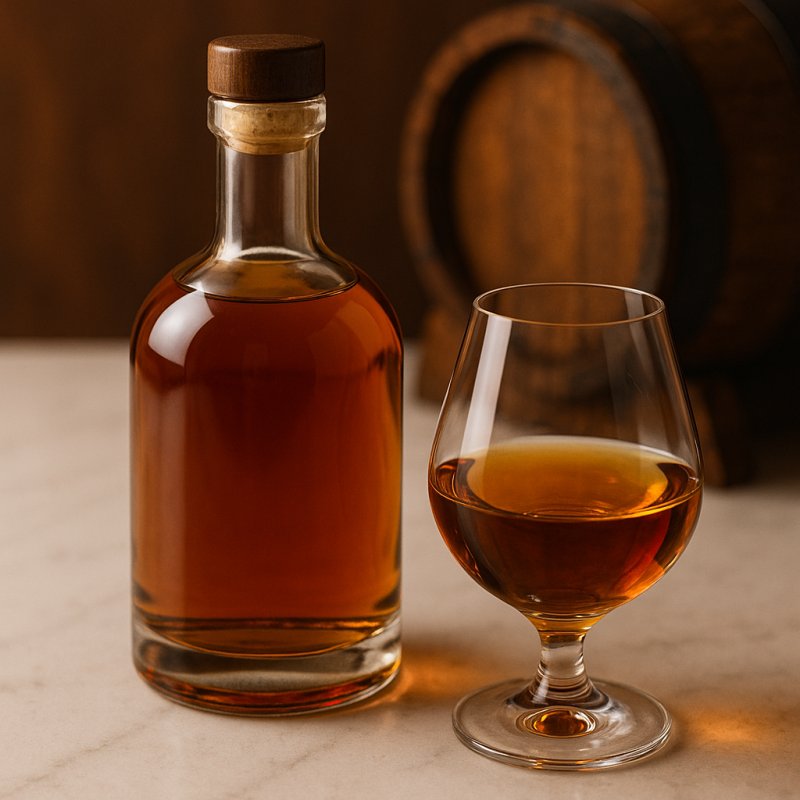
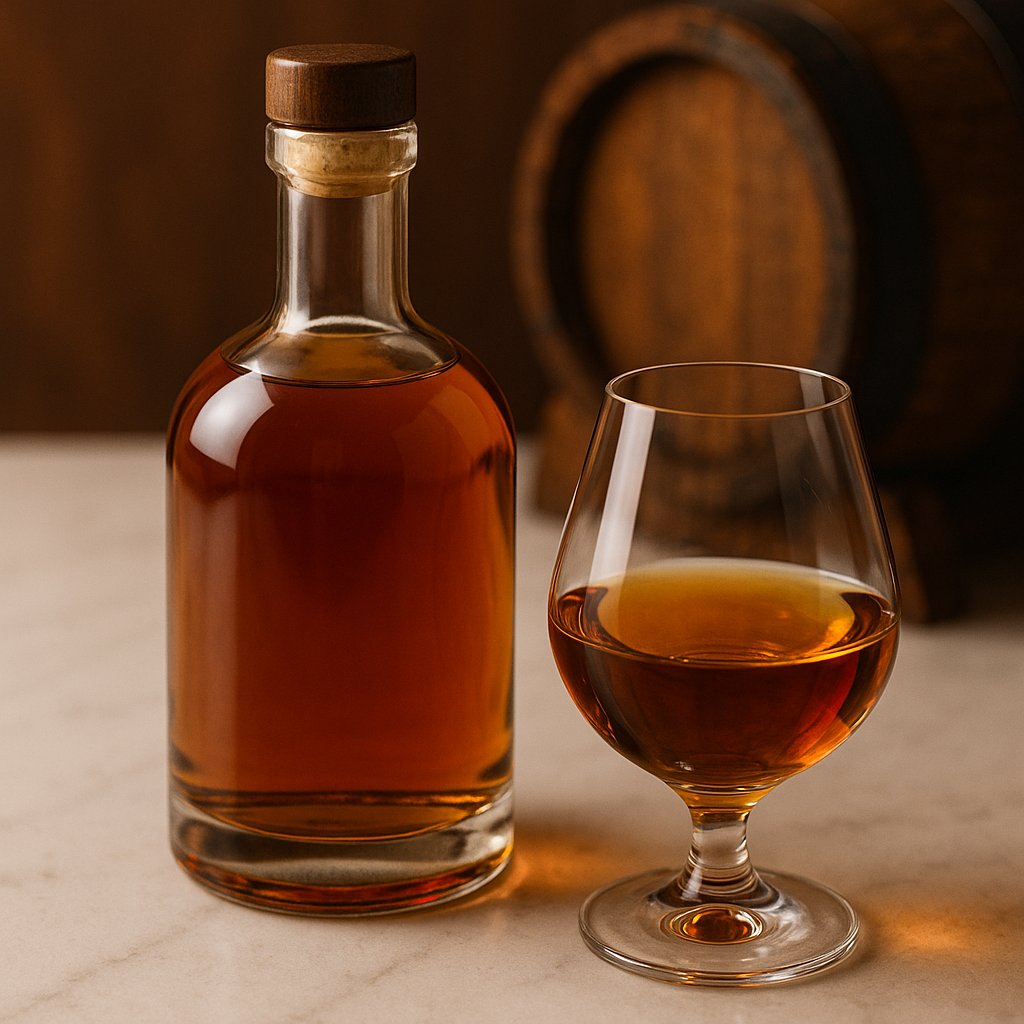
Glass with brandy
Brandy feels to me both familiar and adventurous. When I hear the word, I see dark wooden casks, steaming stills and small shiny bottles on an old market stall in front of me. Brandy is a collective term for distilled beverages obtained from wine or fermented fruit. It can smell delicately of fruit, be warm and spicy on the palate, or carry smoky oak notes, depending on how it was made and aged.

I still remember a winter afternoon when I stood in a small distillery and the master distiller explained the differences to me. He held up a glass and said dryly, "This is brandy, and no, this is not something to knock back in large gulps." I laughed, tasted it, and was surprised at how much finesse there was in that seemingly rustic liquid.

It is important to know that there are different variants. Wine brandy is made from distilled wine and often matures in oak, taking on vanilla and caramel notes. Fruit brandies like cherry or pear brandy concentrate the fruity aromas of the respective fruit. In fine patisserie and kitchens brandy is often used because it binds flavors, caramelizes and develops a beautiful heat when flambéed.

  • For cooking: Brandy gives sauces and desserts depth and makes fruit shine.
  • For drinking: Enjoy in small sips, ideal after a meal.
  • For storing: Store protected from light and upright; opened bottles slowly lose aroma.
A colleague of mine swears by adding a few drops of brandy to baked apples, and since then I do that at home too. Another friend uses it to refine chocolate sauces. Whether as a digestif, in a sauce, or as a little secret in a cake recipe: brandy is a versatile companion in the kitchen and at the bar. I think it should be approached with some curiosity, use your nose and remember that behind every glass there is a story of fruit, craftsmanship and patience.

Availability & types


Availability and types of brandy are easy to understand if you imagine them like different kinds of juice, except they contain alcohol. Brandy is a beverage produced by distilling fermented fruit or wine. It is popular in many countries and is used both for drinking and as an ingredient in cooking. Important: brandy is alcoholic and intended for adults only.

Origin
Brandy originally comes from regions where lots of fruit or wine are produced. The idea is to obtain a stronger liquid from wine or fermented fruit. Countries with long traditions include France (Cognac, Armagnac), Spain (Brandy de Jerez), Italy (Grappa) and Germany (wine brandy and fruit brandies). Each region has its own way of producing and aging brandy, so it tastes different.

Growing areas
Brandy itself does not grow on trees – the fruits or grapes used to make it do. Important growing areas include:

  • France: cultivation of grapes in areas like Cognac or Armagnac.
  • Spain: wine regions that produce Brandy de Jerez.
  • Italy: grapes and pomace for grappa, often in northern regions.
  • Germany and Central Europe: fruit such as apples, pears or cherries for fruit brandies.
Available types and variants
Brandy exists in many variants. You can think of them like different ice cream flavors: they are all ice cream but with different tastes. Here are some simple examples:

  • Wine brandy/Brandy: made from wine; mild and often aged in casks. Examples: brandy, wine brandy.
  • Cognac: a particular type of brandy from a specific area in France. Cognac is made according to strict rules.
  • Armagnac: also French, often a bit more robust in taste.
  • Grappa: from Italy, made from pomace. It can sometimes taste more pungent.
  • Fruit brandies: made from apples, pears, cherries or plums. Examples are cherry brandy or fruit schnapps.
  • Calvados: an apple brandy from Normandy (France), tasting of apples.
  • Aged varieties: some brandies are aged for a long time in wooden barrels. This changes color and flavor – similar to aged cheese becoming more intense.
Where can you get brandy?
Brandy can be found in supermarkets with a spirits section, in specialized beverage shops, from winemakers or online. There are inexpensive bottles for cooking and more expensive bottles for special occasions. If you need brandy as an ingredient, a simple wine brandy is often sufficient; for special recipes or gifts one sometimes chooses Cognac or Calvados.

In short: brandy is versatile, comes from regions with plenty of fruit or wine, and is available in many varieties – from mild to robust, from young to long-aged. Always remember that brandy is an alcoholic beverage and for adults only.
Details & nutrition

Property Value
Unit ml
Average weight per piece 30
Calories per 100 235
Protein per 100 0.0
Carbohydrates per 100 0.0
Sugar per 100 0.0
Fat per 100 0.0
Saturated fat per 100 0.0
Monounsaturated fat 0.0
Polyunsaturated fat 0.0
Fiber per 100 0.0
Vitamin C (mg) per 100 0
Vitamin D (IU) per 100 0
Calcium (mg) per 100 0
Iron (mg) per 100 0.0
Nutri-Score E
CO₂ footprint ca. 0.15 kg CO2e/100 ml
Origin Depends on the producer (often EU, e.g. France/Spain)
Gluten-free Yes
Lactose-free Yes
Nut-free Yes
Vegan Yes
Note Typical alcohol content approx. 36–40% vol; nutritional values may vary slightly depending on brand/alcohol strength.

Technical & scientific information

Brandy (often also called distilled spirit) is an alcoholic distillate obtained by fermenting suitable raw materials and subsequent distillation. As a product group, brandy includes grain spirits, fruit brandies, wine brandies (brandy), pomace brandies and neutral spirits. Typical alcohol contents lie in the range of about 35–60 % by volume, depending on raw material, distillation method and legal classification.


Chemical composition

  • The main component is ethanol (C2H5OH), responsible for energy density and psychoactive effect.
  • Water makes up the largest part of the remaining matrix. Additionally present in varying amounts are: higher alcohols (fusel oils such as propanol, butanol), methanol, aldehydes (e.g. acetaldehyde), ketones, fatty acid esters (fruity aromas), phenols and organic acids.
  • Traces of sugars, minerals and volatile aroma compounds shape aroma and mouthfeel, but are present in small quantities.

Production and processing methods

  • Fermentation: sugars or starchy raw materials are converted by yeasts into ethanol and CO2. Substrates range from grapes through stone and pip fruit to cereals.
  • Distillation: separation occurs according to boiling points and volatility. In pot stills (copper stills) typical round aromas are produced; column stills enable higher purity and alcohol strengths. During distillation fractions are distinguished: heads (contain among others methanol and volatile unwanted compounds), heart (desired ethanol fraction) and tails (less volatile components).
  • Aging and maturation: some brandies are matured in wooden barrels, where wood extracts (e.g. lignin breakdown to vanillin, wood lactones) as well as oxidation and esterification processes change flavor, color and texture.
  • Finishing: proofing (dilution), filtration, possibly addition of colorants or sugar (depending on product category) and quality controls are final steps.

Analytics

Chemical characterization uses gas chromatography–mass spectrometry (GC–MS) for volatile aroma compounds and congeners, as well as gas chromatography or ebullioscopy for determining ethanol content. Heavy metal and residue analyses are performed using ICP or HPLC methods.

Nutritional values and calories

Ethanol provides about 7 kcal (≈29 kJ) per gram. A 100-ml glass of a 40 % vol. spirit contains roughly 31.5 g ethanol and thus about 220 kcal. Brandy provides practically no usable macronutrients besides alcohol calories.

Health aspects

  • Alcohol is a psychoactive, potentially addictive substance. Short-term it leads to intoxication; long-term to liver disease, cardiovascular problems and neurological damage.
  • The International Agency for Research on Cancer (IARC) classifies alcohol as carcinogenic; even moderate consumption increases cancer risk.
  • Particular risks exist with consumption during fetal development (fetal alcohol syndrome), and from methanol poisonings after consuming contaminated or illegally produced spirits.
From a technical viewpoint brandy is a complex mixture of simple and complex organic compounds, whose sensory and toxicological properties strongly depend on raw material choice, microbial fermentation, distillation management and aging. Appropriate quality controls and proper production are decisive to promote desired aromas and minimize health risks.

Wiki entry for: brandy
Active now: 24 visitors of which 2 logged-in members in the last 5 minutes