Menu & categories

Blueberry juice

Refreshing juice made from juicy blueberries

Wiki about blueberry juice Nutri-Score B Vegan Yes Gluten-free Yes Lactose-free Yes Nut-free Yes
NUTRITION / 100 ml
60 kcal 0.5 g Protein 14 g Kohlenhydrate 0.1 g Fett

Introduction

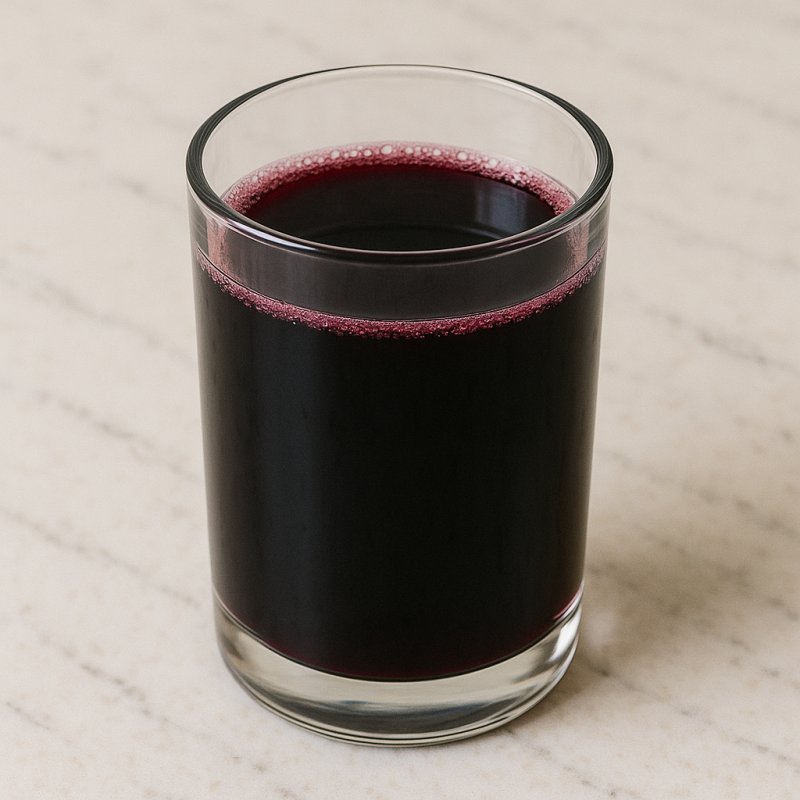
A glass of blueberry juice with fresh blueberries
I still remember a warm summer day when my friend invited me into his garden. He had a small blueberry patch, and we spent the afternoon picking the ripe berries. The juicy, blue fruits were not only delicious, but they also shaped the origin of one of my favorite drinks: blueberry juice.

Blueberry juice is more than just a refreshing drink. It is a true superfood, full of vitamins and antioxidants. These little blue wonders are not only tasty, they are also rich in vitamin C, K and fiber. When I think of the health benefits, I can't help but feel a little proud that I often enjoy a glass of this juice!

A colleague of mine recently discovered the benefits of homemade blueberry juice. He told me enthusiastically about his first attempt at juicing the berries. "It took a little while, but the result was worth it!", he said with a broad grin. He had refined the juice with a splash of lemon and some honey, and I must say I've never tasted a fresher and more flavorful version.

Preparing blueberry juice is easy and fun. Here is a small step-by-step guide I put together for you:

  • Fresh blueberries: Start with about one kilogram of fresh blueberries.
  • Wash: Clean the berries thoroughly under running water.
  • Cook: Cook the berries in a large pot with some water until they soften and release juice.
  • Strain: Use a fine sieve or cloth to separate the juice from the solids.
  • Refine: Add sugar, lemon or other flavors to taste.
I find that blueberry juice not only tastes great on its own, but also makes a wonderful base for cocktails or dressings. You can also use it in smoothies or desserts to add a fruity note. I love to incorporate a glass of blueberry juice into my morning smoothie routine – it gives the whole thing a real freshness boost!

So the next time I enjoy a glass of blueberry juice, I will think back to that lovely summer day in the garden and the joy these little blue berries bring into my life. They are not only a treat but also proof that the simplest things can often bring the greatest joy.

Availability & types

Blueberry juice is a delicious drink made from the small blue fruits of the blueberry. These berries are not only tasty but also very healthy. But where do they actually come from and what different varieties are there? In this section we will take a closer look at the availability and types of blueberry juice.

Blueberries originally come from North America, where they were already used as a food source by indigenous peoples. These small berries grow on shrubs found in forests or open areas. Today blueberries are also cultivated in many other countries, such as Germany, Canada and Poland. In Germany, blueberries are mainly found in the federal states of Mecklenburg-Vorpommern, Brandenburg and Bavaria.

Growing blueberries has become very popular in recent years because they not only taste good but also contain many vitamins and antioxidants. These nutrients are important for our health because they help strengthen the immune system and protect the body from harmful substances. Blueberries can be eaten fresh, used in cakes or yogurt, or pressed into blueberry juice.

When it comes to the varieties of blueberries, there are many different types. Some of the best known are:

  • The wild blueberry – These small, dark berries grow wild in forests and have an intense flavor. They are slightly smaller than cultivated varieties and are often used for juice production.
  • The cultivated blueberry – These berries are larger and sweeter than wild blueberries. They grow on plantations and are the most common variety available in supermarkets.
In addition, there are many variants of blueberry juice, which are produced depending on preference and availability. Here are some examples:

  • Pure blueberry juice – This juice is made only from blueberries, without additives. It has an intense flavor and is very healthy.
  • Blueberry mixed juice – Blueberry juice is often mixed with other fruit juices, such as apple or pear. These mixes are often sweeter and very tasty.
  • Organic blueberry juice – This is juice made from organically grown blueberries. These berries are grown without chemical fertilizers or pesticides, making them particularly environmentally friendly.
Blueberry juice is available in many shops and supermarkets, often in the chilled section or on the shelf with fruit juices. If you're looking for fresh juice, you can sometimes look for regional producers at markets. There you will often find tasty, freshly pressed juice that tastes particularly good.
Details & nutrition

Property Value
Unit ml
Calories per 100 60
Protein per 100 0.5
Carbohydrates per 100 14
Sugar per 100 10
Fat per 100 0.1
Saturated fat per 100 0
Monounsaturated fat 0
Polyunsaturated fat 0
Fiber per 100 0.5
Vitamin C (mg) per 100 9
Vitamin D (IU) per 100 0
Calcium (mg) per 100 1
Iron (mg) per 100 0.1
Nutri-Score B
CO₂ footprint 0.2
Origin EU
Gluten-free Yes
Lactose-free Yes
Nut-free Yes
Vegan Yes
Note Blueberry juice is rich in antioxidants and has a high vitamin content.

Technical & scientific information

Blueberry juice is a popular drink obtained from the fruits of the bilberry (Vaccinium myrtillus). These small, dark blue berries are known not only for their sweet taste but also for their health benefits and high nutrient content. Blueberry juice is frequently used in the food industry and is also popular in naturopathy.

Chemical composition and constituents
Blueberries consist of about 85% water and contain a variety of bioactive compounds. The main components include:

  • Vitamins: Blueberries are rich in vitamin C, which is important for the immune system, as well as vitamin K, which plays a role in blood clotting.
  • Minerals: Minerals present include potassium, magnesium and iron, which are essential for various bodily functions.
  • Dietary fiber: These contribute to digestive health and can reduce the risk of cardiovascular disease.
  • Antioxidants: Blueberries are especially rich in anthocyanins, which are responsible for the blue color and are considered strong antioxidants.
The antioxidant properties of blueberries help neutralize free radicals in the body, which can contribute to the prevention of chronic diseases.

Nutritional values
Blueberry juice contains a range of nutrients summarized in the following table (per 100 ml of unsweetened juice):

  • Calories: 57 kcal
  • Protein: 0.7 g
  • Carbohydrates: 14.5 g
  • Sugars: 10 g
  • Fat: 0.3 g
  • Dietary fiber: 1.2 g
  • Vitamin C: 9.7 mg (16% of the daily requirement)
  • Potassium: 77 mg
Blueberry juice has a sweet taste due to its high sugar content, which makes it a popular ingredient in many recipes.

Processing methods
The production of blueberry juice can take place in several steps:

  • Harvest: The fruits are usually harvested in summer when they are ripe.
  • Cleaning: After harvest the berries are washed to remove dirt and pesticide residues.
  • Pressing: The cleaned fruits are pressed to separate the juice from the solids.
  • Filtration: The juice is filtered to remove turbidity and achieve a clear liquid.
  • Pasteurization: To increase shelf life, the juice is pasteurized, which also helps kill harmful microorganisms.


Wiki entry for: blueberry juice
Active now: 26 visitors of which 2 logged-in members in the last 5 minutes