Menu & categories

Blue Bols

Blue Curaçao liqueur with sweet orange aroma for cocktails and long drinks.

Wiki about Blue Bols Nutri-Score E Vegan Yes Gluten-free Yes Lactose-free Yes Nut-free Yes
NUTRITION / 100 ml
260 kcal 0.0 g Protein 34.0 g Kohlenhydrate 0.0 g Fett

Introduction

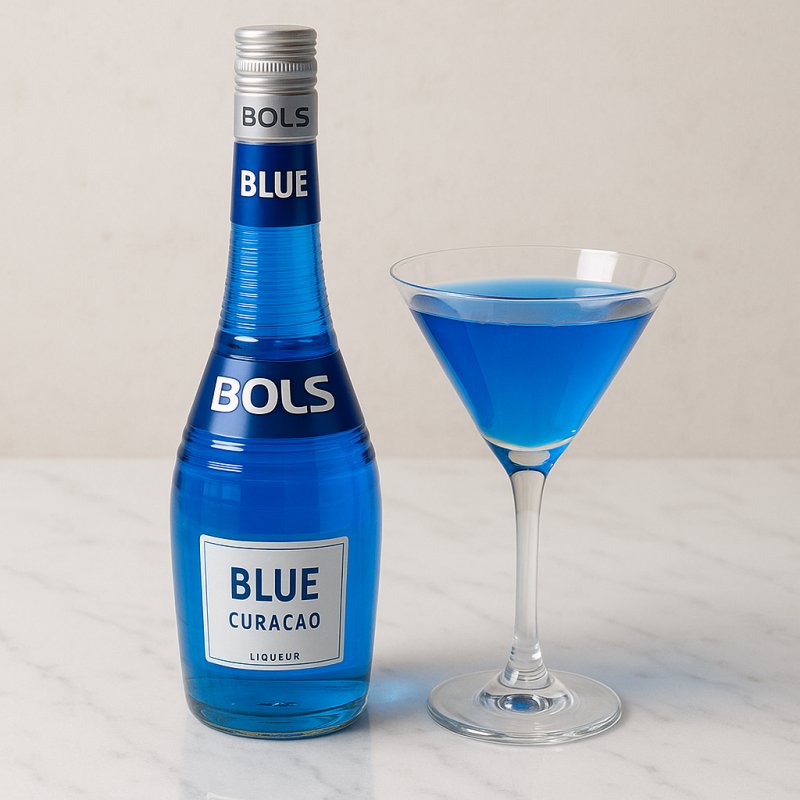
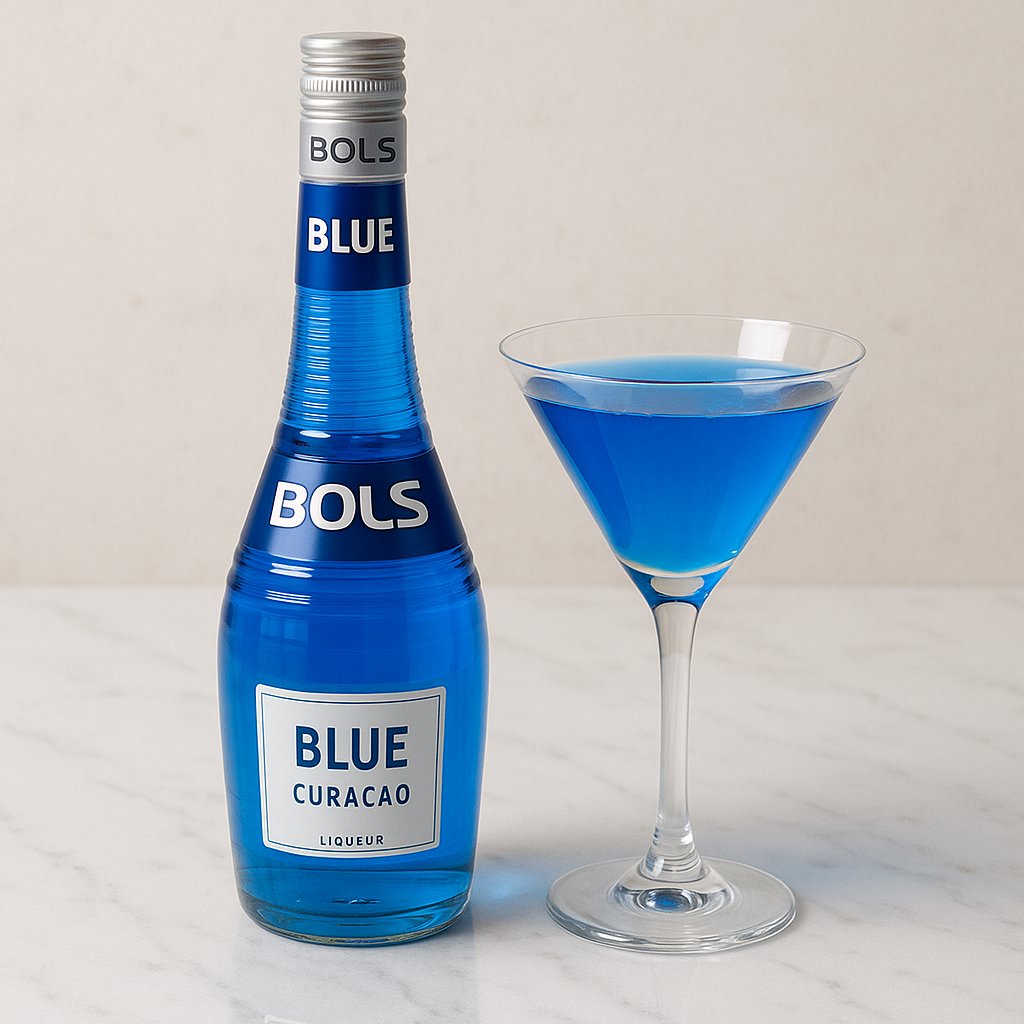
Bottle of Blue Bols (Blue Curaçao), blue orange liqueur
I have a soft spot for ingredients that at first glance smell like parties and nostalgia, and Blue Bols definitely belongs to that group. This bright blue orange liqueur variant has something playful that immediately evokes memories of summer cocktails and kitschy drinking glasses. On the nose I first get the bitter, slightly candied orange note, then a hint of vanilla and sweetness that makes the blue feel less childish and surprisingly complex.

Origin and history are briefly told: Blue Bols is part of a long Dutch liqueur tradition where orange peels and flavorings are combined with clear distillation. The blue color is of course artificial, but it serves its purpose: it makes drinks eye-catching. I still remember once standing on a small terrace in a seaside town with a glass of Blue Lagoon in my hand – the color was so intense that a passing boat paused for a moment because someone thought they had seen a rare sea creature.

Practically, Blue Bols is versatile. Classic cocktails like the Blue Lagoon or the Blue Hawaiian gain visually and flavor-wise because the sweetness nicely balances the acidity of citrus and pineapple. Those who like to experiment use small amounts in desserts: a glaze for lemon tarts, a splash in sorbet, or even as a color accent in a creamy mousse.

  • Dosage: Less is often more, because the sweetness quickly dominates.
  • Mixing partners: Vodka, rum, lemon juice and pineapple pair particularly well.
  • Storage: Store dry, dark and upright so nothing settles.
A colleague of mine once mixed an entire pitcher for the summer party – the result was photogenic, very popular and described by two guests as "liquid candy music." That says it all: Blue Bols is not a highly complex gourmet liqueur, but a bold, cheerful partner that immediately stages dishes and drinks. In the end it remains for me the perfect ingredient when you want to tell stories with color, flavor and a wink.

Availability & types

Availability and types of the ingredient Blue Bols

What is Blue Bols?
Blue Bols is a bright blue liqueur used mainly for mixing cocktails. A liqueur is a sweet beverage that contains alcohol and is often flavored with fruits, herbs or spices. Blue Bols belongs to the family of so-called Curaçao liqueurs, which get their flavor from a special bitter orange originally from the island of Curaçao. It should be noted: because it contains alcohol, Blue Bols is intended for adult consumption only.

Origin
The name and style come from Europe, particularly from the Dutch company Lucas Bols, which has been producing spirits for a very long time. The typical orange note comes from a fruit called Laraha, which grows on the Caribbean island of Curaçao. The company can make the liqueur in Europe and have the flavors sourced from the Caribbean or recreate them. The result is a sweet, slightly bitter orange taste with the striking blue color.

Growing regions
The special Laraha orange grows mainly on the island of Curaçao in the Caribbean. These fruits are not good for direct eating but are used for their peel and aroma. The production of the liqueur itself often takes place in distilleries in Europe, for example in the Netherlands. There are also similar products today made elsewhere that use the same flavors.

Available varieties and variants
Blue Bols does not exist in only one version. You can find different types and packaging. Here are some simple examples to give you a better idea:

  • Standard blue liqueur – the typical bright blue product you find in bars and supermarkets. It is sweet and has the orange flavor of the Curaçao family.
  • Clear or white variant – similar in taste but without the blue color. Useful when you don't want to make the drink blue.
  • Other colors – some brands offer Curaçao in green or red tones. The flavor often remains similar; the color is usually only for appearance.
  • Non-alcoholic syrups – for children or alcohol-free drinks there are imitations as syrups. These have the flavor and color but contain no alcohol.
  • Different bottle sizes – from small sample bottles to large bottles for parties. You can buy according to your needs.
Where to get Blue Bols?
You can find Blue Bols in well-stocked supermarkets, liquor stores, in many bars and also online. In some countries spirits are sold only in specialized shops, in others they are widely available. For families or younger people, the non-alcoholic syrups are often found in regular supermarkets.

In summary: Blue Bols is a colorful orange liqueur with a Caribbean origin idea, offered in many variants – colored or clear, alcoholic or as a syrup – and easy to find in many countries. It is often used to add color and flavor to drinks and recipes, but because it contains alcohol it is not intended for children. If you want a non-alcoholic variant, look for syrups with a similar flavor.
Details & nutrition

Property Value
Unit ml
Calories per 100 260
Protein per 100 0.0
Carbohydrates per 100 34.0
Sugar per 100 34.0
Fat per 100 0.0
Saturated fat per 100 0.0
Monounsaturated fat 0.0
Polyunsaturated fat 0.0
Fiber per 100 0.0
Vitamin C (mg) per 100 0
Vitamin D (IU) per 100 0
Calcium (mg) per 100 0
Iron (mg) per 100 0.0
Nutri-Score E
CO₂ footprint ca. 0,25 kg CO2e/100 ml
Origin Netherlands
Gluten-free Yes
Lactose-free Yes
Nut-free Yes
Vegan Yes
Note Alcoholic liqueur (typically about 20% vol.); nutritional values may vary slightly depending on bottling/market.

Technical & scientific information

Blue Bols is a commercially available, blue-colored orange liqueur counted among Curaçao- or Triple-Sec–like beverages and frequently used as a flavoring ingredient in cocktails. Historically, Curaçao liqueur is based on the bitter oranges (Laraha) that grow on the Caribbean island of Curaçao; commercial products such as those under the name "Blue Bols" combine this bitter orange aroma with sugar, ethanol and food colorings to achieve the characteristic intense blue and the sweet-bitter taste.

Chemical composition and ingredients

  • Base matrix: A hydroalcoholic solution of ethanol and water forms the solvent for aromas and colorants. Liqueur alcohol content typically ranges from about 15 to 40 % vol.; exact values are product-dependent.
  • Flavor compounds: The main contributors to the characteristic aroma are essential oils from bitter oranges (e.g. limonene, linalool, citral), introduced either by maceration of dried peels, by distillation or by adding natural-identical or synthetic aroma blends.
  • Sweeteners: Sucrose or sugar syrups increase the content of dissolved solids; liqueurs often contain from a few hundred grams of sugar per liter, which affects taste and viscosity.
  • Colorants and additives: The intense blue is usually achieved with approved food colorants (often synthetic dyes such as Brilliant Blue FCF, E133, or alternative colorants). Additionally, acidulants (e.g. citric acid), preservatives and emulsifiers may be added in small amounts to optimize stability and flavor.
Production process

Production follows typical liqueur techniques: extraction of flavor compounds (maceration or distillation of peels), optionally further distillation to obtain purer aroma fractions, subsequent blending with neutral spirit, dosing of sugar and water, and filtration and bottling. Colorants are added at the end in homogeneous concentrations. Fermentative or enzymatic processes play a minor role in classic Curaçao, since it is not a fermented product but an aromatized and sweetened spirit product.

Physico-chemical properties

  • The solubility of lipophilic aroma compounds (e.g. limonene) increases with ethanol content, which is why alcohol percentage is decisive for aroma perception.
  • Sugar increases refractive index and viscosity of the solution, affecting mouthfeel, aroma projection and energy content per volume.
Nutritional values and health aspects

The energy density of a liqueur arises primarily from ethanol (approx. 7 kcal/g) and sugar (approx. 4 kcal/g). A typical 30 ml shot can therefore provide a notable amount of calories depending on alcohol and sugar content. The main health points are:

  • Alcohol effects: acute intoxication, dependence potential and long-term damage with regularly high consumption (liver, cardiovascular system, neurological effects).
  • Sugar: contribution to energy excess, risk of dental caries and metabolic diseases with frequent intake.
  • Food colorants: approved dyes are subject to regulatory limits; some dyes may cause intolerances or hyperactive reactions in sensitive individuals.
  • Contraindications: pregnancy, breastfeeding, children, people with certain medical conditions or on particular medications.
Storage, labeling and legal framework

Liqueurs are subject to food law requirements regarding alcohol labeling, ingredient declaration and permitted additives. Storage should be protected from light and kept cool, with high sugar content and alcohol offering protection against microbial spoilage; nevertheless opened bottles should be consumed within a few years to avoid aroma loss.

In summary, "Blue Bols" is an aromatized orange liqueur whose technical core is an ethanol-based solution with citrus-derived essential oils, sugar and food colorants. Sensory properties, stability and legal compliance are managed by choice of extraction methods, alcohol level, sugar dosing and permitted additives, while health assessment primarily focuses on alcohol and sugar content as well as individual tolerability of additives.

Wiki entry for: Blue Bols
Active now: 18 visitors of which 2 logged-in members in the last 5 minutes