Menu & categories

Blackcurrants

Aromaticly tart berry with a very high vitamin C content.

Wiki about blackcurrant Nutri-Score A Vegan Yes Gluten-free Yes Lactose-free Yes Nut-free Yes
NUTRITION / 100 g
63 kcal 1.4 g Protein 15.4 g Kohlenhydrate 0.4 g Fett

Introduction

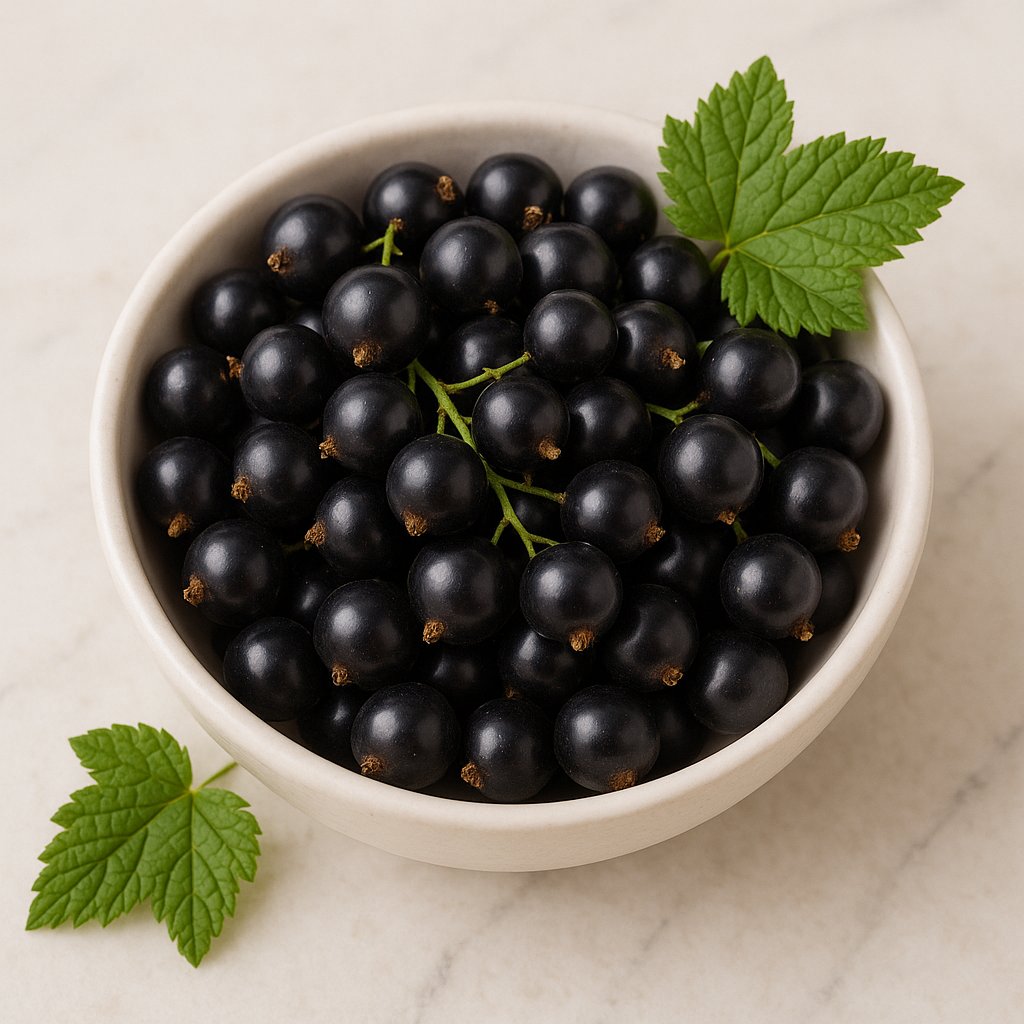
Fresh blackcurrants

I love blackcurrants because in their small, deep-purple form they hide so much intensity. On the first bite I taste a clear acidity that immediately awakens the taste buds, followed by a velvety, almost tannin-like finish. The fruit is not delicate, it is loud – and that's exactly what makes it so exciting in the kitchen.

I still remember a summer market visit where a stall was full of baskets of berries and I couldn't resist. A colleague suggested turning some into a simple syrup; the next morning we had an aroma on fresh yogurt that recalled sour candies and the woods. Since then blackcurrants end up in my jams, sauces, ice cream and occasionally with a hearty roast.

What makes these berries special:

  • High content of vitamin C and anthocyanins, responsible for the dark color and antioxidant effect.
  • Powerful flavor that pairs well with sweet and savory components.
  • Versatility: from desserts to drinks to meat sauces.
In the kitchen I like to work with contrasts: a tart blackcurrant reduction with roasted lamb or a splash of blackcurrant syrup in a gin and tonic lights up the nights. For a quick dessert I mash the berries with some sugar and lemon zest, let them sit briefly and serve them over vanilla ice cream. For long storage I freeze portions or cook classic jellies.

When shopping I look for plump, shiny berries without bruises. Harvest time is usually in midsummer, and in a home garden a sunny spot and regular pruning are often enough to get good yields.
Anyone brave enough to play with this concentrated acidity discovers a true kitchen chameleon.

To me blackcurrants are more than just an ingredient: they are a small flavor enhancer that enlivens dishes and evokes memories of long summers, marketplaces and improvised recipes.

Availability & types


Availability and types of blackcurrants

Blackcurrants are small, dark berries with a very intense flavor. They can be found fresh, frozen or as juice, jelly and jam. They grow best in cooler areas, which is why they are particularly at home in parts of Europe and northern Asia. Sometimes they look like mini-grapes, but they are much more tart and robust in flavor — like a lemon in berry form.

Origin and major growing regions:
Blackcurrants originally come from Europe and parts of Asia. Today they are cultivated in many temperate regions. Known growing areas include:

  • Central Europe (e.g. Germany, Poland)
  • Scandinavia and the United Kingdom — where many cultivars were also developed
  • Russia and northern Asia
  • New Zealand and Chile — these countries have bred specific varieties for storage and export
In supermarkets fresh berries are available mainly in the harvest season (usually summer, around June to July). Because fresh berries spoil quickly, out of season you will often find frozen berries or processed products such as juice and jam.

Available varieties and forms:
There are many different varieties because breeders have developed plants with better taste, higher yield or greater disease resistance. Some known varieties are:

  • Ben Sarek – popular for being healthy and hardy.
  • Ben Hope – a variety with good flavor and stable yields.
  • Öjebyn (often from Sweden) – a sweeter variant that grows well in colder regions.
  • Titania – often used for juice and industrial processing.
Besides varieties, products and plant types are also distinguished:

  • Fresh – for direct consumption or baking. Fresh berries are only in stores for a short time.
  • Frozen – practical out of season because flavor and vitamins are well preserved. They can be used directly for smoothies or cakes.
  • Processed – juice, syrup, jelly or dried berries. These are long-lasting forms.
  • Garden plants – as shrubs for the home garden; some are compact, others grow into larger bushes.
If you are looking for blackcurrants it is good to know: buy fresh in season; frozen or as juice when not. For the garden gardeners pay attention to the variety because some taste better and others are easier to care for. That way you always find the right option — whether for snacking, cooking or preserving.
Details & nutrition

Property Value
Unit g
Calories per 100 63
Protein per 100 1.4
Carbohydrates per 100 15.4
Sugar per 100 7.4
Fat per 100 0.4
Saturated fat per 100 0.03
Monounsaturated fat 0.04
Polyunsaturated fat 0.22
Fiber per 100 6.8
Vitamin C (mg) per 100 181
Vitamin D (IU) per 100 0
Calcium (mg) per 100 55
Iron (mg) per 100 1.5
Nutri-Score A
CO₂ footprint 0.04 kg CO2e je 100 g (Richtwert, abhängig von Anbau/Transport)
Origin Europe (often locally grown)
Gluten-free Yes
Lactose-free Yes
Nut-free Yes
Vegan Yes
Note Very rich in vitamin C; pairs well in desserts, smoothies, jams and with game dishes.

Technical & scientific information


Blackcurrant (Ribes nigrum) are small berries ranging from dark violet to black that botanically belong to the Grossulariaceae family. They are characterized by an intense aroma, pronounced acidity and a high content of water-soluble plant compounds. The fruit is consumed both fresh and industrially processed into juice, jam, extracts and oils.

Chemical composition and constituents
Blackcurrants contain a complex mixture of water-soluble polyphenols, organic acids, vitamins, fiber and seed oil. Particularly notable are:

  • Anthocyanins: mainly delphinidin- and cyanidin-derived compounds (e.g. delphinidin-3-rutinoside, delphinidin-3-glucoside, cyanidin-3-rutinoside). These pigments give the dark color and possess strong antioxidant properties.
  • Flavonols and phenolic acids: quercetin and kaempferol glycosides as well as various hydroxybenzoic and hydroxycinnamic acids.
  • Vitamin C: blackcurrants are among vitamin C–rich fruits; concentration varies by cultivar and ripeness but is notably higher than in many other berries.
  • Organic acids: predominantly citric and malic acid, which determine the tart taste profile.
  • Fiber and pectins: cell wall components important for texture and gelling ability in processed products.
  • Seed oil: oils obtained from the seeds contain polyunsaturated fatty acids, including linolenic acid and, in relevant amounts, gamma-linolenic acid (GLA), making the oil interesting for cosmetic and nutritional applications.
Nutritional values (typical)
Energy and nutrient density vary with ripeness and variety. Fresh berries provide mainly water, carbohydrates (primarily fructose/glucose), moderate amounts of fiber and minerals such as potassium, calcium and magnesium. Exact vitamin C and secondary plant compound contents depend strongly on cultivation and storage.

Processing methods
Industrial processing includes pressing and enzymatic breakdown for juice extraction, pasteurization for preservation, and concentration and freeze-drying for powder production. For aroma products cold maceration and gentle extraction methods are often used to preserve heat-sensitive anthocyanins. Seed oil extraction is performed by cold pressing or via solvent or supercritical CO2 extraction to protect sensitive fatty acids.

Health aspects
Polyphenol-rich extracts show pronounced antioxidant and anti-inflammatory effects in vitro. Clinical studies indicate possible positive effects on vascular function, antioxidant capacity and recovery after physical exertion. The GLA in seed oil is studied for anti-inflammatory properties. In highly concentrated products, sugar and acidity content should be considered. Allergic reactions are rare; in sensitive individuals interactions with medications are not fully studied, so consultation with medical professionals is recommended if in doubt.

Applications and storage
Blackcurrants are used in many ways: as food (juice, jelly, sorbets), as a natural color source (pH-dependent anthocyanins) and in supplements or cosmetics (seed oil, antioxidant extracts). For preservation, freezing is the most efficient method as it minimizes flavor and nutrient losses; heat treatments can reduce anthocyanins and vitamin C.

In summary, blackcurrants are remarkable from a chemical and nutritional perspective for their high density of water-soluble polyphenols, vitamin-rich profile and functional seed oil. This combination makes the fruit interesting for culinary uses as well as health-oriented products and the food industry.

Wiki entry for: blackcurrant
Active now: 6 visitors of which 2 logged-in members in the last 5 minutes