Menu & categories

Black tea

Aromatic tea infusion made from fermented tea leaves.

Wiki about black tea Nutri-Score A Vegan Yes Gluten-free Yes Lactose-free Yes Nut-free Yes
NUTRITION / 100 ml
1 kcal 0.0 g Protein 0.2 g Kohlenhydrate 0.0 g Fett

Introduction

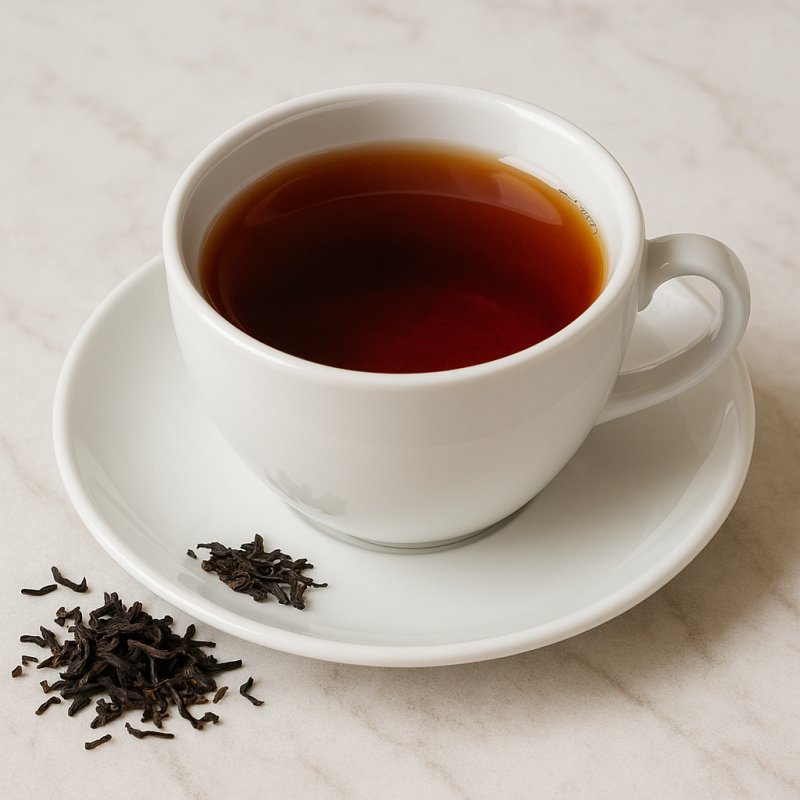
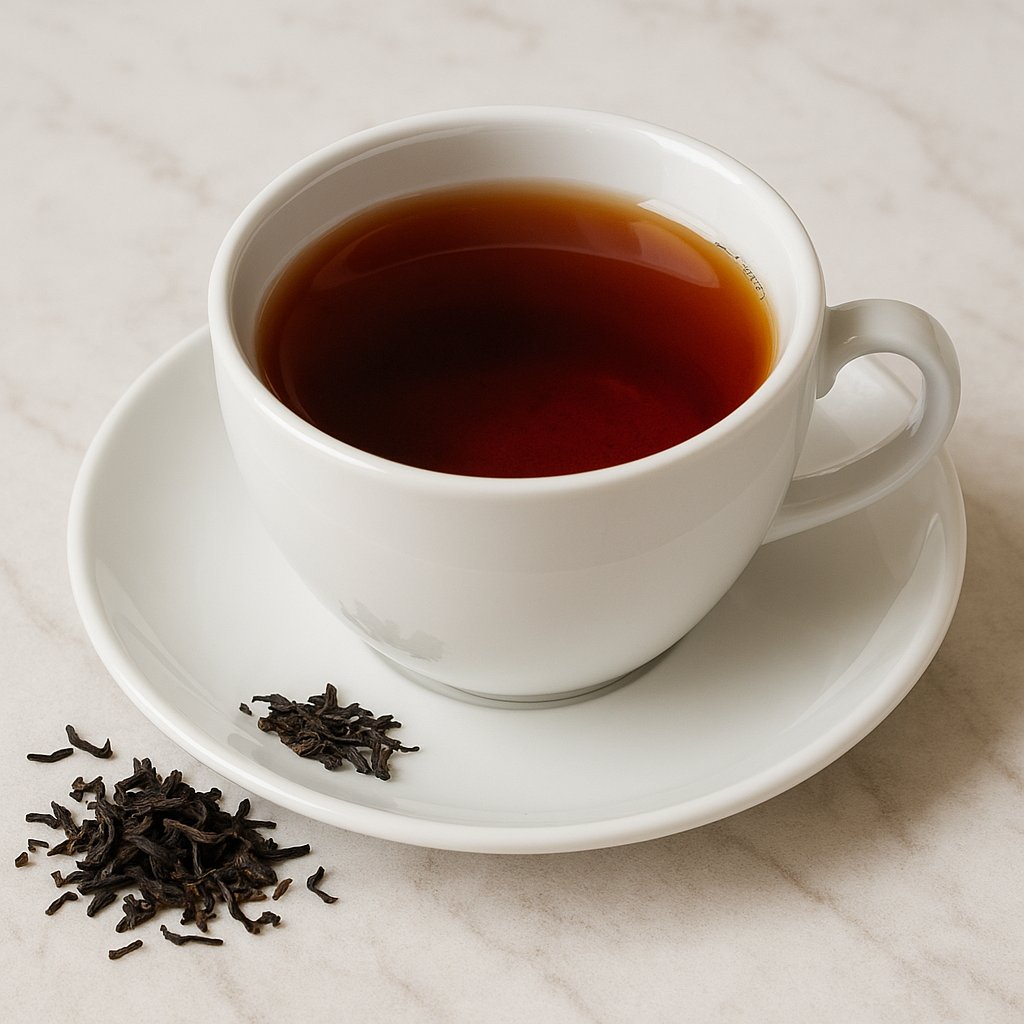
Cup of freshly brewed black tea
I have a small weakness: as soon as the scent of freshly poured black tea drifts through the kitchen, I immediately feel awake and a little nostalgic. For me black tea is more than a drink; it is a topic of conversation, a comfort on rainy afternoons and a surprising companion to both sweet and savory foods. I clearly remember a trip when an older hostess in a small tea house handed me a cup of Assam and said, "Drink slowly, pay attention to the depth." I obeyed her and was convinced afterward that tea should be experienced as mindfully as wine.

What I particularly appreciate about black tea is its diversity. Although all black teas come from the same plant, Camellia sinensis, they differ by growing region, processing and degree of oxidation. The result ranges from strong, malty notes to floral, almost nutty accents. A colleague of mine swears by Darjeeling with cake, while a friend brings Assam as an energizer to morning meetings.

I like to cook, taste and pair. In doing so, a few simple rules have proven useful:

  • Water temperature: About 95 °C for a clear, robust infusion.
  • Steeping time: 3–5 minutes – shorter for milder, longer for more intense aromas.
  • Amount: One teaspoon per cup is a good starting point.
Some enthusiasts refine their tea with milk, lemon or honey; others enjoy it pure. I myself sometimes like my black tea with a splash of milk when it's chilly outside, and sometimes with a slice of lemon when I need something fresh.
From a health perspective, black tea brings, in addition to caffeine, polyphenols that are considered antioxidants, and it is usable in a variety of blends.

In the end, black tea remains for me an uncomplicated, reliable pleasure with surprising depth. It is a ritual in a cup, an invitation to pause briefly, and sometimes the best company on a long day.

Availability & types

Availability and types of black tea

Black tea is one of the world's most popular types of tea. It grows on shrubs called tea plants, which thrive in many countries with warm, hilly climates. You can buy black tea almost anywhere: in supermarkets, tea shops, markets or easily online. As with fruit or vegetables, there are different qualities and forms – you can find loose leaf tea, tea bags, instant powders and even ready-made iced teas.

Origin and growing regions
The main places where black tea is grown are:

  • China – the country of origin for many teas. Delicate black teas such as Lapsang Souchong (smoky) come from there.
  • India – particularly well known are Assam (robust, often used for breakfast blends) and Darjeeling (finer, floral taste).
  • Sri Lanka (formerly called Ceylon) – produces many different black teas that can taste light and fresh.
  • Kenya – supplies much tea for strong blends and tea bags.
  • Indonesia, Vietnam and Nepal – also important suppliers with their own flavor notes.
You can imagine it like this: as with apples, each region has its own "variety" with a particular note. The soil, the climate and the elevation of the plantation change the flavor – similar to wine or coffee.

Available types and variants
Black tea comes in many forms. Here are the most common, simply explained:

  • Loose leaf tea – whole or large leaves. It often tastes better because the leaves retain more flavor. You brew it in a pot or with a tea infuser.
  • Tea bags – convenient and fast. Bags usually contain smaller pieces or broken leaves so the flavor releases quickly.
  • CTC tea (Crush–Tear–Curl) – the leaves are crushed. This is well suited for strong teas in bags.
  • Scented and flavored teas – black tea is often blended with flavors, e.g. Earl Grey (with bergamot oil) or teas with fruit pieces and flowers.
  • Smoked teas – like Lapsang Souchong, which have a smoky aroma because the leaves were dried over wood smoke.
  • Decaffeinated tea – where the caffeine has been removed, for people who want fewer stimulants.
  • Instant and iced tea products – quick‑soluble powders or ready drinks for on the go.
Single‑Origin vs. blends
A single growing region is called Single‑Origin – it's like an apple from one tree. Blends combine teas from different regions to achieve a consistent flavor – like a fruit salad where different fruits together taste better.

In short: black tea is widely available and comes in many flavors and forms. Whether you prefer a strong breakfast tea, a delicate Darjeeling or a scented tea like Earl Grey – there is a suitable variant for every taste and occasion.
Details & nutrition

Property Value
Unit ml
Calories per 100 1
Protein per 100 0.0
Carbohydrates per 100 0.2
Sugar per 100 0.0
Fat per 100 0.0
Saturated fat per 100 0.0
Monounsaturated fat 0.0
Polyunsaturated fat 0.0
Fiber per 100 0.0
Vitamin C (mg) per 100 0.0
Vitamin D (IU) per 100 0
Calcium (mg) per 100 1
Iron (mg) per 100 0.02
Nutri-Score A
CO₂ footprint ca. 0,02 kg CO2e pro 100 ml (aufgebrüht, ohne Milch/Zucker)
Origin India, Sri Lanka, China (depending on growing region and variety)
Gluten-free Yes
Lactose-free Yes
Nut-free Yes
Vegan Yes
Note Nutritional values refer to brewed black tea (without milk, sugar, or other additives).

Technical & scientific information

Black tea refers to the fully oxidized, dried leaf product of the plant Camellia sinensis and is one of the most widely consumed tea types worldwide. Unlike green or white tea, black teas undergo a controlled enzymatic oxidation during processing that significantly alters both chemical composition and sensory profile. Oxidation leads to the formation of characteristic pigments and aroma compounds as well as a reduction in certain monomeric polyphenols.

Processing methods
Production essentially includes the following steps:

  • Withering: Fresh leaves lose water and become more pliable, making enzymes and substrates more accessible for oxidation.
  • Rolling/Crushing: Mechanical cell disruption releases polyphenol oxidases and internal constituents.
  • Oxidation (often incorrectly called "fermentation"): Enzymatic conversion of catechins into oligomers such as theaflavins and polymeric thearubigins; duration and temperature control aroma and color.
  • Drying (Firing): Heat stops oxidation, dries the leaf and stabilizes the compounds.
  • Sorting and processing: Fragmentation (e.g. CTC process) or retention of whole leaves (orthodox processing) influence extraction speed and flavor.
Main constituents
The chemical makeup of black tea is complex and depends on cultivar, growing region and processing. Relevant components include:

  • Caffeine (Theine): the central stimulant, typically about 20–60 mg per cup (200–250 ml), depending on steeping time and leaf amount.
  • Polyphenols: after oxidation there are fewer monomeric catechins than in green tea; instead theaflavins (responsible for red color and "briskness") and thearubigins (large, partially not yet fully characterized polymeric pigments responsible for body and dark color) dominate.
  • Amino acids: including L‑theanine, which can interact with caffeine to modulate subjective alertness.
  • Volatile aroma compounds: monoterpenes (e.g. linalool, geraniol), aldehydes and esters characterize aroma and taste.
  • Minerals and trace elements: potassium, manganese and variably fluoride; levels strongly depend on soil and processing.
  • Tannins and astringent compounds: responsible for astringency; they can also influence iron absorption from the diet.
Nutritional values
Brewed black tea without additives provides virtually no energy and only minimal amounts of macronutrients. The effects relevant to humans arise primarily from bioactive secondary plant compounds and minerals, not from calories or protein.

Health and nutritional aspects
Experimental and epidemiological studies investigate the effects of black tea on cardiovascular risk factors, cognitive function and metabolism. In vitro studies show antioxidant activity of polyphenolic components, while clinical results are heterogeneous. Relevant notes:

  • Black tea can have a stimulating effect due to caffeine; pregnant people are advised to limit caffeine intake.
  • Tannins can reduce the absorption of non‑heme iron, especially when consumed with iron‑rich plant meals.
  • With moderate consumption, observational studies report positive associations with certain cardiovascular endpoints; causal statements remain the subject of research.
  • In sensitive individuals, high doses can lead to sleep disturbances or gastrointestinal complaints.
Storage and preparation
To preserve aroma and compounds, tea is best stored in airtight containers in a dry, cool and dark place. Typical infusion parameters are 95–100 °C and 2–5 minutes steeping time; longer steeping increases tannin extraction and leads to greater bitterness. Decaffeinated variants are available through physical or chemical decaffeination processes.

Overall, black tea is a chemically diverse natural product whose sensory properties and potential health effects depend largely on cultivar, cultivation, processing and preparation.

Wiki entry for: black tea
Active now: 17 visitors of which 2 logged-in members in the last 5 minutes