Menu & categories

Black salsify

Delicately nutty root vegetable – winter classic

Wiki about black salsify Nutri-Score A Vegan Yes Gluten-free Yes Lactose-free Yes Nut-free Yes
NUTRITION / 100 g
82 kcal 3.3 g Protein 15.0 g Kohlenhydrate 0.2 g Fett

Introduction

Fresh black salsify
Black salsify – often called “winter asparagus” – is one of those ingredients that, as a 35-year-old editor, never ceases to amaze me. Few vegetables combine earthy elegance, subtle sweetness and nutty depth so harmoniously. In my European kitchen black salsify has long since evolved from a historical medicinal vegetable to a modern highlight. At first glance it looks unassuming: dark, earthy, sticky when peeled. But it is precisely this rustic skin that hides a tender, cream-coloured interior that surprises with delicate flavours after cooking. A colleague of mine swears by placing the stalks directly into lemon water right after peeling so they keep their pale colour — a small trick that saves beginners a lot of frustration.

Those who understand black salsify quickly learn that it represents seasonal cooking at its best. From late autumn into early spring it provides a reliable, regional alternative to imported vegetables. I remember a winter market in Belgium where a farmer explained to me why black salsify is for her a “vegetable of patience”: it needs nutrient-rich, well-loosened soils, careful harvesting and steady hands in the kitchen. When I later tossed it at home in brown butter, an aroma developed that recalled hazelnuts, fresh butter and a hint of forest. Those warm notes are precisely what make black salsify so versatile — it can be creamy, crunchy or velvety depending on how you treat it.

In many European regions black salsify is enjoying a quiet renaissance. While my grandmother served it classically with a light sauce, today I like to combine it with citrus, roasted seeds, a touch of thyme or crispy bacon. A friend from northern Germany even uses it raw, finely shaved, with apple, mustard dressing and dill — surprisingly fresh and elegant. For me personally it is the ideal base for soul food on cold days: a silky soup with shallots, white wine and a little cream, finished with lemon zest. Crispy bread alongside — that’s all you need to enjoy winter.

Who the preparation

Availability & types

Availability and types of the ingredient black salsify

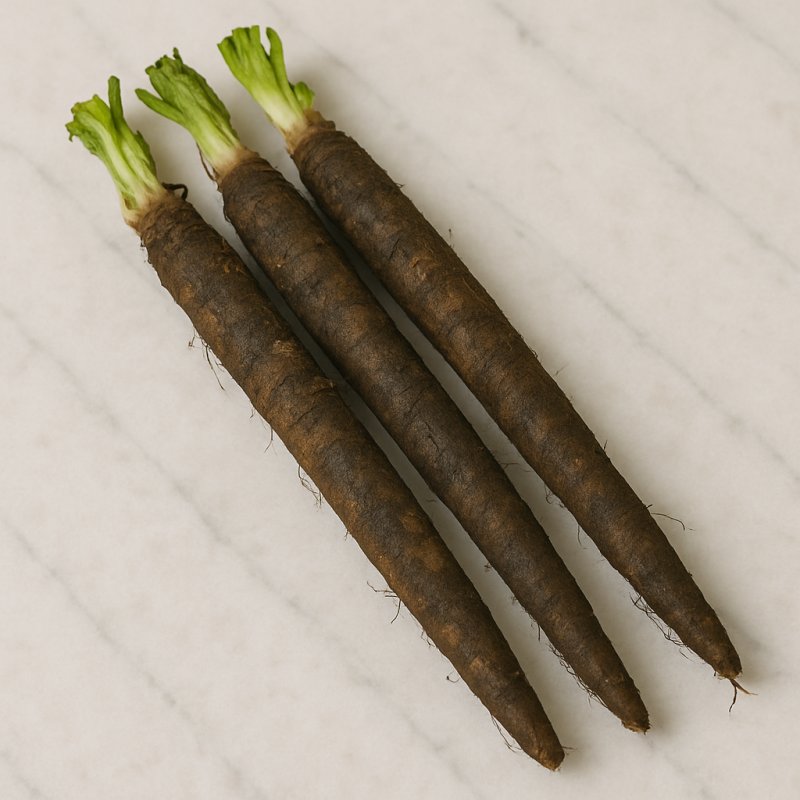
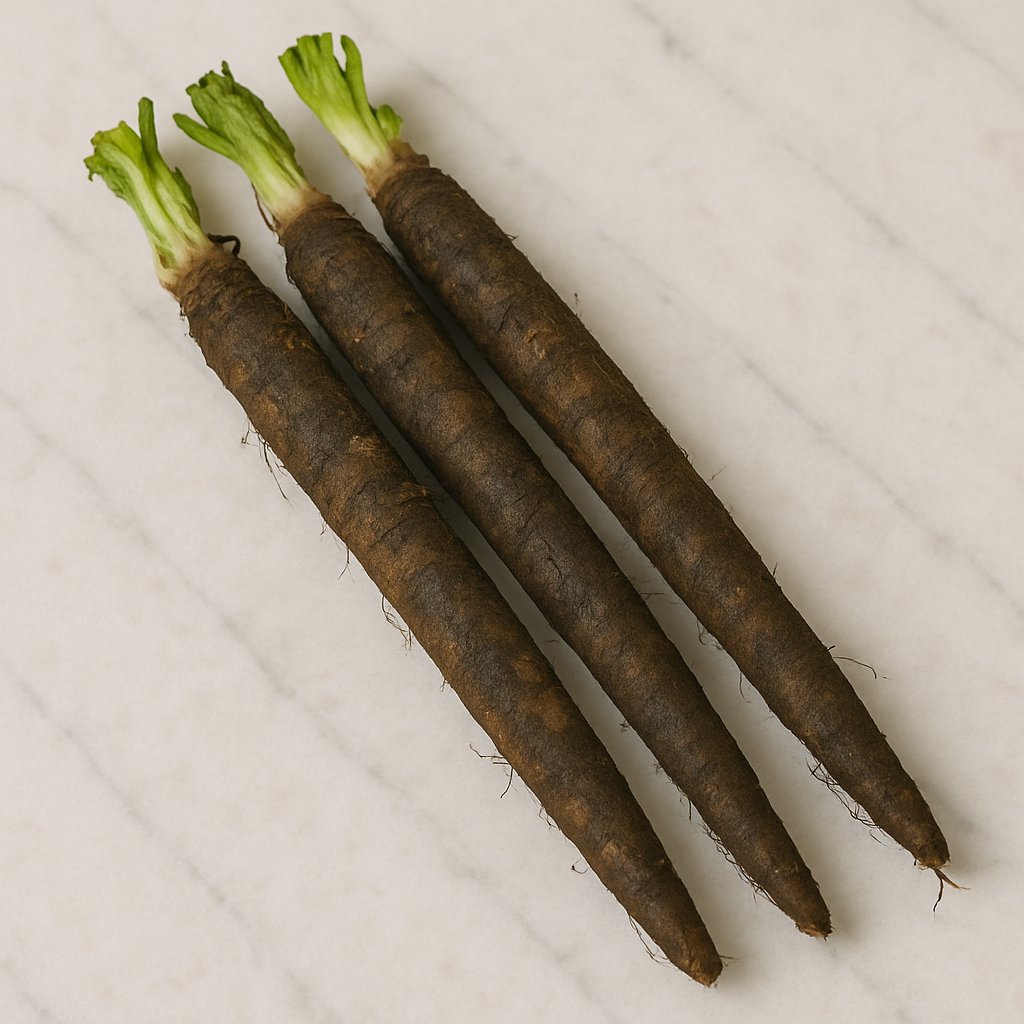
Black salsify is a root vegetable with a dark brown to black skin and a light creamy interior. It is also called “winter asparagus” because it is harvested fresh in the cold season and has a delicate taste. To help you understand when and which types are available, let’s look at origin, season, varieties and the different forms in which you can buy black salsify.

Origin and cultivation

Originally native to southern Europe and parts of the Mediterranean region, it is now mainly grown in Europe, for example in Germany, France, Belgium, the Netherlands and Spain. It prefers deep, loose soils because its roots should grow long and straight. Cultivation is somewhat labor-intensive because the roots are delicate and break easily. Therefore, special tools or very careful hand harvesting are often used.

For you as a buyer it is important: good growing areas produce long, firm roots with few surface cracks. The smoother and straighter the black salsify, the easier it is to peel later and the nicer the vegetable looks.

Availability over the year

Black salsify is a typical winter vegetable. The main season in Central Europe usually runs from October to March.
During this time you will find fresh roots at weekly markets and well-stocked supermarkets. Outside the season fresh black salsify is rarer, but it is often available canned or frozen.

  • Fresh: mainly autumn and winter (October–March)
  • Frozen (IQF): year-round, convenient and often pre-blanched
  • Canned (jar/tin): also available year-round
Tip: In organic shops and farm stores fresh black salsify is sometimes available even until
Details & nutrition

Property Value
Unit g
Average weight per piece 120
Calories per 100 82
Protein per 100 3.3
Carbohydrates per 100 15.0
Sugar per 100 4.5
Fat per 100 0.2
Saturated fat per 100 0.03
Monounsaturated fat 0.02
Polyunsaturated fat 0.10
Fiber per 100 3.3
Vitamin C (mg) per 100 6
Vitamin D (IU) per 100 0
Calcium (mg) per 100 45
Iron (mg) per 100 0.8
Nutri-Score A
CO₂ footprint 0.25 kg CO2e/kg
Origin Europe, season late autumn to spring
Gluten-free Yes
Lactose-free Yes
Nut-free Yes
Vegan Yes
Note May exude latex-containing milky sap; gloves recommended when peeling. Rich in inulin.

Technical & scientific information

Black salsify (Scorzonera hispanica) is a hardy, biennial root vegetable plant in the Asteraceae family. The cultivated plant is grown mainly in temperate climatic zones of Europe and is known in trade as “winter asparagus”. Characteristic features are the dark brown to black, corky outer skin of the taproot and the white, milky, latex-rich inner tissue. Due to its nutty-sweet aroma, high nutritional value and good storability, black salsify is an important component of winter vegetable assortments.

Botany and morphology: Black salsify forms a long, cylindrical taproot that depending on the variety reaches 20 to 35 cm, sometimes up to 40 cm in length and measures 2 to 4 cm in diameter. The bark is dark, the parenchyma regions are whitish and exude latex when cut. The shoot bears basal, lanceolate leaves; the inflorescences appear in the second year and are yellow, typical of the genus Scorzonera. The plants prefer deep, humus-rich, stone-free soils that allow undisturbed root development.

Origin and history: The areas of origin are thought to be in southwestern Europe, particularly the Iberian Peninsula. Historical sources document use since the 17th century in Central Europe. The name “Schwarzwurzel” derives from the dark colour of the periderm; the English name “black salsify” refers to the relation to oyster plant (Tragopogon porrifolius), to which it is however only distantly related.

Cultivation and growing: Sowing usually takes place from March to April in rows. A soil preparation with deep loosening is essential to minimize root branching. Optimal pH values are between 6.5 and 7.2. Even soil moisture promotes cell elongation and prevents cracking. Harvest times vary depending on the growing period and fall between October and March. For harvesting loose soils are preferred; in heavy soils ridges and special root lifters facilitate recovery.

Wiki entry for: black salsify
Active now: 17 visitors of which 2 logged-in members in the last 5 minutes