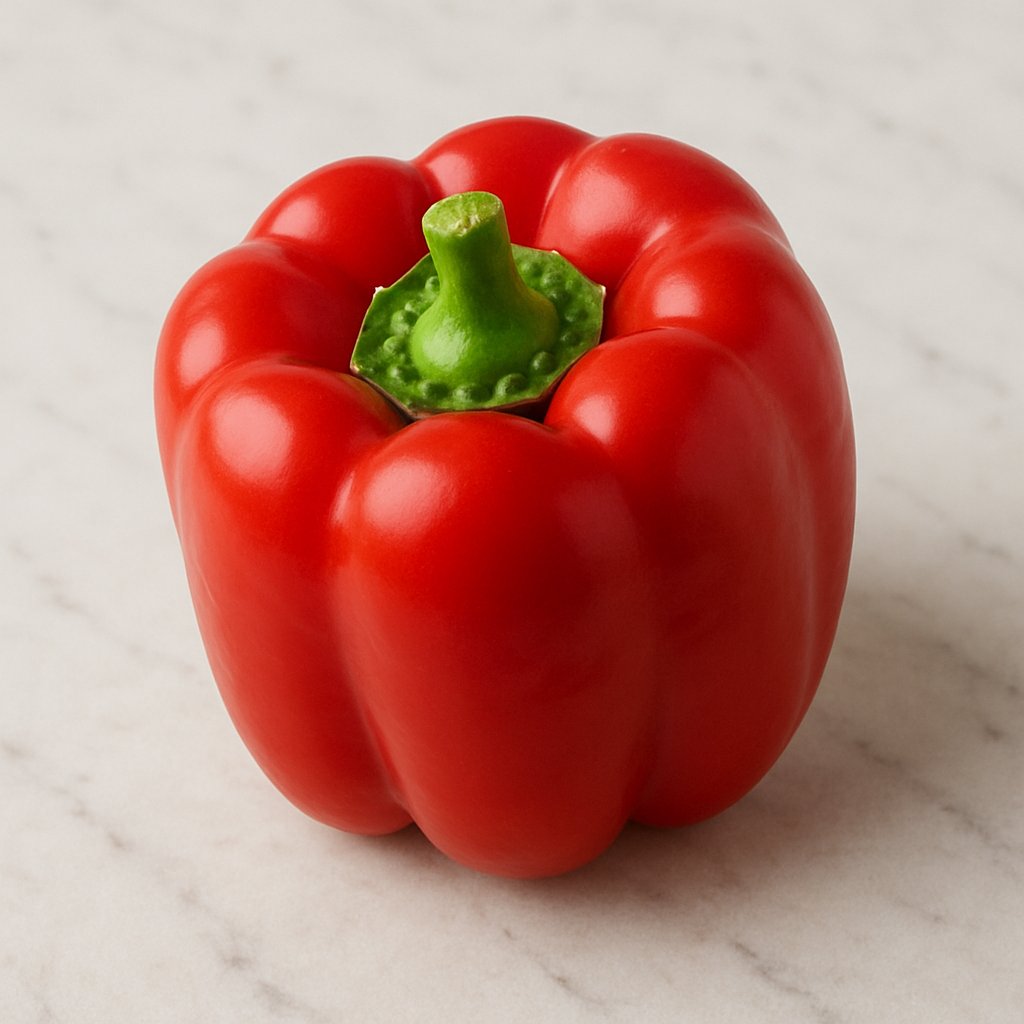
Availability and Types
The bell pepper is a vegetable grown and sold in almost every part of the world. It originally comes from Central and South America. There the wild ancestors grew thousands of years ago, and people began cultivating the plants early on. With seafarers the pepper reached Europe, Africa and Asia – today it therefore grows almost everywhere it is warm enough.
Peppers grow best in warm, sunny locations. In Europe major growing areas include Spain, the Netherlands, Italy and parts of Germany. In warmer countries such as Mexico, China and Turkey production is particularly high. Many supermarkets therefore receive peppers year-round – in winter often from warmer-climate countries and in summer from regions closer to us.
There are many different varieties of pepper. They can be distinguished by shape, color, size and taste. Here are some simple groups that are easy to recognize:
- Block peppers (bell peppers): These are rather square and meaty. They are often large and suitable for stuffing or for salads.
- Pointed peppers: These are elongated and taper to a point. They often have slightly thinner flesh and a stronger flavor.
- Mini or snack peppers: Smaller varieties that are nice to eat raw as a snack. They are practical for a lunchbox or as crudités.
- Hot peppers (chilis): Although technically in the same plant family, chilis are very hot and are often used as a spice. Their taste is not sweet like some peppers, but spicy.
The colors can also differ: green, red, yellow, orange and sometimes even purple or brown. Usually green peppers are simply unripe fruits of varieties that later turn red or yellow. If a pepper stays on the plant longer, it often becomes sweeter and more intense in flavor. You can think of it like a banana: green is sour, and as it ripens it becomes sweet.
When shopping you can look out for different variants:
- Fresh: The normal form you see in the supermarket. Look for glossy, firm pods without spots.
- Organic: Organic peppers are grown without certain chemical pesticides. They are sometimes a bit more expensive, but many people prefer the organic option.
- Frozen: Peppers already cut and sold frozen. Convenient because they keep for a long time and you don't have to throw away as much.
- Dried: Some peppers are dried and sold as spice or dried pieces. This changes the flavor – it often becomes more intense.
If you want to know which peppers are available at the moment, check the offer at the store or market. Seasonal vegetables are often cheaper and fresher. But thanks to global cultivation you can find peppers almost anytime today. In short: there are peppers in many shapes, colors and flavors – something for almost everyone. Whether you nibble them raw, fry them in a pan or cook them in a soup, peppers are versatile and easy to obtain.