Menu & categories

Beer

Hoppy beverage made from malt, water, and yeast – usually contains alcohol.

Wiki about beer Nutri-Score D Vegan Yes Gluten-free No Lactose-free Yes Nut-free Yes
NUTRITION / 100 ml
43 kcal 0.5 g Protein 3.6 g Kohlenhydrate 0.0 g Fett

Introduction

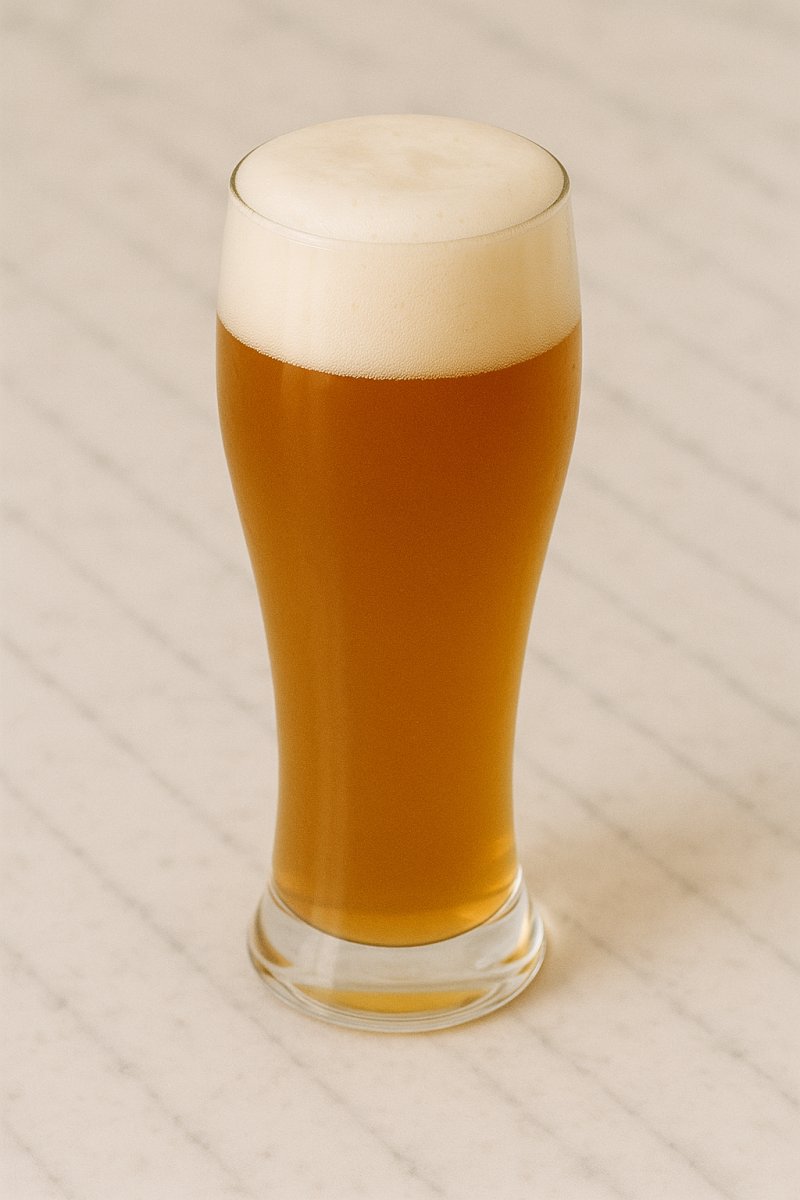
Glass of beer with frothy head
Beer for me is more than a thirst-quencher – it is a versatile ingredient that can accompany, refine and surprise dishes. I still remember a rainy Sunday afternoon when I accidentally poured a dark beer instead of red wine into my beef roast. The result was so deep and caramelized that since then I have consciously experimented more often with different varieties.

In cooking I use beer both for marinating and for deglazing, braising and even baking. Light lagers or pilsners bring freshness and lightly hoppy notes to doughs and pan dishes, while ales and stouts give the liquid more body and roasted aromas. A colleague of mine swears by porter in a chocolate cake – combined, almost fused, an astonishing depth arises without alcohol dominance.

A few practical insights I've gathered in the kitchen:

  • Marinating: Beer loosens meat and brings malty sweetness. Combined with mustard, garlic and herbs it becomes an uncomplicated marinade.
  • Reduction: When reducing, flavors intensify; sweet malt notes become almost syrupy.
  • Baking: Yeasted doughs love the enzymes in beer; dark varieties give bread and cakes a nice crust.
  • Pairings: Light beers suit seafood, while braised beef pairs better with robust ales or stouts.
Important: alcohol evaporates during cooking but not completely. If children or sensitive guests are eating, it's better to simmer longer or use alcohol-free variants. At a barbecue once I forgot to reduce the marinade enough – the ribs were delicious, but the hostess was cautious and asked to plan alcohol-free next time.

For anyone who wants to discover beer as an ingredient, my final advice: taste deliberately and note combinations. A good sip to taste before cooking helps to better estimate the later aroma impact. That way beer in your kitchen becomes not just a side element, but a true flavor partner.

Availability & types


Availability and types of beer

Beer is a beverage found in many countries around the world. It is produced in breweries and then sold in supermarkets, beverage stores, pubs or restaurants. You can get beer in bottles, cans or on tap (commonly called “on draught”). There are also specialty beer shops and online stores that offer many different varieties, from basic brands to rare special beers.

Where does beer come from?
Beer is very old and was invented thousands of years ago. The basic idea is similar everywhere: grains, water, hops and yeast are processed to make a beverage. The ingredients come from nature:

  • Barley (or sometimes wheat): This is the grain, similar to rice or corn. It is grown and later malted so that the starch becomes sugar that the yeast can consume. Barley grows in cool and temperate regions, for example in Germany, England, Canada, Russia or the USA.
  • Hops: This is a plant with small cones that gives beer bitterness and many aromas. Hops are grown especially in parts of Germany (for example Hallertau), in the Czech Republic, the USA (e.g. the state of Washington) and New Zealand.
  • Yeast: These are tiny microorganisms that convert sugar into alcohol and carbon dioxide. Yeast is not “grown” like a plant; it is cultured in labs and breweries.
  • Water: Water is the largest component in beer. Depending on how the water tastes, the beer also changes a bit.
What kinds and variants exist?
Beer exists in many forms. They can be grouped into broad categories to make it easier to understand:

  • Lager: Light, often clear beers that are fermented cold. They usually taste mild and fresh. A comparison: lager is like a simple, refreshing flavored water.
  • Ale: These beers ferment somewhat warmer and often have fruitier aromas. You can compare them to a cake with more spices.
  • Pils: A light, usually fairly bitter beer with a clear color. It is very popular in Germany. Pils is like a sharp, spicy lemonade (for adults).
  • Wheat beer (Hefeweizen): Made with wheat instead of only barley and often cloudy (not completely clear). It smells a bit of banana or clove – like a sweet fruit cake.
  • Stout and Porter: Dark beers that recall coffee, chocolate or caramel. They are strong and heavier in taste.
  • Alcohol-free beers: They look like normal beer but contain little or no alcohol and are intended for people who do not want to drink alcohol.
  • Special and craft beers: Small breweries try many new flavors – with fruit, spices or unusual ingredients. It's like experimental ice cream with many different flavors.
In winter there are often Christmas or winter beers, and in spring and summer lighter varieties. Regionally there are local traditions: for example Weißbier is very popular in Bavaria, while pils is widespread in the Czech Republic. Overall beer is easy to obtain but comes in many different types, so there is something for almost every taste.
Details & nutrition

Property Value
Unit ml
Calories per 100 43
Protein per 100 0.5
Carbohydrates per 100 3.6
Sugar per 100 0.3
Fat per 100 0.0
Saturated fat per 100 0.0
Monounsaturated fat 0.0
Polyunsaturated fat 0.0
Fiber per 100 0.0
Vitamin C (mg) per 100 0.0
Vitamin D (IU) per 100 0
Calcium (mg) per 100 4
Iron (mg) per 100 0.02
Nutri-Score D
CO₂ footprint 0.06
Origin Germany/Europe (depending on the brewery)
Gluten-free No
Lactose-free Yes
Nut-free Yes
Vegan Yes
Note Nutritional values vary by style (Pils, wheat, bock, alcohol-free). Generally contains alcohol and is usually not gluten-free.

Technical & scientific information


Beer is an alcoholic beverage made mainly from water, malt, hops and yeast. From a chemical and nutritional point of view it is a complex beverage with a predominantly aqueous matrix, dissolved alcohols, carbohydrates, proteins, organic acids, phenolic compounds and dissolved carbon dioxide. Typical values are an alcohol content around 3–6 % vol. for many everyday beers, while specialty beers may be well above that and alcohol-free variants typically contain <0.5 % vol..

Chemical composition (typical, per 100 ml):

  • Water: 90–95 %
  • Ethanol: 0–6 g (depending on alcohol content)
  • Carbohydrates (malt sugars, dextrins): 2–4 g
  • Proteins and peptides: 0.2–0.8 g
  • Carbon dioxide: 0.5–1.5 g (depending on carbonation)
  • Minerals and vitamins (B‑vitamins, potassium, phosphate): traces up to a few 10 mg
  • Polyphenols, hop bitter compounds (iso‑α‑acids), aroma compounds (esters, alcohols, aldehydes): variable amounts
The energy density of an average beer is about 40–50 kcal per 100 ml, depending on the final extract and alcohol content. Carbohydrates provide most of the calories in alcohol-free beers; in alcoholic beers ethanol contributes significantly to the energy balance.

Manufacturing process is divided into several technical steps:

  • Mashing (malting, mashing): enzymatic breakdown of starch into fermentable sugars; temperature profiles control fermentability and body.
  • Lautering: separation of liquid wort from the spent grains.
  • Boiling with hops: isomerization of α‑acids to bitter iso‑α‑acids, denaturation of proteins, sterilization and aroma development through Maillard reactions.
  • Fermentation: fermentation by yeasts (typically Saccharomyces cerevisiae for ales, S. pastorianus for lagers) to ethanol and CO2; fermentation temperatures influence ester and higher alcohol formation.
  • Maturation/Conditioning: storage to stabilize flavor, precipitation of solids and secondary fermentation.
  • Filtration/Pasteurization: clarification and microbiological stabilization; alternatively unfiltered or raw-drawn variants exist.
Key brewing chemistry metrics include for example original gravity (Plato), final extract, original and final density (OG/FG), alcohol calculation from densities and IBU (International Bitterness Units) to quantify bitterness. Color determination is expressed in units like EBC or SRM.

Sensory and physical components such as foam stability are influenced by specific proteins (e.g. LTP1), hop isomerizates and CO2. Aroma profiles arise from a combination of hop terpenes, yeast metabolic products (esters, higher alcohols) and roast or Maillard products from the malt.

Health aspects are ambivalent: moderate consumption indicators in epidemiological studies show heterogeneous effects, while the risk from regular or high alcohol consumption is clearly documented (liver disease, cardiovascular disease, various cancers, addiction potential). Beer contains allergens like gluten (from barley), possible traces of histamine and sulfites and is therefore not harmless for sensitive individuals. For pregnant people, those with liver disease or on certain medications alcohol consumption is contraindicated. As a reference, a standard portion is often defined as roughly 10–12 g ethanol.

Overall, beer is a technologically advanced, chemically multifaceted food produced through controlled processes from enzymatic hydrolysis to microbial fermentation. Its composition and sensory properties can be deliberately controlled by raw materials, processes and yeast strains, while nutritional and health-related aspects must be considered when consuming it.

Wiki entry for: beer
Active now: 18 visitors of which 2 logged-in members in the last 5 minutes