Menu & categories

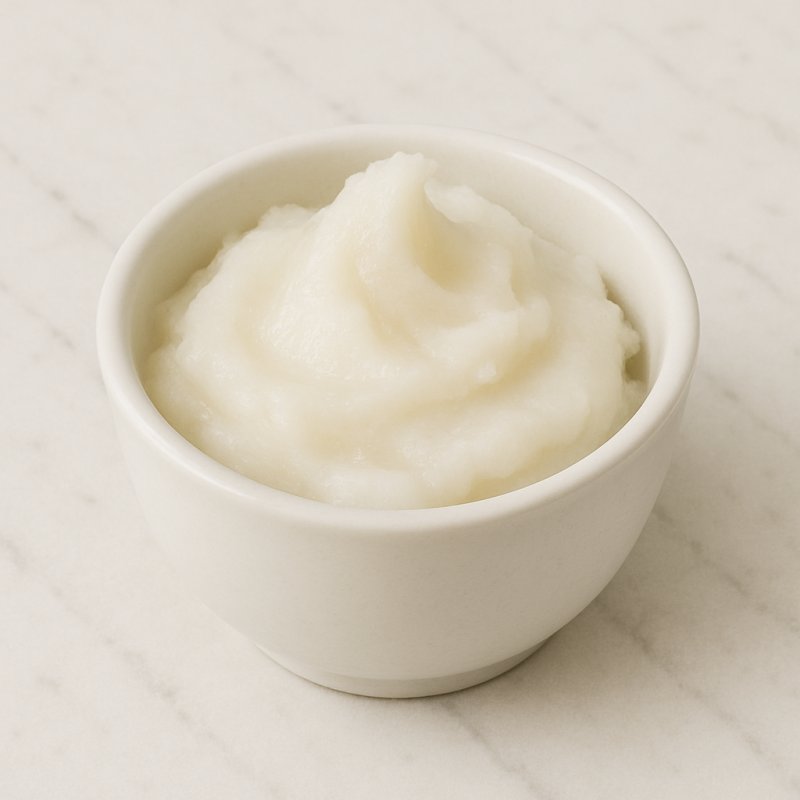
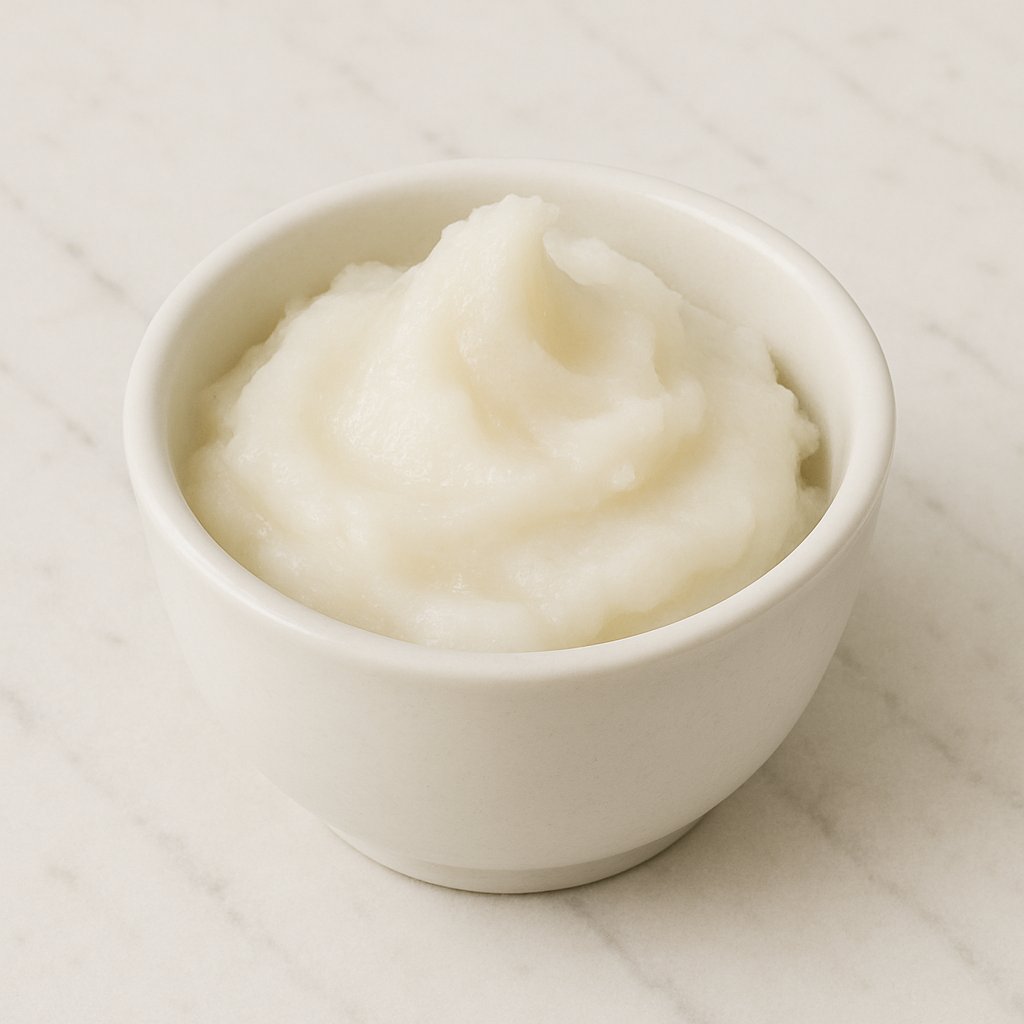
Beef tallow

Classic animal fat for frying and deep-frying

Wiki about beef tallow Nutri-Score E Vegan No Gluten-free Yes Lactose-free Yes Nut-free Yes
NUTRITION / 100 g
902 kcal 0 g Protein 0 g Kohlenhydrate 100 g Fett

Introduction

Chunks of beef tallow
Beef tallow is an ingredient with history, character and surprising versatility. As a 35-year-old editor from Europe I grew up with the notion that vegetable oils define modern cooking. Yet for some years I have witnessed a return to traditional fats — and beef tallow is at the forefront. This clarified fat obtained from beef fat has a high smoke point, a subtly savory taste and impressive stability. It appears repeatedly in my grandmother's old cookbooks: golden fried potatoes, crisp pastry bases, robust braises. Today a new generation rediscovers exactly this quality, whether for searing, baking, frying or sustainable use of leftovers.

What is beef tallow?
Beef tallow, in German "Rindertalg", is produced by rendering beef fat (often kidney fat, also called “suet”). With gentle heating the pure fat separates from tissue and water components. After filtering a light, aromatic substance remains that is solid at room temperature and melts silkily when heated. The smoke point is generally significantly higher than that of many unrefined vegetable oils, making beef tallow ideal for crispy searing. It is also oxidation-stable, so dishes develop unpleasant flavors less quickly.

Flavor, texture and culinary uses
Beef tallow has a mild, meaty note that gives dishes depth without being dominant. In baking it provides crumbly textures, in frying juicy interiors and in deep-frying very crispy surfaces. A colleague of mine swears by frying his fries only in tallow — he claims the crust becomes incomparable. I was skeptical until I tested it in a small bistro kitchen in Antwerp: glossy-crisp outside, fluffy inside — and indeed less greasy on the palate than expected.

  • Searing and roasting: Ideal heat resistance for steaks, fried potatoes, wok vegetables and mushrooms.

Availability & types

Availability and types of beef tallow

Beef tallow is rendered, i.e. melted down, beef fat. It is produced mainly from the firm fat tissue around the kidneys and other internal organs. Because it is very heat-stable and keeps for a long time, it has been used for centuries in cooking, but also for crafts, soaps and candles. Today beef tallow is more commonly found again because many people appreciate sustainable and traditional ingredients. In this section you will learn where to get beef tallow, which types exist and how they differ — explained simply.


Where is beef tallow available?

  • Butcher shops: Often the best source. You can specifically ask for "beef tallow" or "kidney fat." Some butchers sell it fresh, raw (as chunks of fat) or already rendered in jars.
  • Farmers' markets and farm shops: At direct sellers you can find tallow from regional cattle, often with information on husbandry and feeding. This is good for those who value transparent origin.
  • Online shops: There are specialized suppliers who ship tallow in jars, bags or practical tallow discs. Pay attention to refrigerated shipping and the expiration date.
  • Supermarkets: In regular supermarkets beef tallow is rarer. Sometimes it can be found in the delicatessen section or as an ingredient in prepared products (for example for cooking fats).
  • Home production: Those who obtain raw beef fat from the butcher can render it at home slowly. That way you know exactly what is in it.


Origin and impact on quality

  • Regional origin: Beef tallow from your region is often fresher and has short transport routes. This supports local farmers and butchers.
  • Type of husbandry: With pasture- or grass-feeding the tallow can have a different aroma and a different fatty acid composition
Details & nutrition

Property Value
Unit g
Average weight per piece 10
Calories per 100 902
Protein per 100 0
Carbohydrates per 100 0
Sugar per 100 0
Fat per 100 100
Saturated fat per 100 50
Monounsaturated fat 42
Polyunsaturated fat 4
Fiber per 100 0
Vitamin C (mg) per 100 0
Vitamin D (IU) per 100 0
Calcium (mg) per 100 0
Iron (mg) per 100 0
Nutri-Score E
CO₂ footprint 12.0 kg CO2e/kg
Origin Beef, various countries of origin
Gluten-free Yes
Lactose-free Yes
Nut-free Yes
Vegan No
Note Notable for high heat stability; contains no carbohydrates or proteins. Solid at room temperature.

Technical & scientific information

Beef tallow (also referred to as tallow, suet or beef tallow) is a lipid raw material obtained from bovine adipose tissue, predominantly saturated. It is produced by rendering beef fat, particularly from kidney, flank and back fat. The product is solid to semi-solid at room temperature and is characterized by high oxidation stability, a neutral to slightly animal-aromatic odor and a light, creamy to yellowish appearance. Beef tallow is used in food technology, cosmetics, pharmaceuticals, chemical and artisanal applications.

Chemical composition and fatty acid profile:
Beef tallow consists primarily of triacylglycerols. Typical is a high proportion of saturated and monounsaturated fatty acids. Common components are stearic acid (C18:0), palmitic acid (C16:0), oleic acid (C18:1, n-9) and in smaller amounts myristic acid (C14:0), palmitoleic acid (C16:1) and linoleic acid (C18:2, n-6). The saturated fatty acid content often ranges between 45 and 55%, the monounsaturated around 35–45%, while polyunsaturates are usually in the single-digit percent range. The resulting profile entails a relatively high melting point and pronounced thermal stability.

Physical properties:
Beef tallow shows variability in consistency and melting behavior depending on origin and feeding. Typical values are:
- Melting range: about 40–50 °C, depending on fatty acid composition and fractionation.
- Solidification point: moderately below the melting point, often 35–45 °C.
- Iodine value: relatively low (often 35–50), indicating a low degree of unsaturation.
- Acid value (for fresh, refined tallow): low, indicator of few free fatty acids.
- Peroxide value (fresh): low values, increases with improper storage.
These parameters
Wiki entry for: beef tallow
Active now: 20 visitors of which 2 logged-in members in the last 5 minutes