Menu & categories

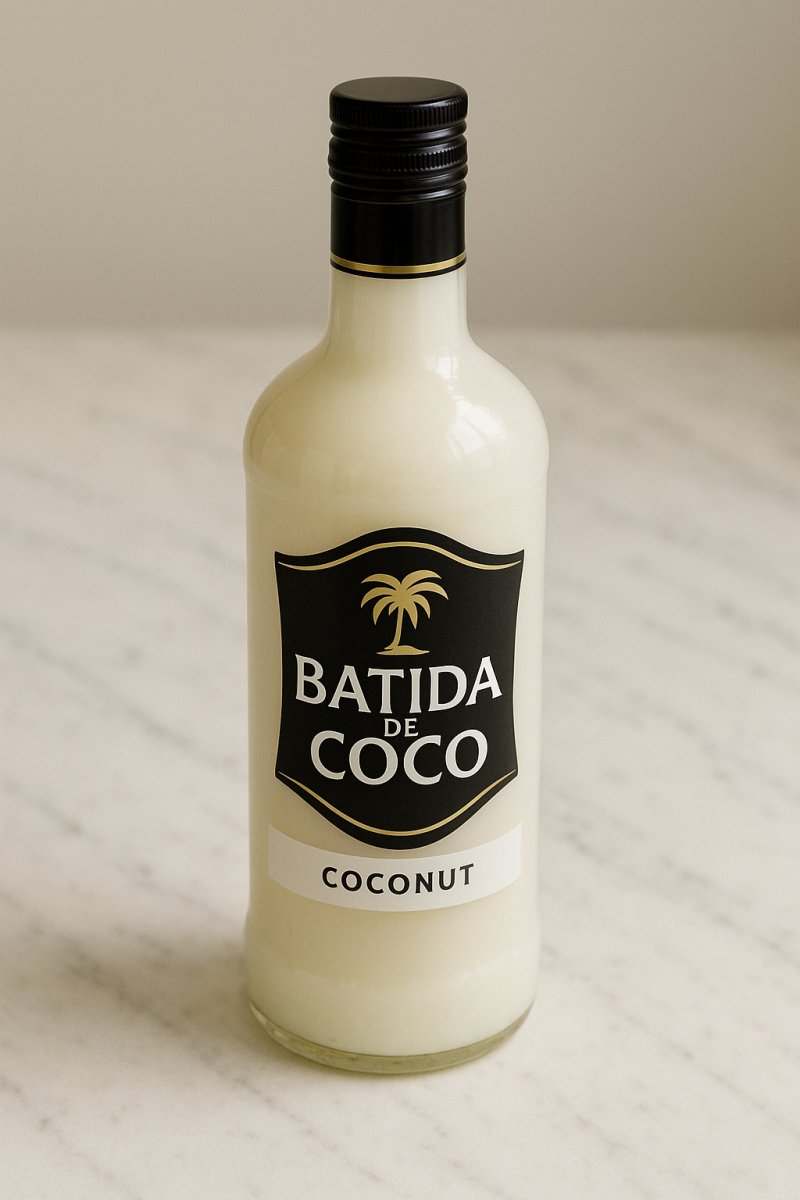
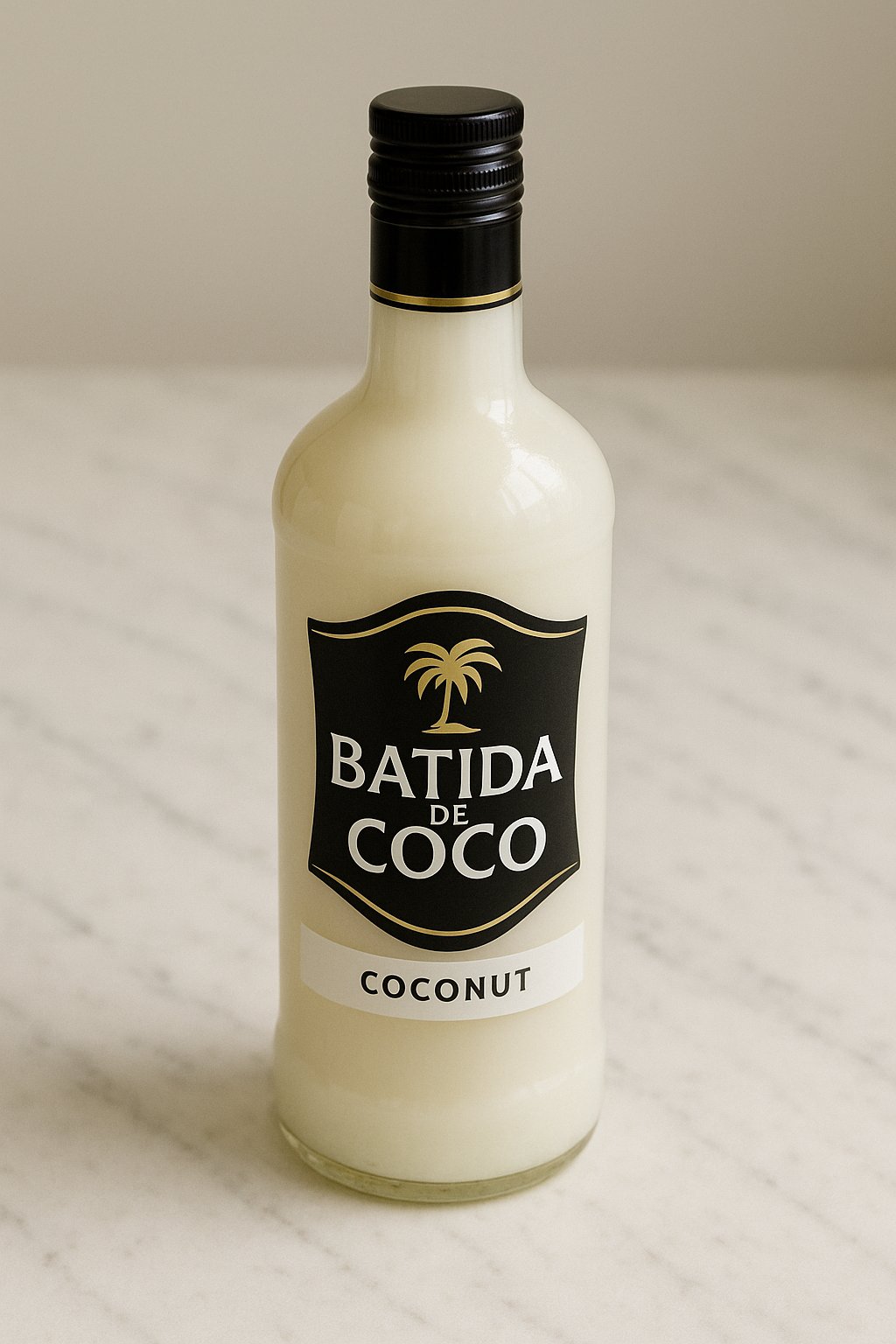
Batida de Coco

Sweet coconut liqueur with a creamy texture

Wiki about Batida de Coco Nutri-Score E Vegan No Gluten-free Yes Lactose-free No Nut-free No
NUTRITION / 100 ml
230 kcal 1.0 g Protein 25.0 g Kohlenhydrate 10.0 g Fett

Introduction

Glass with Batida de Coco liqueur and coconut
I still remember well the first sip of Batida de Coco that reopened my idea of coconut: creamy, sweet and at the same time surprisingly fresh, as if summer had been squeezed into a glass. I had discovered the bottle at a small market stall in Lisbon, and a colleague of mine, who always has a taste for exotic liqueurs, insisted that we try it. What began as a curious sip quickly became a small tradition on long evenings with friends.

Batida de Coco is a Brazilian coconut liqueur, usually based on white rum or cachaça and refined with coconut milk or cream and sugar. Its profile is lush and velvety, but not heavy: the coconut notes range between fresh nut and sweet, slightly vanilla cream. I find it best chilled, neat as a digestif or as a creamy base in cocktails, where it instantly amplifies tropical flavors.

What I particularly like about Batida de Coco are these practical qualities:

  • Versatility: It fits simple mixed drinks like the classic batida with lime juice or more elaborate cocktails that need coconut nuances.
  • Convenience: Ready bottles are ideal when you have guests and want to offer something impressive quickly.
  • Regional identity: Batida is deeply rooted in Brazilian drinking culture and brings a piece of Caribbean and Atlantic sunshine to the home bar.
Of course there are numerous variations: some producers focus on an especially creamy coconut cream, others on a lighter profile with more rum note. When I experiment at home, I like to mix in fresh limes and a few mint leaves or use Batida de Coco as a dessert companion to baked pineapple. Once I even incorporated it into a chocolate mousse — the result was decadent enough that a friend joked he would soon file a patent.

For me Batida de Coco is more than just a liqueur. It is a small ritual, a taste that evokes holiday memories and with which you can create something special with a few simple steps. If you are curious, try it neat on ice, in a fruity mix or as a sweet surprise in dessert; in any case it is a pleasure that tells stories.

Availability & types

Availability and types

What is Batida de Coco? Batida de Coco is a sweet coconut liqueur from Brazil. You can think of it as a thick, coconut‑milk–like flavor in a bottle, often slightly alcoholic. In Brazil it is enjoyed neat, with ice or as an ingredient in cocktails. For many people around the world it is an easy way to add coconut flavor quickly to drinks and desserts.

Origin and growing regions
Batida de Coco originally comes from Brazil. Many coconut palms grow there, especially along the coast, because the palms like a lot of sun, warmth and sandy soil. The coconuts that provide the flavor grow in tropical countries like Brazil, but also in other regions such as the Philippines, Indonesia, India and some Caribbean countries. You can picture it this way: coconut palms are like sun worshippers — they prefer warm beaches and provide the fruits that are later turned into drinks like Batida de Coco.

Available varieties and variants
Batida de Coco is not available in just one version. Producers offer different types so there is something for different tastes. Here is a simple overview:

  • Classic Batida de Coco: This type is sweet and has a strong coconut taste. It is the most common variant and is often used for mixing.
  • Lighter / Low‑Sugar: For people who want less sugar there are lighter versions. They taste less sweet but retain the coconut aroma.
  • Higher alcohol content: Some bottles have more alcohol and are suitable if you like a stronger drink or want to use less to achieve the same effect.
  • Alcohol‑free variants: For children or people who do not drink alcohol there are alcohol‑free coconut liqueur substitutes or coconut‑flavored syrups. These are to be understood like juices or syrups and can be used the same way in mixed drinks.
  • With added flavors: Some Batidas have additional flavor notes such as vanilla, pineapple or caramel. This is comparable to a vanilla ice cream to which fruit or sauce is added — the base aroma remains coconut, but pleasant secondary flavors are added.
How easy is Batida de Coco to obtain?
In many countries you can buy Batida de Coco in supermarkets, specialist liquor shops or online stores. Big brands are often found in large supermarket chains, while special or imported varieties tend to appear in well‑stocked beverage departments or specialty shops. Alcohol‑free syrups are often available in grocery stores because they make the flavor accessible to everyone — similar to chocolate syrup found in many households.

Tips for finding it:

  • Look in the beverage or spirits section of your supermarket.
  • Online shops often have a larger selection, especially if you are looking for a specific variety.
  • If you want nonalcoholic alternatives, look for coconut syrup or coconut liqueur substitutes.
In summary: Batida de Coco comes from tropical regions such as Brazil and is made from coconut flavors. There are classic, lighter, stronger, alcohol‑free and flavored variants. You can find it in supermarkets, specialty stores or online — and there is a suitable version for every taste, whether sweet, light or alcohol‑free.
Details & nutrition

Property Value
Unit ml
Calories per 100 230
Protein per 100 1.0
Carbohydrates per 100 25.0
Sugar per 100 25.0
Fat per 100 10.0
Saturated fat per 100 9.0
Monounsaturated fat 0.7
Polyunsaturated fat 0.3
Fiber per 100 0.0
Vitamin C (mg) per 100 0.0
Vitamin D (IU) per 100 0.0
Calcium (mg) per 100 20.0
Iron (mg) per 100 0.1
Nutri-Score E
CO₂ footprint 1.8
Origin International, typically a Brazil-inspired coconut liqueur
Gluten-free Yes
Lactose-free No
Nut-free No
Vegan No
Note Alcoholic beverage made from coconut and milk/cream, usually about 16-20% ABV. Nutritional values may vary slightly depending on brand and recipe.

Technical & scientific information

Batida de Coco refers both to a traditional Brazilian mixed drink and to a commercially available coconut cream or coconut‑containing liqueur base used in cocktails and desserts. Typically Batida de Coco consists of coconut milk or coconut cream, sugar and alcohol (often cachaça or rum); commercial variants may additionally contain stabilizers, emulsifiers and preservatives to improve texture and shelf life.

Composition and ingredients
The basic components of Batida de Coco can be distinguished chemically and nutritionally:

  • Coconut fat and fatty acids: Coconut milk/cream contains predominantly saturated fatty acids, particularly medium‑chain triglycerides (MCT) such as lauric acid (C12:0), myristic acid (C14:0) and caprylic acid (C8:0). These fatty acids influence melting point, texture and energy density.
  • Water and soluble components: The aqueous fraction contains dissolved carbohydrates, proteins with soluble albumins and a broad spectrum of mineral ions (potassium, sodium, magnesium) as well as small amounts of vitamins, mainly water‑soluble B vitamins.
  • Sugars: In homemade and industrial Batidas table sugar (sucrose) is added; commercial products may also contain glucose syrups or inverted sugar, which alters sweetness intensity, freezing point and viscosity.
  • Alcohol: Alcoholic variants typically use cachaça or rum at ~35–40 % vol., with alcohol acting both as a flavor carrier and as a preservative and increasing the solubility of aromatic compounds.
  • Stabilizers and emulsifiers: Industrially produced Batidas often contain carboxymethylcellulose, guar gum, lecithins or mono‑/diglycerides to prevent phase separation and ensure a creamy, homogeneous texture.
Nutritional values and energy density
Batida de Coco is energy‑ and fat‑rich. Energy comes mainly from saturated fats and added sugar; an alcoholic fraction further increases the caloric density. Typical nutritional values vary by formulation but are in the range of about 200–350 kcal per 100 g for commercially sweetened variants. Fat contents can be 15–30 g per 100 g, with a large share being saturated fatty acids.

Processing methods
Production is divided into several process steps:

  • Extraction of coconut milk/cream: Smoked or fresh coconut flesh is grated and pressed with water; repeated pressing and centrifugation yield different fat contents (milk vs. cream).
  • Mixing and homogenization: The liquid components are mixed with alcohol and sugar. High‑pressure homogenization or high‑shear homogenization is used to finely distribute fat droplets in the aqueous phase and stabilize the emulsion.
  • Stabilization and pasteurization: For microbial safety thermal treatment (pasteurization) and the addition of stabilizers are applied. The choice of temperature affects flavor and nutrient loss.
  • Filling and storage: Packaging protects against oxidation; light and temperature control are important because heat can cause fat separation and enzymatic changes.
Health aspects
From a nutritional science perspective the main points are:

  • The high content of saturated fatty acids, particularly lauric acid, has metabolic effects; lauric acid can raise HDL cholesterol but also affect LDL. Overall intake of saturated fats should be considered in the context of the whole diet.
  • The sugar and energy content makes Batida de Coco a calorically critical product for regular consumers; excessive consumption carries increased risk of weight gain and metabolic diseases.
  • Alcohol in the product contributes to acute and chronic health risks; for vulnerable groups (pregnant people, those with liver disease) alcoholic consumption is contraindicated.
  • Allergic reactions to coconut are possible, though less common than with other tree nuts; industrial additives can cause additional intolerances (e.g. soy lecithin).
Overall, Batida de Coco is a culinarily versatile product with a characteristic fatty acid composition and high energy density. Its chemical structure as a fat‑water emulsion and its processing requirements determine texture, stability and sensory properties; healthwise, moderate consumption is advisable, particularly because of saturated fats, sugar and alcohol content.

Wiki entry for: Batida de Coco
Active now: 18 visitors of which 2 logged-in members in the last 5 minutes