Menu & categories

Basil

Aromatic culinary herb with intense flavor and valuable nutrients

Wiki about basil Nutri-Score A Vegan Yes Gluten-free Yes Lactose-free Yes Nut-free Yes
NUTRITION / 100 g
23 kcal 3.2 g Protein 2.7 g Kohlenhydrate 0.6 g Fett

Introduction

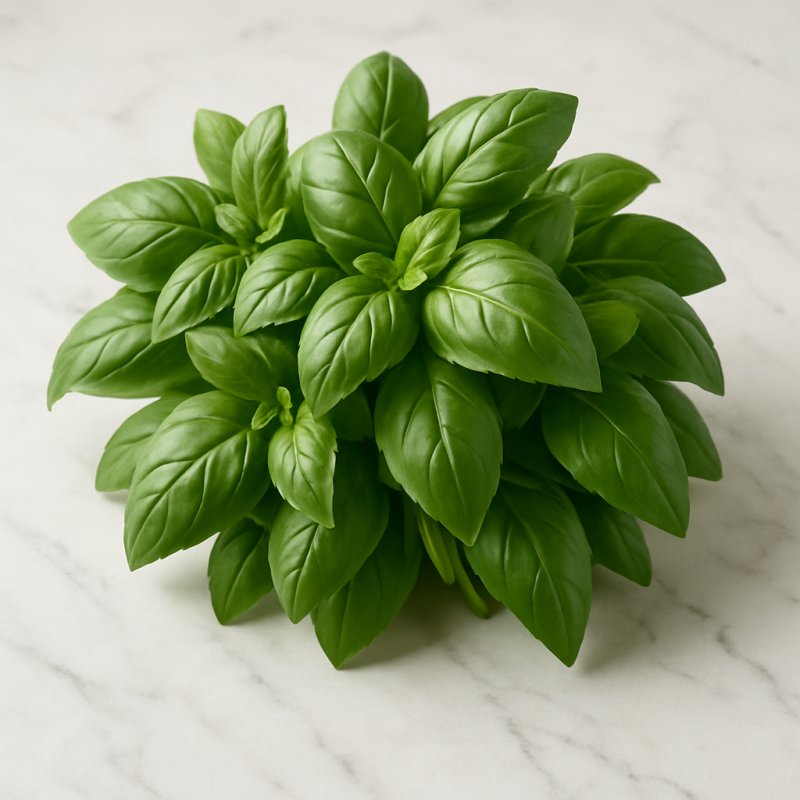
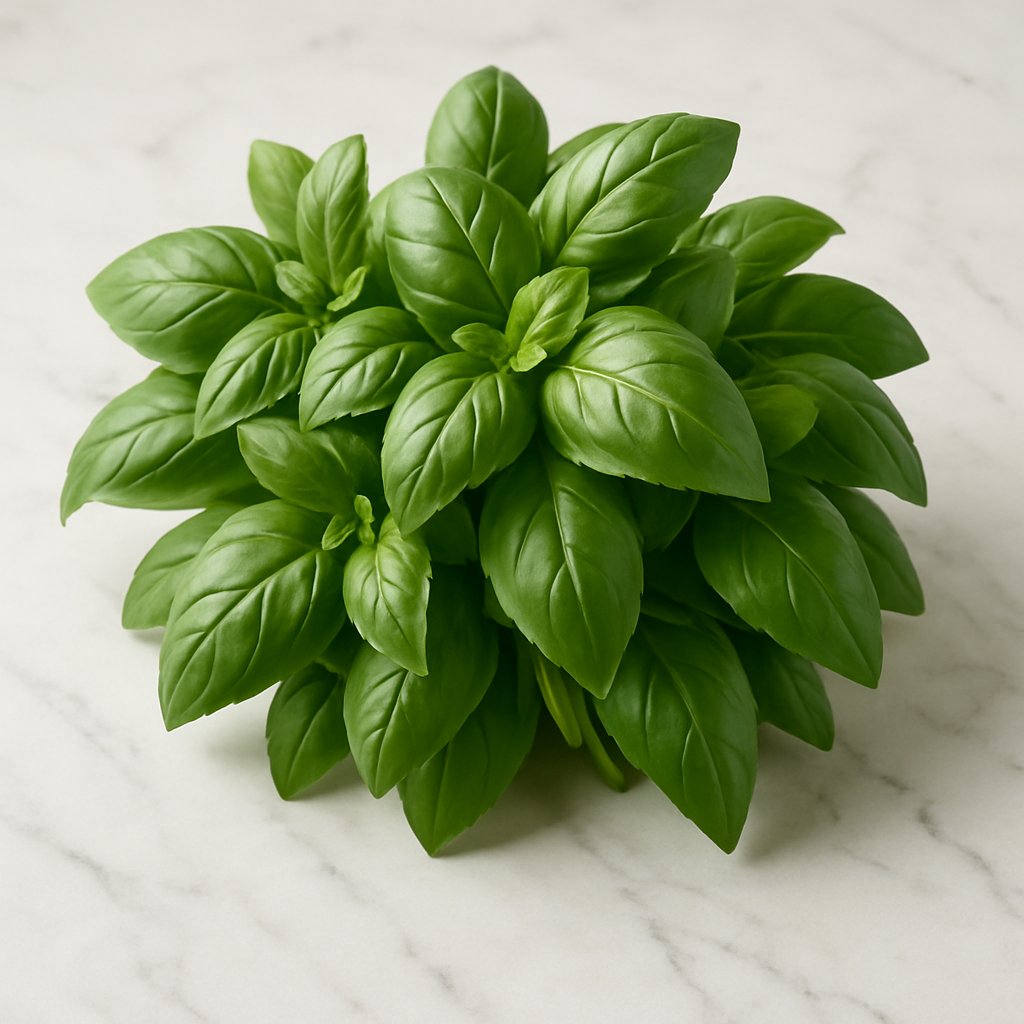
Fresh green basil leaves
I still remember the first scent of basil that really knocked me out: on a mild summer evening when someone on the terrace rubbed fresh leaves between their fingers and the smell immediately recalled sun-ripened tomatoes and wet wood. Since then basil has been more than just an herb to me; it's a little aroma magnet that turns simple dishes into something charming.

What I love about basil is its versatility. There are the classic large, soft leaves that are perfect for Pesto, and the smaller, more intense varieties that are used more as a garnish. I have stirred countless jars of pesto in my life, some with more garlic, some with extra lemon, and each time I think how wonderfully this herb balances sweet and peppery notes.

A colleague of mine swore for years by dried basil as a cure-all for sauces that were too bland. I had to explain that fresh basil speaks a completely different language: brighter, greener, more alive. Of course dried basil has its place — it's practical and reliable — but torn fresh over a Caprese or served in a quick tomato ragù, it makes the dish undeniably homier.

Practical tips I've gathered over time:

  • For storing: Basil likes warmth. In water on the windowsill it keeps longer than in the refrigerator.
  • For processing: Better to pinch leaves off by hand instead of cutting them, so as not to lose the aroma.
  • For pairing: Basil goes especially well with tomatoes, lemon, garlic, olive oil and mozzarella.
When I cook it's often about small rituals: rubbing a leaf between your fingers, throwing a few leaves into the pan, tying a bouquet garni from them at the end. These gestures not only feel good, they also give the food personality. Basil, for me, is a piece of summer preserved in scent and taste that I like to bring out again and again, whether on a simple slice of bread with tomato or at an elaborate family meal. Thus this herb remains an indispensable companion in my kitchen, bringing great joy with little effort.

Availability & types

Availability and types of basil

Basil is a very well-known culinary plant, offered fresh in many supermarkets, at weekly markets and in nurseries. You can also easily grow it yourself at home in a pot or in the garden. Basil originally comes from warmer regions such as India and the Mediterranean. It has been grown there for thousands of years. Today basil is cultivated almost everywhere the climate is warm enough or where it is protected in pots indoors.

Where does basil come from and where is it grown?
Basil originated in South Asia (especially India) and spread via the Near East to Europe. Today cultivation areas can be found in many countries:

  • Europe: In countries like Italy or Greece a lot of basil is grown, particularly for the well-known Italian cuisine.
  • Asia: In India and Thailand basil often grows on fields and in small gardens.
  • North and South America: Basil is also cultivated here, often for supermarkets or for fresh cooking in restaurants.
  • At home: Many people grow basil in pots on the windowsill or on the balcony. This is practical because you can always cut it fresh.
What varieties and types are there?
There are many different varieties of basil that differ in appearance, smell and taste. Here are some of the best known and what makes them special:

  • Sweet basil (Genovese): Probably the best known, with large green leaves. It tastes mild and slightly sweet – ideal for pesto and salads. It can be compared with the famous Italian region of Genoa, because it is often used there.
  • Thai basil: Has smaller, firmer leaves and a slightly licorice-like, anise-like taste. It is widely used in Thai dishes, for example in curries.
  • Purple basil (purple): Striking because of its dark purple leaves. It tastes similar to green basil but looks particularly decorative in salads – like a colored cloth on the plate.
  • Lemon basil: Smells strongly of lemon and gives dishes a fresh, zesty note. Especially good with fish or in summer drinks.
  • Italian large-leaf: Similar to Genovese but often somewhat larger and fleshier. Perfect for fresh pesto recipes.
  • Holy basil (Tulsi): This variety plays an important role in Indian traditions and is also used as a medicinal plant. It has a more intense and slightly spicy flavor.
Fresh, dried or in a pot?
Basil is available fresh as a bunch or in a pot, as well as dried in spice jars. Fresh basil has the most intense aroma; drying changes the taste somewhat – similar to dried leaves of herbs that are no longer as juicy. A pot is practical because you can pick the leaves fresh whenever you need them.

Tips for choosing
When buying, look for fresh, shiny leaves without brown spots. A pot of basil is a good choice for the kitchen: it lasts longer and you can harvest repeatedly. If you want to try different flavors, try small plants of Thai, lemon or purple basil – that way you quickly find which variety you like best.

In summary: Basil originally grows in warm countries, today it is cultivated worldwide and is available in many varieties – from mild Genovese to aromatic Thai or decorative purple. Whether fresh in a pot, as a bunch or dried in a jar, basil is versatile and easy to grow for beginners.
Details & nutrition

Property Value
Unit g
Average weight per piece 1.5
Calories per 100 23
Protein per 100 3.2
Carbohydrates per 100 2.7
Sugar per 100 0.3
Fat per 100 0.6
Saturated fat per 100 0.04
Monounsaturated fat 0.09
Polyunsaturated fat 0.37
Fiber per 100 1.6
Vitamin C (mg) per 100 18.0
Vitamin D (IU) per 100 0
Calcium (mg) per 100 177
Iron (mg) per 100 3.2
Nutri-Score A
CO₂ footprint 0.3 kg CO2e pro 100 g (Freilandanbau, ohne Transport)
Origin Mediterranean region, today cultivated worldwide
Gluten-free Yes
Lactose-free Yes
Nut-free Yes
Vegan Yes
Note Nutritional values refer to fresh basil leaves; values may vary slightly depending on variety, cultivation and storage conditions.

Technical & scientific information

Basil (Ocimum basilicum) is an aromatic herbaceous plant in the family Lamiaceae and is cultivated worldwide as a culinary and medicinal plant. The plant typically reaches heights of 20 to 60 centimeters, has opposite, softly hairy leaves and small flowers arranged in spikes. Numerous cultivated varieties differ in leaf size, color and scent profile; well-known types include Genovese, Thai basil and lemon basil.

Botanical and agronomic characteristics: Basil is an annual or, in frost-free climates, perennial plant with rapid vegetative growth. Propagation is mainly by seed but can also be done by cuttings. The optimal germination temperature is around 20–25 °C, while full sun and well-drained, nutrient-rich soils promote aroma and leaf production. Common cultivation problems include fungal diseases with excessive humidity and pest infestations by aphids and whiteflies.

Chemical composition and constituents: The characteristic aromas of basil derive primarily from the essential oil, whose content can vary by variety between 0.5 and 3.5 % of the fresh weight. Main components are estragole, linalool, eugenol, 1,8-cineole and citral. The composition influences taste and effects: eugenol provides slightly peppery and antiseptic properties, linalool contributes floral notes, estragole and citral give anise- or lemon-like aromas. In addition to volatile terpenes, basil also contains non-volatile secondary plant compounds such as flavonoids (e.g. apigenin, luteolin), phenolic acids (e.g. rosmarinic acid) as well as tannins and saponins.

Nutritional profile: Fresh basil leaves supply, despite very low calories, appreciable amounts of vitamins and minerals per gram of fresh mass. Typical nutrient carriers are vitamin K, vitamin A (mainly as beta-carotene), vitamin C and essential minerals such as calcium, iron and manganese. However, concentrations are moderate due to the small quantities consumed in cooking, so basil primarily serves as a flavor and aroma contributor and secondarily as a micronutrient source.

Processing methods: Basil is used fresh, dried or as a component of pesto and oil infusions. Fresh leaves release their full aroma best but should be cooled quickly after harvest, since heat and humidity accelerate the loss of volatile oils. Drying often reduces the aromatic profile because volatile components are lost; air-dried leaves retain more aroma than high-heat processes. Oil infusions (macerates) and distilled essential oils concentrate the volatile components and are used for culinary, cosmetic and therapeutic applications.

Health aspects: Basil is traditionally attributed anti-inflammatory, antibacterial and antispasmodic properties. Scientific studies show that components such as eugenol and rosmarinic acid possess antioxidant and antimicrobial activity. Clinical data on therapeutic effectiveness in humans are limited, and dosage and safety depend on form and concentration. Particular caution is advised with high intake of estragole, as mutagenic effects have been discussed in animal studies; at culinary amounts the risk is considered very low. Pregnant and breastfeeding people should avoid highly concentrated essential oils.

Safety and storage: Fresh basil lasts only a few days in the refrigerator at 4 °C; to extend freshness, storing it wrapped in slightly damp kitchen paper or standing it in a glass of water is recommended. Dried basil should be stored airtight and protected from light to minimize oxidation of aromatic compounds. When using essential oils, attention must be paid to dilution and possible skin irritation.

In summary, basil is a versatile ingredient with a complex chemical profile and high culinary value. The balance of volatile terpenes and non-volatile secondary plant compounds determines aroma, potential health effects and processing properties. For most applications fresh leaves remain the preferred form, while standardized extracts and oils can be used when higher concentrations of bioactive components are required.

Wiki entry for: basil
Active now: 18 visitors of which 2 logged-in members in the last 5 minutes