Menu & categories

Banana

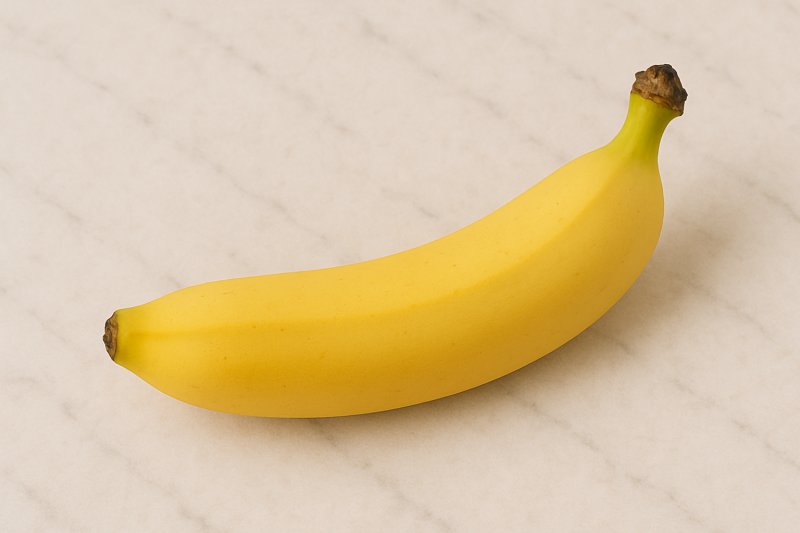
Ripe, raw banana with natural sweetness and high potassium content

Wiki about banana Nutri-Score B Vegan Yes Gluten-free Yes Lactose-free Yes Nut-free Yes
NUTRITION / 100 g
89 kcal 1.1 g Protein 23 g Kohlenhydrate 0.3 g Fett

Introduction

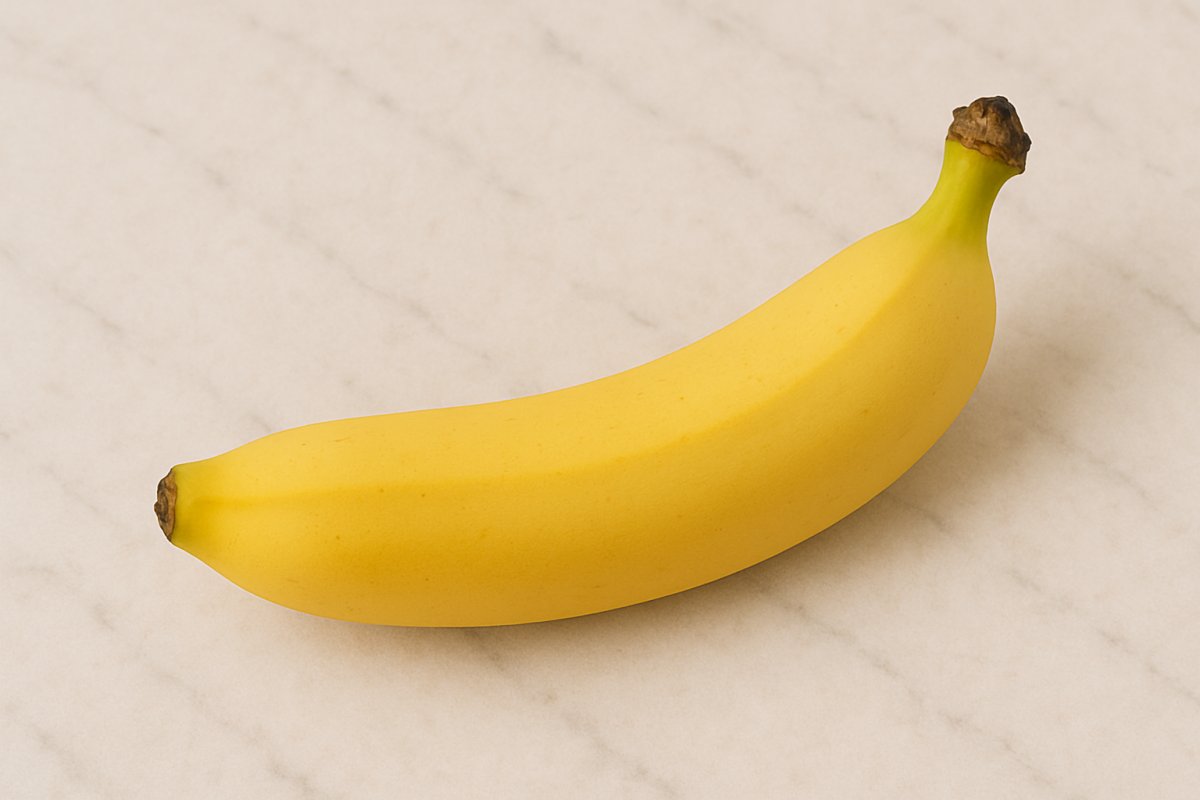
Ripe yellow banana in its peel
I still clearly remember the morning I realized how versatile a raw banana can be. At the time I was standing in a small kitchen that smelled of coffee, and a colleague handed me a banana with a smile as if it were a little comfort for a hectic day. I bit into it and was surprised by the gentle sweetness, the creamy texture and the quiet crackle when the fiber structures separated. Since then I have appreciated raw bananas not only as a quick snack, but also as a culinary staple that shines in surprisingly many recipes.

For me the raw banana is more than just fruit. It is a reliable companion in everyday life: easy to carry, edible without preparation and surprisingly nutritious. I particularly like the balance between natural sweetness and the starchy-like fullness of younger, less ripe specimens. Sometimes I deliberately buy a mix of ripe and almost green bananas to enjoy the different textures – the ripe ones provide immediate energy, the green ones offer a firmer bite and keep you fuller longer.

When I talk about raw bananas, I think of my first encounter with a simple dessert: a mashed piece of banana mixed with yogurt and honey, sprinkled with nuts. A friend laughed at the time because he didn't believe that so little effort could bring so much flavor. Since then I enjoy experimenting: slices on porridge, in a smoothie, or as a base for quick banana ice cream. The raw banana is in these cases a reliable flavor carrier and often the secret ingredient that gives creaminess without requiring additional dairy.

Nutritionally I value raw bananas for their fiber, potassium and gently available energy. They are suitable for hikes, as an office snack, or as a sweet finish to an improvised dinner. In conversations with friends, bananas were repeatedly mentioned as “comfort food,” and I can only confirm that: there is little more comforting than the familiar aroma and the velvety consistency of a ripe, raw banana.

In short: the raw banana is, for me, a little culinary chameleon – down-to-earth, nutritious and surprisingly adaptable. I take it on trips, prepare it for guests and always keep a few in the fruit bowl, because in its uncomplicated way it simply brings joy.

Availability & types

Availability and types

The raw banana is one of the easiest fruits to find around the world. It grows mainly in warm, humid regions near the equator. If you picture a map, these are areas in South America, Africa, Asia and some Pacific islands. Countries like Ecuador, Colombia, Costa Rica, the Philippines and Cameroon are large banana producers. These places often have many hours of sunshine, regular rainfall and no long frost periods – good conditions for banana plants to grow well.

Because bananas are grown in so many countries, you can find them almost always in supermarkets. They are usually in the produce section or hanging in special baskets. Sometimes they are available in larger quantities because they are widely cultivated in warm countries. In some regions bananas are available year-round, while in others there may be short periods with fewer ripe fruits – similar to other fruits that have better seasons.

Varieties and variants

  • Cavendish: This is the most sold banana worldwide. You probably know it: yellow skin, soft, sweet flesh. It is the common supermarket banana.
  • Plantain (cooking banana): These bananas are larger, more starchy and less sweet when green. They are often cooked, fried or roasted and not eaten raw. In many countries plantains are like potatoes – used as a side dish.
  • Red banana: It has a reddish-brown skin and is often somewhat sweeter and creamier inside than the yellow banana. It is smaller and has a slightly different taste, almost like a mix of banana and mango.
  • Baby bananas / small bananas: These are shorter and sweeter than regular Cavendish bananas. Children often like them because they fit well into small hands.
  • Wild and local varieties: In many tropical countries there are dozens of banana varieties that are traded only locally. Some have unique flavors, others are particularly firm or very aromatic. These varieties are often seen more at local markets than in large supermarkets.
An easy way to explain the differences: imagine the Cavendish banana is like the standard T-shirt – comfortable and everywhere available. Plantains are more like work jeans – sturdy and for specific tasks (cooking). Red bananas or baby bananas are like colorful T-shirts or children's T-shirts – they look different and have a special note.

How to recognize the right banana?

  • If you want to eat it raw, choose yellow bananas with maybe a few brown spots – they will be nicely sweet.
  • Green bananas are firm and less sweet; they will ripen if you leave them for a few days.
  • If you want a cooking banana, you can often recognize it by a thicker peel and larger size; it will become soft and fluffy when cooked.
In summary: raw bananas are available almost everywhere because they are grown in many warm countries. There are different types – from the everyday Cavendish to the sturdy plantain and sweet specialty types. Each variety has its place: some are eaten raw as a snack, others are cooked. So there is something for every taste and use.
Details & nutrition

Property Value
Unit g
Average weight per piece 120
Calories per 100 89
Protein per 100 1.1
Carbohydrates per 100 23
Sugar per 100 12
Fat per 100 0.3
Saturated fat per 100 0.1
Monounsaturated fat 0.03
Polyunsaturated fat 0.07
Fiber per 100 2.6
Vitamin C (mg) per 100 8.7
Vitamin D (IU) per 100 0
Calcium (mg) per 100 5
Iron (mg) per 100 0.3
Nutri-Score B
CO₂ footprint 0.8
Origin Tropical and subtropical growing regions, imported produce
Gluten-free Yes
Lactose-free Yes
Nut-free Yes
Vegan Yes
Note Nutritional values refer to 100 g of peeled, raw banana; values may vary slightly depending on ripeness.

Technical & scientific information

Banana, raw refers to the edible, unprocessed fruit of various species of the genus Musa, which is widespread worldwide as a staple food and snack. Bananas consumed raw have a soft, starch- and sugar-rich flesh structure that varies with ripeness from firm and slightly mealy to very soft and sweet. Botanically it is a berry with a multilayered pericarp; typical dessert bananas mainly come from hybrids of the species Musa acuminata and Musa balbisiana.

Composition and main constituents
The flesh of a raw banana consists predominantly of water (approx. 74–75 % in ripe fruits) and carbohydrates (around 22–23 %). The carbohydrates are made up, depending on ripeness, of starch, free sugars (glucose, fructose, sucrose) and dietary fiber. Unripe bananas contain a higher proportion of resistant starch, which is not fully degraded in the small intestine, while during ripening starch is converted into readily utilizable sugars. The fiber content is about 2–3 % and comprises pectins, hemicelluloses and cellulose. Protein content is low (about 1–1.5 %), and fat content is negligible.

Minerals and vitamins
Raw bananas provide notable amounts of potassium (typically 350–400 mg per 100 g), which is relevant for the regulation of fluid balance and neuromuscular function. Other minerals include magnesium, phosphorus and small amounts of calcium and iron. Among vitamins, provitamin A (carotenoids in small amounts), vitamin C (ascorbic acid, approx. 8–12 mg/100 g) and B vitamins such as vitamin B6 (pyridoxine) are noteworthy; these are involved in carbohydrate metabolism and neurotransmitter biosynthesis.

Biochemical changes during ripening
The ripening of bananas is an ethylene-driven physiological process. Ethylene induces enzymes such as amylases, which hydrolyze starch, and pectinases, which break down the cell wall and thereby make the fruit softer and sweeter. At the same time, the color of the peel changes due to the breakdown of chlorophyll and the exposure or synthesis of carotenoids. These enzymatic processes also influence texture, aroma (through the formation of volatile aromatic compounds) and the digestibility of carbohydrates.

Processing and culinary uses

  • Raw consumption: eaten ripe as fresh fruit or sliced in fruit salads.
  • Further processing: purees for baby food, banana chips (fried or dried), baked goods (e.g. banana bread) and smoothies.
  • Preservation: freezing or canning reduces enzyme activity; for industrially shelf-stable products pasteurization or drying is often applied.
Health aspects
Raw bananas are considered well tolerated and can have different nutritional effects depending on ripeness. Ripe fruits provide quickly available energy through monosaccharides and sucrose, whereas unripe bananas, due to resistant starch, may exhibit prebiotic effects by serving as substrates for the gut microbiota and producing short-chain fatty acids. The high potassium content supports blood pressure regulation in the context of a low-sodium diet. Vitamin B6 and vitamin C contribute to metabolic function and antioxidant capacity. In individuals with fructose intolerance or with elevated blood glucose concerns, consumption of very ripe, very sweet bananas should be chosen with care.

Safety and possible side effects
Bananas are generally safe. Rare allergic reactions are usually related to cross-reactions with latex (Hevea) or certain pollens. Excessive consumption can lead to gastrointestinal complaints in sensitive individuals, particularly with intolerable amounts of resistant starch or fruit sugars. In renal disease, the potassium content should be discussed with the treating physician.

Storage and quality
Optimal storage of raw bananas is at moderate temperatures (approx. 12–15 °C) to delay ripening; cooler temperatures cause chilling injuries, warmer temperatures accelerate ethylene-induced ripening. Mechanical injuries favor microbial colonization and mold formation. Sensory assessment (color, firmness, aroma) correlates well with chemical indicators of ripeness such as starch and sugar content.

Overall, the raw banana is a nutrient-dense, versatile fruit with specific biochemical properties that change markedly with ripeness, storage and processing. Its nutritional significance lies in the combination of readily available energy, prebiotic fiber content and a favorable mineral profile, particularly a high potassium content.

Wiki entry for: banana
Active now: 20 visitors of which 2 logged-in members in the last 5 minutes