Menu & categories

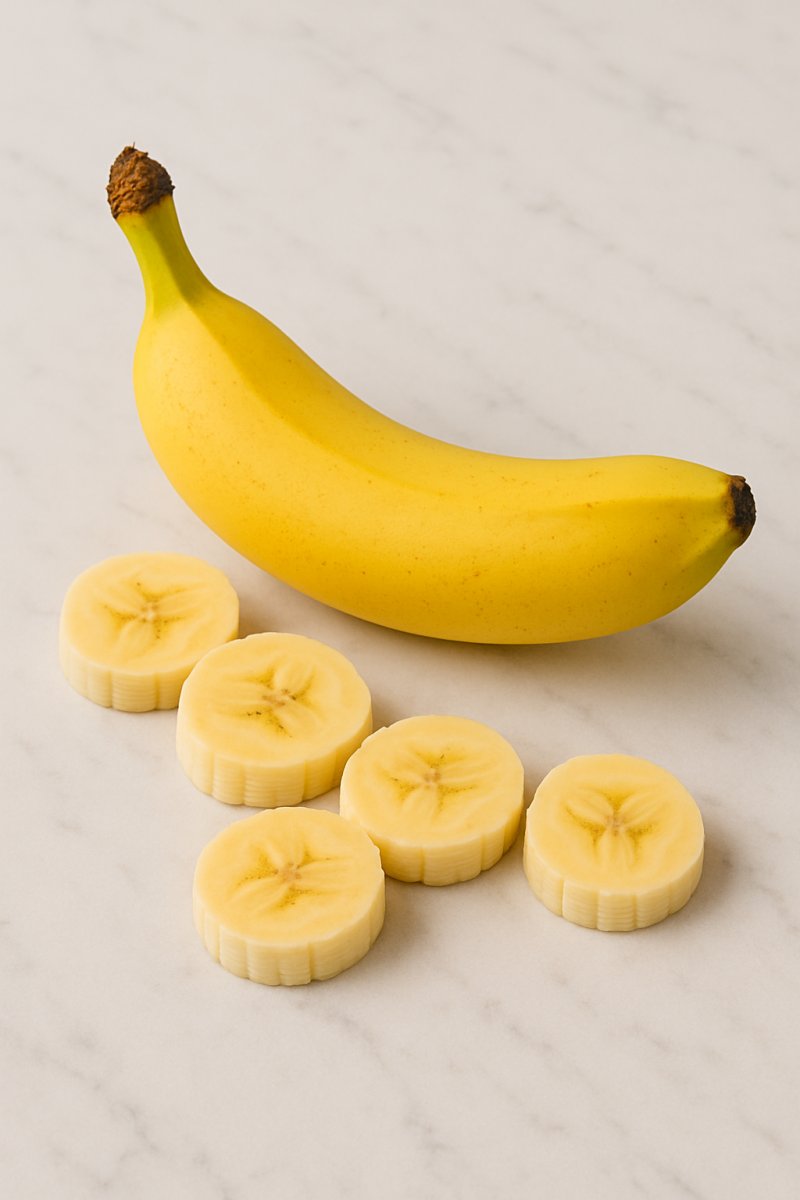
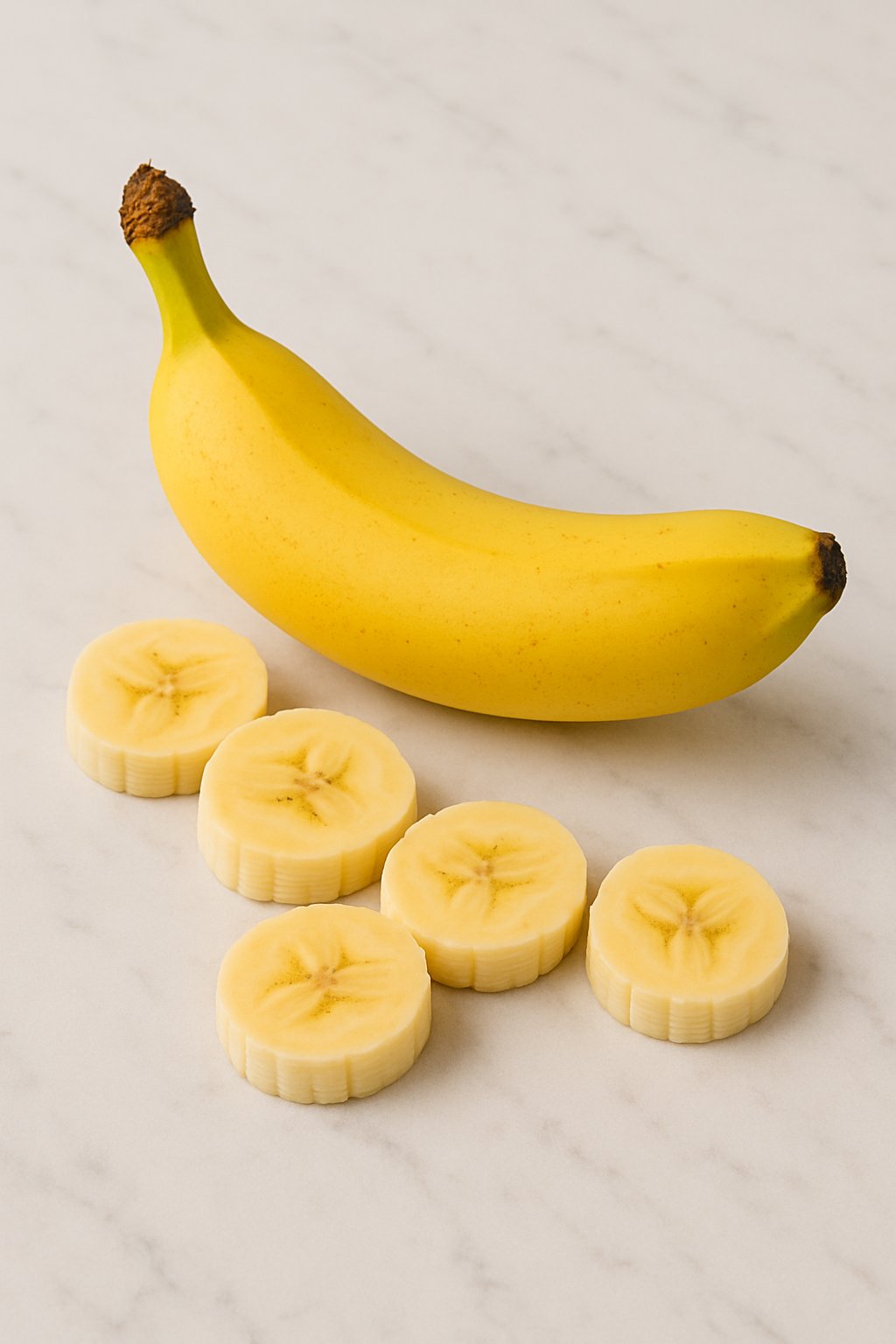
Banana

Mild, sweet fruit – ideal as a snack and for baking.

Wiki about banana Nutri-Score A Vegan Yes Gluten-free Yes Lactose-free Yes Nut-free Yes
NUTRITION / 100 g
89 kcal 1.1 g Protein 22.8 g Kohlenhydrate 0.3 g Fett

Introduction

Banana
I love the banana because it is so uncomplicated and yet so versatile. When I peel a banana, a small ritual always begins for me: first admiring the rich yellow, then inhaling the scent and finally checking whether it is still firm enough for a salad or already soft enough for a fluffy banana cake. A banana is never just a banana; it is a snack, an ingredient and a comfort for the soul at the same time.

I still remember a rainy afternoon when I stood in the kitchen with an overripe banana and an improvised pan. From two eggs, a measure of oats and that one banana came a jam substitute that immediately convinced friends. A colleague of mine has sworn by the same recipe for breakfast pancakes when he is on the road ever since.

Botanically the banana is amazing: it provides easily digestible energy, contains potassium, fiber and is a reliable ingredient for baking or smoothies. I also like how many facets it has – from the firm plantain to the soft-sweet dessert banana.

  • Snack: Plain, with nut butter or sliced on yogurt.
  • Baking: Ripe bananas replace sugar and fat in cakes and muffins.
  • Cooking: In curries or fried as a savory component plantains are convincing.
  • Smoothies: Creaminess guaranteed, especially combined with berries or spinach.
There are little tricks I always pass on: bananas ripen faster in a paper bag with an apple, and if you don't like brown spots you can freeze the peel before baking – that way the flesh is easy to process later. I also rarely throw away the peel; sometimes it serves as a polish for silverware in an emergency, one of those small kitchen wisdoms I picked up somewhere.

In the end the banana is a perfect companion for me through everyday life: practical, comforting and surprisingly adaptable. It tells of distant plantations and home kitchen tables and brings a little piece of sunny yellow into the day with every bite.

Availability & types


Availability and types of banana

The banana is a well-known fruit found almost everywhere in the world. It originally comes from tropical Southeast Asia and the area around Papua New Guinea. Wild bananas grew there many thousands of years ago. People later brought them to other parts of the world, for example to Africa, the Caribbean and South America. Today bananas grow in warm, tropical countries around the equator.

Where do bananas grow?
You can find bananas particularly in these regions:

  • Southeast Asia: Countries like the Philippines, Indonesia and India.
  • Latin America: Ecuador, Colombia, Costa Rica and Guatemala are large exporting countries.
  • Africa: Countries like Ghana, Cameroon and Uganda grow many bananas, mainly for domestic consumption.
  • Caribbean: Islands like Jamaica and the Dominican Republic also produce bananas.
Why are bananas available year-round?
Bananas are available in supermarkets almost year-round because they grow in many different countries and are harvested continuously. They are also often shipped green and ripen during transport or in storage. Sometimes you see green, yellow or brown bananas in the store — this only shows how ripe they are.

What types and varieties exist?
There are many banana varieties. Here are the best-known ones, explained simply:

  • Cavendish: The yellow banana you see in the supermarket. It is sweet, soft and very popular — therefore it is sold everywhere.
  • Plantain (cooking banana): Larger and firm. You can cook or fry it like a potato. It is not very sweet when green.
  • Lady Finger (small sweet banana): Small and very sweet, almost like a sugary snack. Some people find it more aromatic than the regular Cavendish.
  • Red banana: Has a reddish peel and is often creamier and slightly sweeter in taste.
  • Blue Java (ice cream banana): A special variety that is said to taste of vanilla or ice cream — hence the nickname.
  • Burro and other local varieties: Many countries have their own varieties that look and taste different. Some are more chunky, others very aromatic.
Other variants on the market
Bananas are not only available fresh: you can buy dried banana chips, frozen banana pieces, banana purée (for example for baby food) and even banana flour. There are also conventionally grown and organic bananas. Organic means fewer or no chemical pesticides were used in cultivation.

Small storage tips
Bananas ripen due to a natural gas called ethylene — it is simply a ripening gas. If you want a banana to ripen faster, put it together with an apple. If you want to slow ripening, keep it in the refrigerator (the peel will darken, but the flesh will remain fresh longer).

In summary: bananas come from tropical regions and there are many different varieties. The yellow Cavendish is the most widespread, plantains are cooked, and there are special varieties like red or small sweet bananas. You can buy them fresh, dried or frozen — almost like an all-round snack from nature.
Details & nutrition

Property Value
Unit g
Average weight per piece 120
Calories per 100 89
Protein per 100 1.1
Carbohydrates per 100 22.8
Sugar per 100 12.2
Fat per 100 0.3
Saturated fat per 100 0.1
Monounsaturated fat 0.03
Polyunsaturated fat 0.07
Fiber per 100 2.6
Vitamin C (mg) per 100 8.7
Vitamin D (IU) per 100 0
Calcium (mg) per 100 5
Iron (mg) per 100 0.26
Nutri-Score A
CO₂ footprint 0.08 kg CO2e pro 100 g
Origin Tropics/Subtropics (commonly Ecuador, Colombia, Costa Rica)
Gluten-free Yes
Lactose-free Yes
Nut-free Yes
Vegan Yes
Note The riper the banana, the higher the sugar content and the softer the flesh.

Technical & scientific information


Banana (genus Musa) is a culinary and economically important fruit used worldwide as fresh produce and processed ingredient. Botanically, bananas belong to the family Musaceae and are divided into numerous cultivars, with sweet dessert bananas (e.g. Cavendish) and starchy plantains (cooking bananas) as the main groups. Many cultivated forms are triploid and sterile, which explains their propagation via vegetative suckers.

Chemical composition and nutritional values (per 100 g edible portion): Banana provides about 89 kcal, ~22.8 g carbohydrates (of which ~12 g sugars), ~2.6 g fiber, ~1.1 g protein and 0.3 g fat. Important minerals and vitamins include potassium (≈358 mg), magnesium (≈27 mg), vitamin B6 (≈0.37 mg) and vitamin C (≈8.7 mg). Exact values vary with variety, ripeness and origin.

Biochemical changes during ripening: Unripe green bananas contain a high proportion of starch, including resistant starch, which during ripening is hydrolyzed by amylases into mono- and disaccharides (glucose, fructose, sucrose). At the same time, cell wall polymers (pectins) are degraded by pectinases, resulting in softening. Typical banana aroma is formed by a mixture of volatile esters (including isoamyl acetate), alcohols and ketones.

Fiber, resistant starch and the microbiome: Green bananas are a source of resistant starch, which is fermented in the colon to form short-chain fatty acids such as butyrate. These metabolites serve as an energy source for colonocytes and support the intestinal barrier as well as microbial diversity. Ripe bananas have less resistant starch and more readily available sugars.

Processing and technological applications: Bananas are eaten fresh, dried, freeze-dried, processed into purée, flour or chips and fermented (e.g. banana beer). Green banana flour is interesting due to its high resistant starch content and favorable physicochemical properties as a gluten-free binder. During drying and heating, color and aroma change; enzymatic browning by polyphenol oxidase can be reduced by blanching or antioxidants.

Health aspects: Banana is an easily available source of potassium, which with moderate consumption may positively influence blood pressure and cardiovascular health. Fiber and resistant starch promote gut health. Due to the sugar content, people with diabetes should monitor portions; the glycemic index is lower in green bananas because of the higher resistant starch content. Bananas also contain phenols and dopamine; the latter acts mainly peripherally as it does not effectively cross the blood-brain barrier.

Safety and environmental aspects: Allergic reactions to banana are possible, particularly cross-reactions with latex (latex-fruit syndrome) due to shared proteins such as chitinase or profilin. Conventional bananas may contain pesticide residues; sustainable cultivation practices and control systems are relevant from an ecological perspective. In addition, the fungus Fusarium oxysporum (Tropical Race 4) threatens commercial stocks, making breeding and diversification important.

In summary, the banana is a versatile, nutrient-rich ingredient with characteristic biochemical ripening processes, multiple processing techniques and demonstrated positive effects on digestion and electrolyte balance. Variety choice, ripeness and processing method significantly determine the nutrient profile, functional properties and health impact.
Wiki entry for: banana
Active now: 27 visitors of which 2 logged-in members in the last 5 minutes