Menu & categories

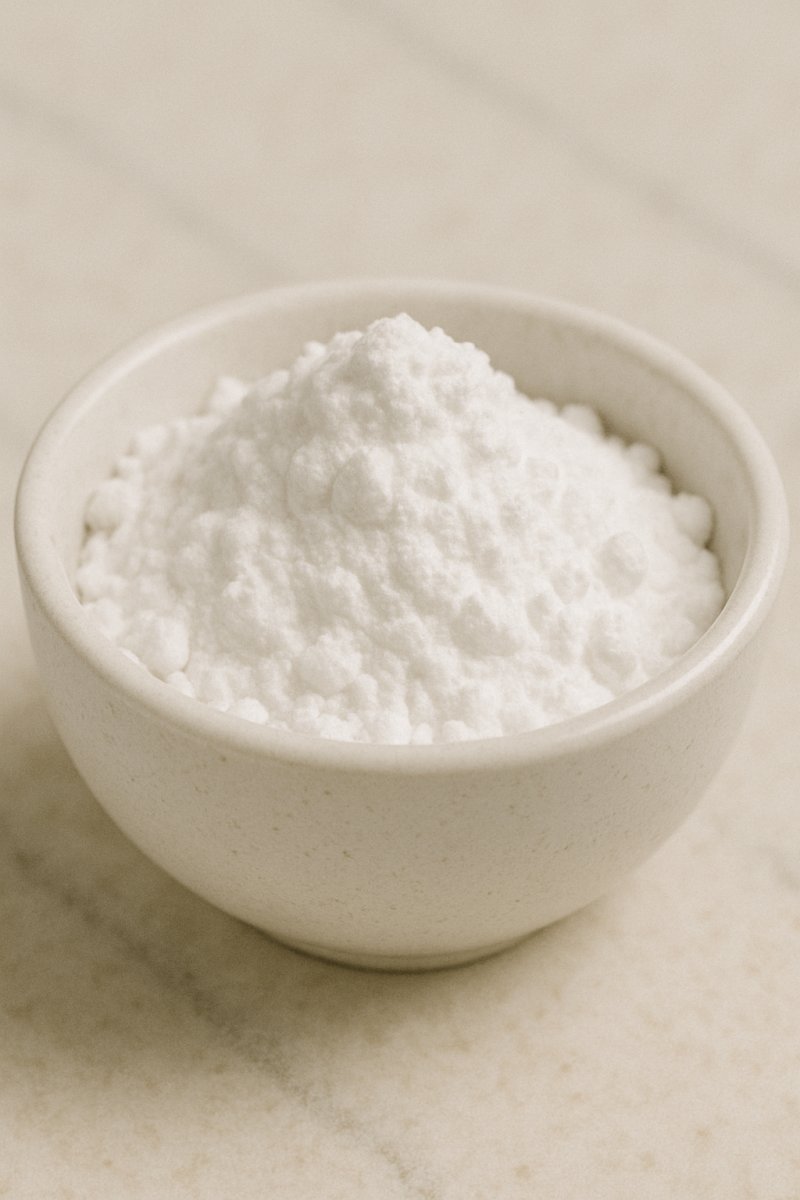
Baking powder

Classic leavening agent for light doughs and fine pastries.

Wiki about baking powder Nutri-Score D Vegan Yes Gluten-free Yes Lactose-free Yes Nut-free Yes
NUTRITION / 100 g
98 kcal 0.0 g Protein 27.0 g Kohlenhydrate 0.0 g Fett

Introduction

Package of baking powder
I have a secret relationship with baking powder – not romantic, more practical: it's the little magic wand in my kitchen that turns flat batters into airy wonders. Baking powder is a chemical leavening agent, usually a mixture of baking soda, an acid and starch, which releases carbon dioxide when exposed to moisture and heat and makes doughs and pastries rise. I still remember a rainy Sunday afternoon when I had too little yeast and rescued a quick tray with baking powder; the guests were delighted, and I learned that timing and trust in simple ingredients often suffice.

What I appreciate about baking powder is its reliability. It reacts immediately, so the rule is: work fresh and don't let the batter sit around forever. A colleague once told me he only put a cake in the oven after hours and wondered why the result wasn't fluffy – that's a classic baking powder misunderstanding. There are also a few things to keep in mind:

  • Fast vs. slow: Some baking powders are double-acting and release gas when mixed and again when heated.
  • Amount: Too much gives a metallic aftertaste, too little leaves baked goods chewy.
  • Alternatives: Baking soda on its own needs an acid (buttermilk, lemon) to work.
I also love experimenting with baking powder beyond cakes – a pinch in pancake batter makes them feather-light, a touch in tempura batter gives extra crunch. Stored in an airtight container the powder stays fresher longer; I mark the date, because I believe in unicorns but not expired baking powder.

In conclusion: baking powder is for me more than a powder on the shelf. It's an uncomplicated helper that handles quick rescues as well as fine baking. If you follow a few basic rules – correct dosing, fresh powder and prompt baking – you're often rewarded with airy, pleasant results. I'd be glad if you try the next experiment and maybe later tell me how something big grew from a small pinch.

Availability & types

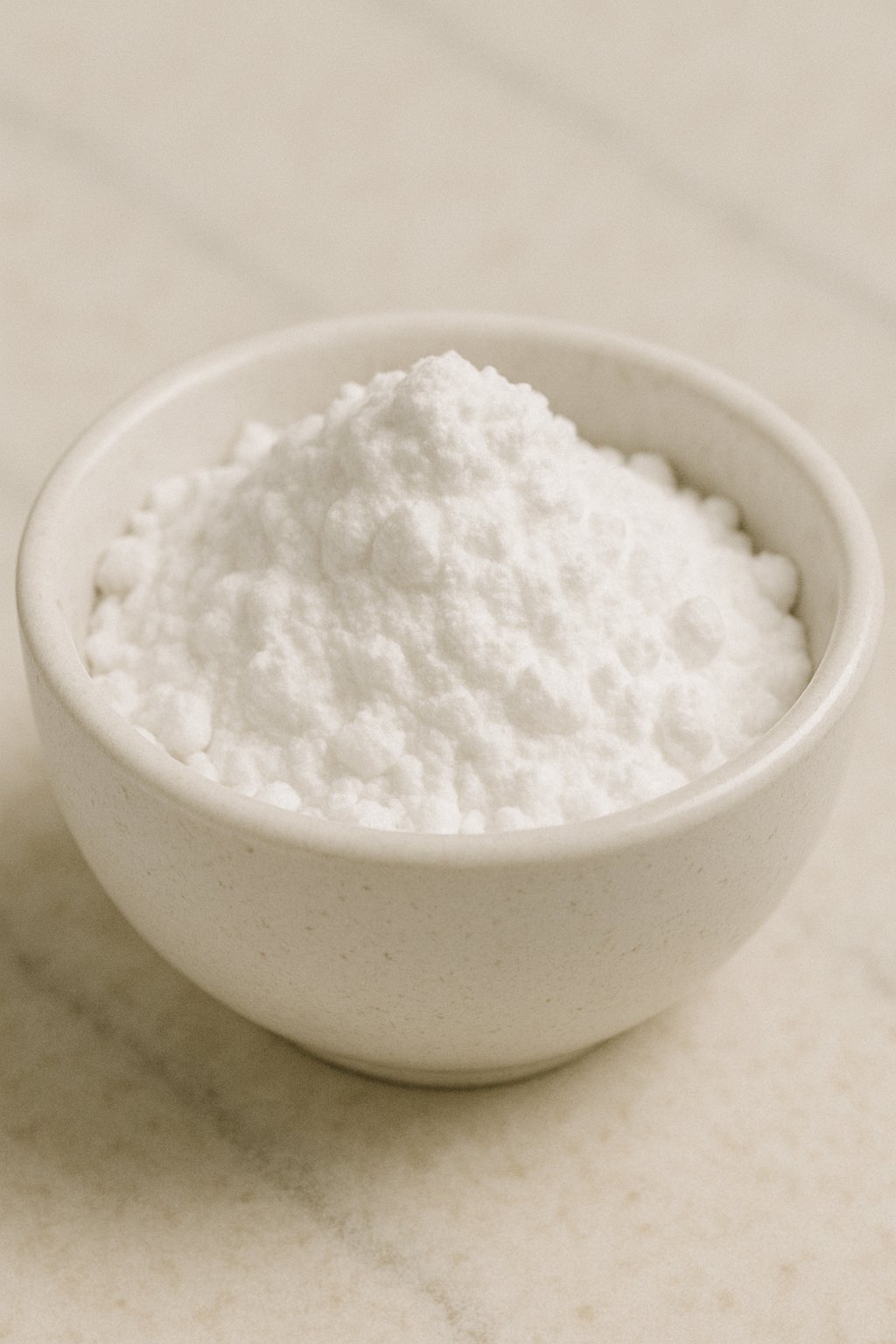
Baking powder is a small white powder that helps make cakes, rolls and muffins nice and light. In this section I explain in simple terms where baking powder comes from, what building blocks it contains, where these are grown or produced and what types exist.

Origin and ingredients
Baking powder usually consists of three simple parts: baking soda (also called sodium bicarbonate), an acidic compound and some starch (such as corn starch) that keeps the powder dry. Baking soda can be obtained from natural minerals or produced chemically. The acid can come from various sources, for example from tartaric acid (also “cream of tartar”), which is a by-product of winemaking, or from phosphates that are produced industrially. The starch often comes from corn – so from plants.

Growing and production locations
Since baking powder is a processed product, it is not grown in a field but mixed in factories. However some ingredients do come from agriculture:

  • Corn (for starch): Grown worldwide, especially in the USA, China, Brazil and parts of Europe.
  • Grapes (for tartaric acid): Come from wine-growing regions such as Spain, Italy, France or California. Tartaric acid often forms during winemaking.
  • Minerals or baking soda: Can be sourced in various countries or made synthetically – this is often independent of agricultural production.
The actual mixture we buy as baking powder is usually produced in food manufacturing facilities and then delivered to supermarkets or sold online.

Available types and variants
There are different kinds of baking powder. Here are the main ones, explained in simple terms:

  • Single-acting baking powder: Reacts immediately when it comes into contact with liquid. You can imagine it like a balloon that gets filled once and then is done.
  • Double-acting baking powder: Reacts twice: once when mixed with liquid and again when heated in the oven. This is very practical because the batter gets particularly good leavening power.
  • Aluminum-containing vs. aluminum-free baking powder: Some varieties contain tiny amounts of aluminum compounds (which can slightly change the taste in some recipes), others are aluminum-free and are often preferred because they taste more neutral.
  • Cream of tartar–based baking powder: Uses acid from grapes. This is a natural variant and works well for delicate recipes.
  • Natural or organic-certified variants: These use ingredients from organic farming or avoid certain additives.
  • Alternative combinations: Some people use baking soda + lemon juice or vinegar instead of baking powder; this works similarly because the acid and baking soda together produce carbon dioxide.
Availability in everyday life
Baking powder is easy to get: in supermarkets, discounters, health-food stores and online. You can buy small packets for home use or larger packages for bakeries. For storage: always keep it dry and sealed, then it stays effective longer. If you don't have baking powder, baking soda combined with an acid source also works as a substitute.

Summary: Baking powder is a simple, versatile product made of baking soda, an acid and starch. The plant-based ingredients come from regions with lots of corn and grape cultivation, and the mixture itself is made in factories. There are different types – mainly single- and double-acting as well as aluminum-free or with natural acids – and you can find it everywhere in shops or online. It is therefore a practical helper for light baked goods at home.
Details & nutrition

Property Value
Unit g
Calories per 100 98
Protein per 100 0.0
Carbohydrates per 100 27.0
Sugar per 100 0.0
Fat per 100 0.0
Saturated fat per 100 0.0
Monounsaturated fat 0.0
Polyunsaturated fat 0.0
Fiber per 100 0.0
Vitamin C (mg) per 100 0
Vitamin D (IU) per 100 0
Calcium (mg) per 100 900
Iron (mg) per 100 0.5
Nutri-Score D
CO₂ footprint 0.8 kg CO2e/kg
Origin Germany / EU
Gluten-free Yes
Lactose-free Yes
Nut-free Yes
Vegan Yes
Note Baking powder typically consists of sodium bicarbonate, acidifying agents (e.g. phosphates) and starch as an anti-caking agent; it is used in small amounts to lighten doughs.

Technical & scientific information

Baking powder is a chemical leavening agent used in the kitchen primarily to aerate doughs and batters. It is a dry mixture whose main component is sodium bicarbonate (NaHCO3). On contact with moisture and/or heat the bicarbonate reacts with one or more acid components, releasing carbon dioxide (CO2). The gas formed creates bubbles in the dough which expand during baking, increasing volume and producing a light structure.

Chemical composition and reaction: Typical baking powder formulas contain three functional building blocks: sodium bicarbonate as the base source, one or more acidic salts (e.g. monocalcium phosphate Ca(H2PO4)2, sodium hydrogen citrate or sodium di- or acid pyrophosphate) and a stabilizer/anti-caking agent such as corn starch. The basic reaction can be generally written as: NaHCO3 + HA → NaA + CO2 + H2O. Under strong heating sodium bicarbonate can also thermally decompose: 2 NaHCO3 → Na2CO3 + CO2 + H2O. In so-called double-acting baking powders there are two acid components: one reacts already at room temperature when liquid is added, the second reacts mainly during oven heating, providing a two-stage CO2 release and more reliable leavening.

Physical properties and manufacture: Industrially, baking powder is produced by carefully weighing and homogeneously mixing the components. The starch absorbs residual moisture and prevents premature reaction; it also serves as a flow agent so the powder remains free-flowing. After mixing, sieving and packaging may follow. Product quality is controlled via parameters such as particle size, moisture content and the available CO2 amount (neutralization capacity).

Nutritional and health aspects: Baking powder itself provides virtually no energy or nutrients aside from trace minerals; the sodium content is most relevant. A typical pinch or teaspoon of baking powder typically contains several hundred milligrams of sodium. Therefore frequent or generous use can contribute to increased daily sodium intake, which should be considered in a sodium-restricted diet. Some formulations contain aluminum-containing acids, which is why aluminum-free variants exist; health risks from aluminum traces in baking powder are regarded as low for normal use, yet some consumers prefer aluminum-free products.

Practical notes and storage: Baking powder loses effectiveness over time if moisture gets in or it is stored too long. Shelf life unopened is often over a year; once opened and kept in a dry, cool container it is usually effective for six to twelve months. A simple functionality test is to mix a small amount of baking powder with warm water: it should fizz strongly and release CO2 immediately. Too much baking powder in a recipe leads to a soapy or metallic taste, a paler crumb and possibly excessive browning.

Use and alternatives: Baking powder is used in cakes, cookies, pancakes and many other baked goods. An alternative is baking soda (sodium bicarbonate) combined with an acid source (e.g. buttermilk, yogurt, lemon juice or cream of tartar) or yeast for recipes that require longer fermentation times and different textures. Overall, baking powder is a technically proven, easy-to-handle leavening agent whose action is based on well-understood acid–base reactions and that yields safe and predictable results in household use.

Wiki entry for: baking powder
Active now: 20 visitors of which 2 logged-in members in the last 5 minutes