Menu & categories

Pork belly

Fatty, cured and often smoked pork belly

Wiki about bacon Nutri-Score E Vegan No Gluten-free Yes Lactose-free Yes Nut-free Yes
NUTRITION / 100 g
650 kcal 12 g Protein 1 g Kohlenhydrate 68 g Fett

Introduction

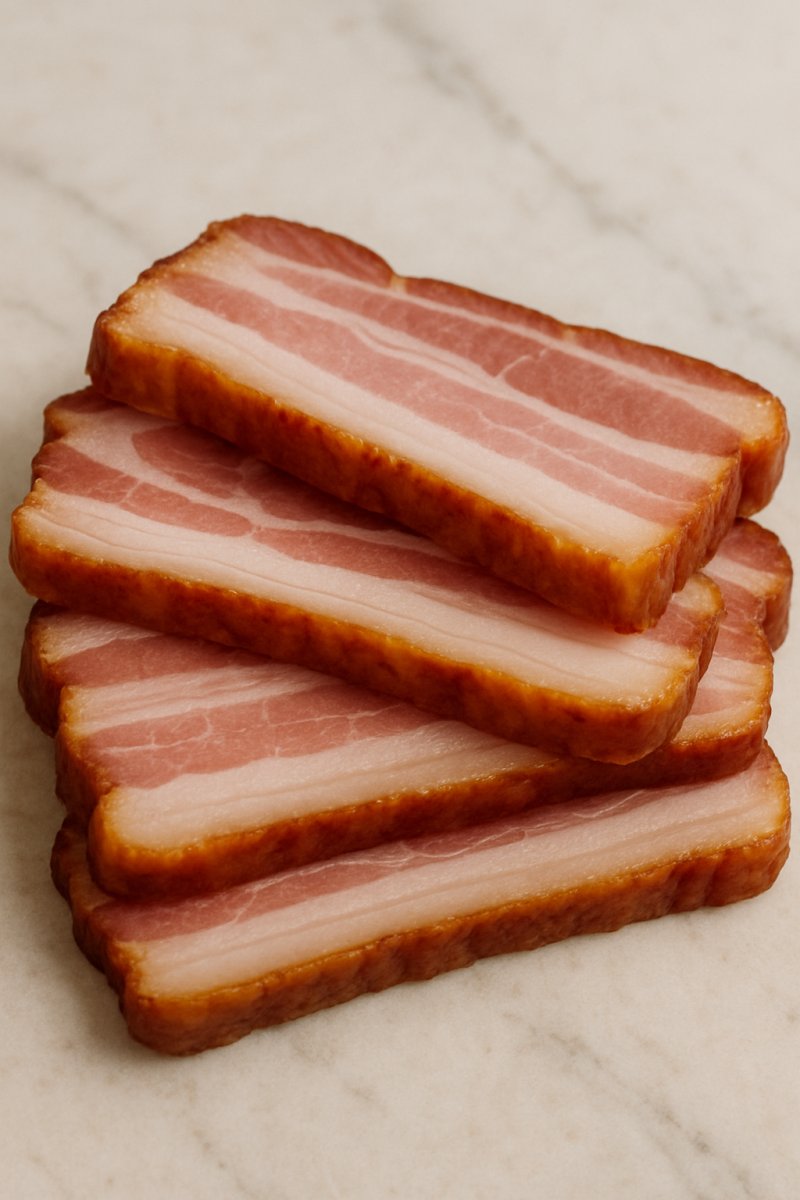
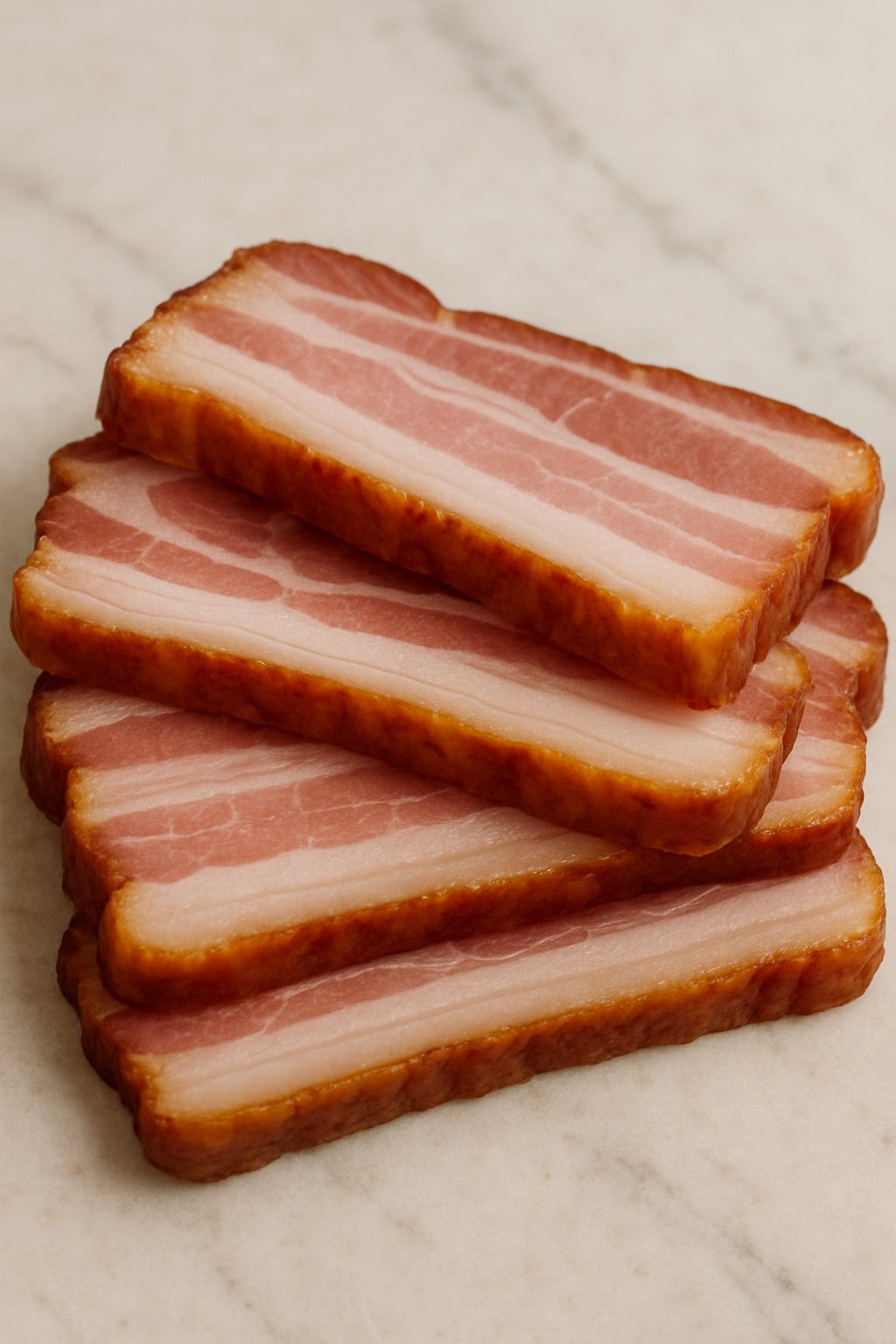
Raw slices of pork belly on a wooden board
The first time I truly stared in admiration at a thick strip of pork belly was at a small weekly market somewhere in Central Europe. A vendor held up a piece that looked as if it had just told a story: delicate veins of fat, a fine marbling and a smell that immediately upended my breakfast thinking. I bought a piece without knowing exactly what it would become, and learned more about tradition, technique and flavor than I expected.

Pork belly is a wonderful product of simple things. It comes from the pig's belly, is usually cured and often smoked or air‑dried. These processes give it variety: from salty‑pronounced to mild and aromatic. I still remember a dinner when a colleague said bacon was only for frying. Then he served thin, crispy slices with a green salad – and I was converted. Since then I think: bacon is not an accompaniment, bacon is a statement.

Its culinary uses are continually surprising. Pork belly:

  • adds depth to soups and stews,
  • makes pasta dishes distinctive,
  • works as a crispy topping or as a base for vegetables.
I particularly appreciate pork belly's balance of fat and meat. Fat carries flavors, meat provides structure. When slowly fried the fat becomes silky while the edges turn golden brown and crispy – an interplay I often celebrate at Sunday dinners. A small anecdote: a friend once brought a bottle of very good red wine that paired perfectly with a bacon‑potato gratin. We talked more about the pork belly than the wine.

Of course pork belly is not only enjoyment but also craft. Good quality shows in smell, color and texture. I like to buy directly from the butcher, ask about production method and origin, and I'm pleased when they confirm the preferences of my kitchen. For me pork belly remains a food that connects stories: regional traditions, improvised recipes and shared tables.

Availability & types

Availability and types of pork belly

Pork belly is a cut from the pig that comes from the belly area. You can buy it in many countries because pigs are raised in most places. How pigs are raised and how the pork belly is processed determines how it looks and tastes. To give you a clearer picture: pork belly is like a large, flat slice of meat and fat – some pieces are rather lean, others very fatty. The fat gives a lot of flavor when cooked and keeps dishes succulent.

Origin and production areas

  • Europe: In countries such as Germany, Italy and Spain pork belly is very popular. In Italy you know, for example, “pancetta”; in Spain there are similar products often seasoned differently. These regions have a long tradition in pork processing.
  • North and South America: Large amounts of pork are produced there as well. Pork belly varieties can differ by region because animals are fed differently and different recipes are used.
  • Asia: In countries like China or Korea pork belly is also common, often used in specific dishes or sliced very thin and quickly stir‑fried.
All these regions have markets, butcher shops or supermarkets where you can buy pork belly. In supermarkets you usually find it packaged in slices or as a piece; at butchers you often get fresher or more specialized variants.

Available types and variants

  • Fresh pork belly: This is the raw meat from the pig's belly. It is usually sold in pieces or slices and is suitable for frying, grilling or stews.
  • Smoked pork belly: This belly has been smoked over wood and therefore tastes smoky. Smoking is a method where smoke is passed over the meat so that it becomes more shelf‑stable and gains a distinct flavor.
  • Salted or cured pork belly: Salt or a salt solution (curing) is used. This helps keep the belly fresher longer and slightly alters the taste. This is common in products like pancetta.
  • Seasoned variants: Some pork bellies are seasoned with pepper, garlic, herbs or other spices. These types give dishes a special flavor right away without much extra seasoning.
  • Thin‑sliced bacon: Especially popular for breakfast or on sandwiches. It is cut thinner and becomes quickly crispy when fried. In some countries bacon is more heavily smoked or seasoned.
  • Vietnamese, Chinese or Korean style: In some cuisines pork belly is cut very thin, marinated or cut into strips to be used in wok dishes or soups.
Practical tips for selection
When buying pork belly, pay attention to how much fat it has and whether it is smoked or seasoned – this affects the flavor. For crispy results choose thin slices; for succulent braised dishes thicker pieces are better. And if you want to know where the meat comes from, ask in the shop about origin or region – it helps you understand how the belly was produced.

In summary: pork belly comes in many variants depending on where it comes from and how it has been treated. Whether fresh, smoked, cured or seasoned – each type has its place in the kitchen and brings different flavors to your dishes.
Details & nutrition

Property Value
Unit g
Average weight per piece 15
Calories per 100 650
Protein per 100 12
Carbohydrates per 100 1
Sugar per 100 0.5
Fat per 100 68
Saturated fat per 100 24
Monounsaturated fat 30
Polyunsaturated fat 8
Fiber per 100 0
Vitamin C (mg) per 100 0
Vitamin D (IU) per 100 0
Calcium (mg) per 100 10
Iron (mg) per 100 0.8
Nutri-Score E
CO₂ footprint 6.5
Origin Pork, mostly from Europe
Gluten-free Yes
Lactose-free Yes
Nut-free Yes
Vegan No
Note Pork belly is high in fat, contains a lot of salt and is often cured and smoked. Nutritional values can vary depending on the production method and water content.

Technical & scientific information

Pork belly denotes the cut obtained from the ventral region of the pig, characterized by a fat‑rich structure with alternating layers of muscle tissue and fat. In the kitchen pork belly is used raw, cured, smoked or processed into bacon slices. Anatomically it originates from the ventral part of the pig and consists predominantly of subcutaneous and intermuscular fat as well as portions of the m. rectus abdominis and adjacent musculature.

Chemical composition and constituents
The main component of pork belly is lipid material: depending on the cut and maturation stage the fat content typically ranges between 40 and 70 percent of fresh weight. The fat fraction consists mainly of triglycerides, a mixture of saturated, monounsaturated and polyunsaturated fatty acids. The most common fatty acids include palmitic acid (C16:0), stearic acid (C18:0), oleic acid (C18:1 cis‑9) as well as smaller proportions of linoleic acid (C18:2) and linolenic acid (C18:3). The water content in fresh pork belly often ranges between 20 and 40 percent, and the protein content is usually in the range of 10 to 15 percent, composed predominantly of muscle proteins such as actin and myosin as well as collagenous connective proteins.

Nutritional values
The energy density of pork belly is high: 100 grams provide, depending on fat content, approximately 400–600 kcal. Macronutrient‑wise fats dominate, followed by proteins; carbohydrates are practically absent. Micronutrients include fat‑soluble vitamins such as vitamins A, D and E in small amounts as well as B vitamins (notably niacin and B12) and trace elements like iron, zinc and phosphorus. Sodium can be markedly increased in cured or salted bellies, which is why processed variants generally have a higher salt load.

Processing methods
Several traditional and industrial methods are used for producing and preserving pork belly:

  • Raw product: Fresh belly is used as frying product and is not subjected to further preservation.
  • Curing: Salt and nitrates/nitrites are applied to lower water activity, inhibit microbial growth and stabilize color. Nitrite additionally causes the characteristic pink coloration via nitrosyl‑myoglobin formation.
  • Smoking: Cold or hot smoking adds aromatic compounds such as phenols and carbonyls and extends shelf life through antimicrobial effects of the smoke complex.
  • Salting and drying: Air‑dried belly (e.g. pancetta) undergoes controlled drying phases in which water content is reduced and flavor concentration and specific biochemical processes occur.
Chemical and microbiological changes during processing include proteolysis, lipolysis and oxidative processes of fatty acids that influence flavor, aroma and shelf life.
Sensory and culinary properties
Pork belly delivers an intense mouthfeel due to its high fat content and acts as a carrier for fat‑soluble aromas. When heated Maillard reaction products and pyrolytic compounds form, responsible for roast aromas and crispy textures. The ratio of fat to muscle determines whether a belly piece will become crispy when fried or remain rather tough.
Health aspects
From a nutritional perspective pork belly provides concentrated energy and essential nutrients but also a high share of saturated fatty acids, which when consumed excessively are associated with an increased risk of cardiovascular disease. Cured and smoked products also contain elevated sodium levels and, when nitrites are used, can contribute to the formation of nitrosamine‑like compounds, especially if these products are heavily heated. Health assessment strongly depends on portioning, preparation method and the overall dietary profile.
Food safety
Key safety aspects are control of water activity, microbiological monitoring and regulation of additives such as nitrite. Oxidation of fatty acids leads to rancidity and flavor degradation, which is why antioxidants can be relevant in processing and packaging. Hygienic slaughter, cooling and correct storage minimize microbial risk.
Overall pork belly is a technically versatile and flavor‑intense meat product whose properties are determined by genetic factors of the animal, feeding, cut and processing methods. For a balanced diet moderate consumption and attention to preparation and storage recommendations are advised to ensure sensory quality and food safety.
Wiki entry for: bacon
Active now: 6 visitors of which 2 logged-in members in the last 5 minutes