Menu & categories

Asparagus

Low in calories, nutrient-rich and versatile

Wiki about asparagus Nutri-Score A Vegan Yes Gluten-free Yes Lactose-free Yes Nut-free Yes
NUTRITION / 100 g
20 kcal 2.2 g Protein 3.7 g Kohlenhydrate 0.1 g Fett

Introduction

Fresh asparagus, green and white
Asparagus for me, as a 35-year-old editor from Europe, belongs to the culinary season like the first warm evening on the balcony. As soon as the tender stalks appear on the markets, a ritual begins that unites tradition, enjoyment and regional identity. I remember my childhood well: the scent of freshly peeled asparagus in my grandmother's kitchen announced spring more reliably than any weather report. Today, many years and numerous researches later, I know why asparagus plays such an outstanding role in Europe: it is versatile, elegant, healthy and evokes emotions that reach far beyond the plate.

What makes asparagus so special
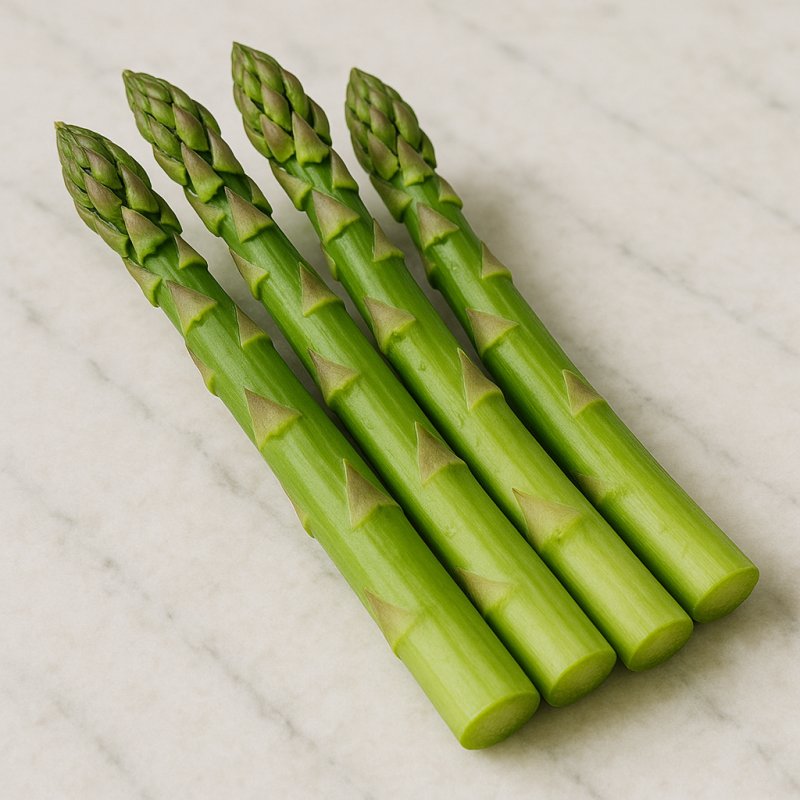
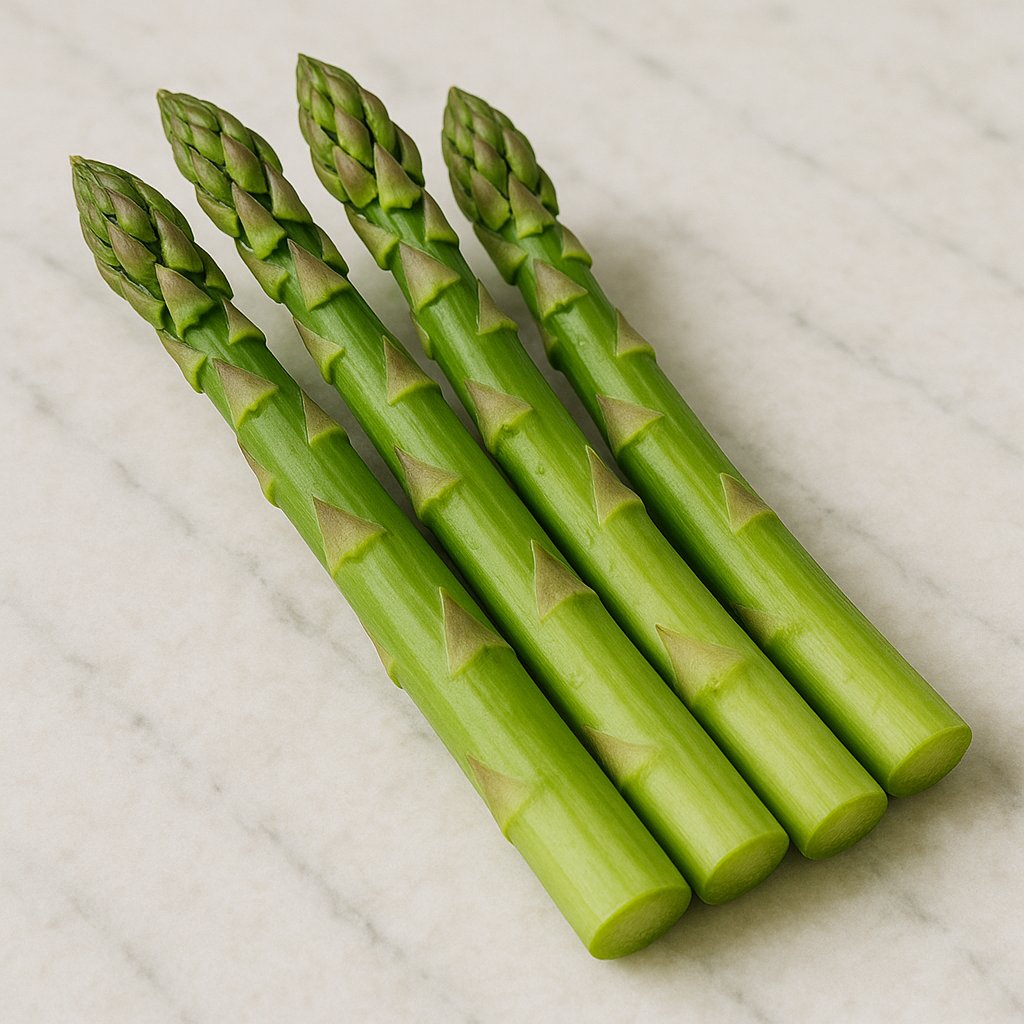
Asparagus is a vegetable specialty with history. The Romans already valued it as a delicacy, and in European cuisine it is still considered a symbol of quality and seasonality. There are three main variants: white asparagus, which grows in the absence of light and therefore remains tender and mild; green asparagus, which forms chlorophyll through sunlight and develops a stronger, nutty note; and purple asparagus, which receives an aromatic twist through brief light exposure. This variety makes asparagus the ideal ingredient for elegant menus as well as for uncomplicated everyday dishes.

Taste, texture and cuisine
White asparagus unfolds a fine sweetness and a silky texture, especially when gently cooked. Green asparagus scores with bite and light roasted aromas when grilled or pan-fried. A colleague of mine swears by green asparagus with lemon zest and roasted almonds, because the contrast of freshness and nuttiness literally brings spring to the tongue. I myself love classic white asparagus with a fragrant hollandaise sauce, new potatoes and young herbs. This dish is not only comforting, it is also a timeless expression of regional cuisine.

Shopping and quality
Those who buy asparagus should pay attention to freshness characteristics. Fresh stalks squeak slightly when rubbed together, the cut surfaces are moist and not woody, and the tips are tightly closed. A colleague from the editorial team travels every year at the start of the season

Availability & types

Availability and types of asparagus

Asparagus is a special vegetable that is not available fresh from the region all year round. Many even call the time it is harvested the "asparagus season." In Germany this season usually begins in April and traditionally ends on June 24, St. John's Day. After that the plants should recover so they can grow vigorously again the following year. In other countries with warmer climates the season can start a little earlier or last a little longer. Outside the season you will often find asparagus as imported goods, frozen or in jars and cans. Fresh, regional asparagus usually tastes most intense because it is harvested ripe and sold quickly.

To help you place asparagus, it is useful to know the different types. There is not just one variety, but several variants that differ in color, taste and preparation. The best known are white asparagus, green asparagus and purple asparagus. In addition there is wild asparagus and special cultivated forms that are popular to varying degrees depending on country and region.

Origin and cultivation
The asparagus we eat is botanically "Asparagus officinalis." It originally comes from regions around the Mediterranean and western Asia. The ancient Romans already knew and loved it. Today asparagus is grown in many European countries, such as Germany, France, Spain, Italy and the Netherlands. Large producers also exist in North and South America and in Asia. Cultivation is laborious: asparagus grows underground from so-called shoots that sprout anew each year. For white asparagus the stalks are harvested under earth mounds so that no sunlight reaches them. Green asparagus grows above ground and acquires color through chlorophyll produced by sunlight.

The main types and their characteristics

  • White asparagus: It is particularly popular in Germany and is also called the "king vegetable." White asparagus has a mild, buttery flavor and a delicate, sometimes slightly bitter note. It is harvested under the soil before the tips come to light. It almost always needs to be peeled because its skin is firmer. Typical preparation is in sal
Details & nutrition

Property Value
Unit g
Average weight per piece 25
Calories per 100 20
Protein per 100 2.2
Carbohydrates per 100 3.7
Sugar per 100 1.9
Fat per 100 0.1
Saturated fat per 100 0.02
Monounsaturated fat 0.01
Polyunsaturated fat 0.05
Fiber per 100 2.0
Vitamin C (mg) per 100 5
Vitamin D (IU) per 100 0
Calcium (mg) per 100 24
Iron (mg) per 100 2.1
Nutri-Score A
CO₂ footprint 0.5 kg CO2e/kg
Origin Seasonal, often locally sourced in Europe
Gluten-free Yes
Lactose-free Yes
Nut-free Yes
Vegan Yes
Note Asparagus is low in calories and rich in folate and potassium; green asparagus has slightly more vitamin C than white.

Technical & scientific information

Asparagus (Asparagus officinalis) is a perennial herbaceous plant of the family Asparagaceae and is among the economically most important vegetable species of the temperate climate zone. Characteristic are the shoots harvested in spring, which depending on cultivation and harvesting technique enter the market as white asparagus (bleached underground), green asparagus (photosynthetically active grown on the surface) or purple asparagus (briefly exposed to light). The deep-reaching rhizome and root system allows a planting lifespan of 8–12 years and shapes the nutrient and water economy of the crop.

Botany and morphology: Asparagus produces fine shoots (turions) that are harvested as a vegetable. After harvest the plant develops a feathery, finely divided leaf-like mass (phylloclades), which takes over assimilation for the storage organs. The species is dioecious, with separate male and female plants; male genotypes are considered to be higher-yielding and earlier. Flowers are inconspicuous and are mainly pollinated by insects. The fruits are red berries, which are inedible for humans.

Varieties and usage types: Cultivars differ in emergence dynamics, spear diameter, pigmentation, tendency to anthocyanin formation and resistance to diseases. For white asparagus, varieties with strong, straight spear thrust and low light sensitivity are preferred. Green asparagus varieties show high chlorophyll formation, slimmer spears and good head-closure stability. Modern hybrids, often male-only, increase homogeneity and yield.

Site and soil requirements: Asparagus thrives best on light to medium, well-drained, sandy to sandy-loamy soils with pH 6.0–7.5. Deep soil loosening is essential because the root system can penetrate beyond 2 meters. Waterlogging and compaction lead to root stress, increased susceptibility to rot and reduction of spear quality. Heat-storing soils,

Wiki entry for: asparagus
Active now: 20 visitors of which 2 logged-in members in the last 5 minutes