Menu & categories

Asparagus cream soup

Creamy asparagus soup with cream and broth

Wiki about cream of asparagus soup Nutri-Score C Vegan No Gluten-free No Lactose-free No Nut-free Yes
NUTRITION / 100 g
55 kcal 1.5 g Protein 4.5 g Kohlenhydrate 3.2 g Fett

Introduction

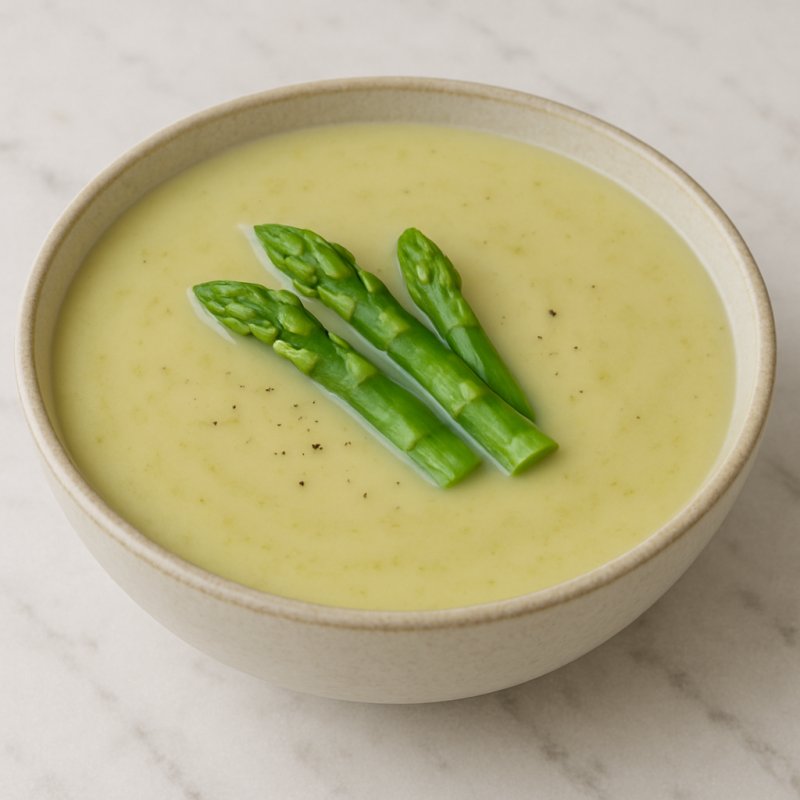
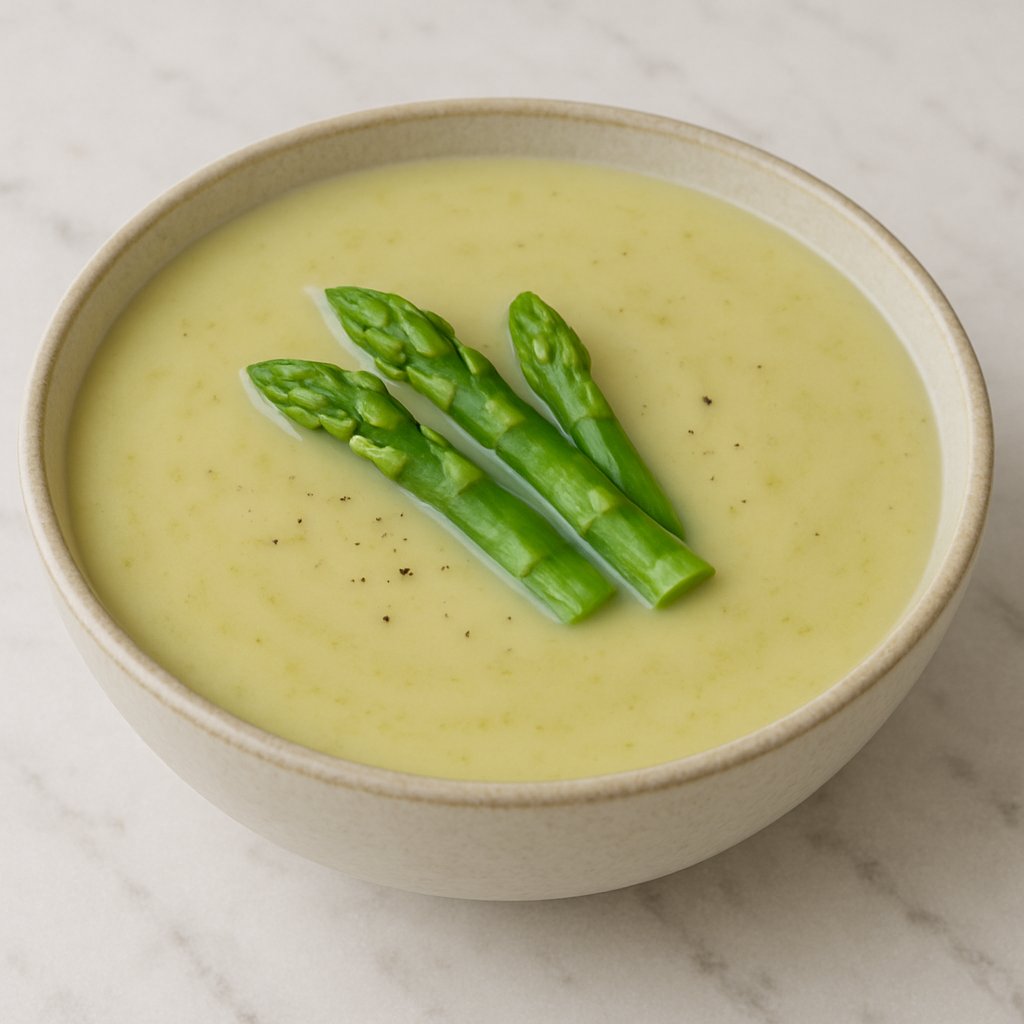
Plate with creamy asparagus soup and asparagus pieces
I still remember the first spring when I served asparagus cream soup to a small circle of girlfriends: it was the secret star of the evening, even though I had only started with a simple recipe. For me asparagus cream soup is more than a starter; it is a season on a plate, a delicate scent of field and freshness that immediately evokes memories of market stalls, damp earth and early sunlight. When I peel the stalks and let the first piece slide through my fingers, I already know that something special is being created.

The base is surprisingly plain and yet versatile. I usually start with white or green stalks, depending on what the market offers, and I make sure to treat the tips separately because they cook faster and their texture contributes so much to the soup's elegance. Onions or shallots, a knob of butter, some flour or a splash of cream — these are the ingredients that turn asparagus into a velvety cream soup. Sometimes I add a bay leaf or a hint of nutmeg when I'm in the mood for a slightly spiced note.

When I cook, I like to think in small details:

  • The broth: Vegetable broth enhances freshness, chicken broth makes the soup more rustic.
  • The consistency: Puree until silky or leave it deliberately chunky for more bite.
  • The accompaniment: A drop of lemon juice or some roasted bacon brings contrast.
A colleague of mine swears by a dollop of crème fraîche and a few chives as a finish; that led me to experiment with small garnishes that do not distract but underscore the asparagus notes. In another trial I pureed some cooked potato cubes to make the soup more filling — perfect for cool evenings when you need something warming.

For me asparagus cream soup is also a piece of memory keeping: it accompanies spring celebrations, light lunches and those moments when I have guests unexpectedly and want to create something impressive with little effort. The preparation is surprisingly forgiving; a bit more cream, a longer reduction or stronger seasoning change the result, but rarely ruin it. When the soup finally steams in the bowl and the tip shines with a small herb garnish, I am still as pleased as the first time.

Availability & types

Availability and types

Asparagus cream soup is made from the vegetable asparagus, which grows in many countries. When talking about availability one means where and when asparagus can be found and what forms of asparagus cream soup exist. Asparagus is a very popular spring vegetable – you can buy it fresh, but it is also available ready-made as soup in cans or jars.

Origin and producing countries
Asparagus originally comes from Europe and Asia. Today fresh asparagus often comes from countries such as Germany, France, the Netherlands and Spain. In Germany asparagus is particularly famous: there is even an "asparagus season", usually from April to June. That is the time when fresh asparagus is harvested in the fields and tastes best.

Growing areas
Asparagus grows on fields that often have sandy soil, because the plants can root well there. Large growing areas are often flat and sunny. Smaller farms and large asparagus farms cultivate asparagus. In some regions there are even asparagus routes, roads where many asparagus growers sell their harvest. Locally, people often buy asparagus directly on the farm or at the market.

Available varieties
There are different varieties of asparagus that differ in color and taste. The main ones are:

  • White asparagus: This grows under the soil or in mounds so that sunlight does not turn it green. It is more tender and has a mild, slightly sweet taste.
  • Green asparagus: This grows above ground and gets its green color from sunlight. It tastes a bit stronger and fresher, almost like young spinach.
  • Purple asparagus: This variety has a purple color and is particularly aromatic. It is less commonly found in stores, but looks attractive on the plate.
Variants of asparagus cream soup
Asparagus cream soup exists in many variants — from very simple to festively refined. Here are the most common types you can find in the supermarket or on a menu:

  • Fresh asparagus cream soup: Made from freshly cooked asparagus, vegetable broth and some cream or milk. It tastes mild and natural.
  • Ready-made soup in jars or cans: These soups are more convenient and have a long shelf life. They are often pasteurized so they do not spoil. You only need to heat them.
  • Concentrate or powder: Sometimes there are soup powders that you mix with water. This is very practical when you want a quick soup, but the taste is usually less fresh.
  • Refined variations: Some soups contain additional ingredients like potatoes, carrots, a knob of butter, herbs or small asparagus pieces as garnish. Others are vegan and use plant-based milk instead of cream.
How to choose
If you want a particularly fresh soup, choose fresh asparagus in season or a fresh asparagus cream soup from the market. For quick enjoyment, cans or jars are practical. Check the label: it often states whether the soup is "with fresh asparagus" or "from concentrate." A simple rule: the shorter the ingredient list, the more natural the product usually is.

This way you can find asparagus cream soup easily and get to know the different types – from fresh, tender white or green asparagus to ready-made soup in a jar that is quickly on the table. Each variant has its own advantage, depending on whether you want time, freshness or convenience.
Details & nutrition

Property Value
Unit g
Calories per 100 55
Protein per 100 1.5
Carbohydrates per 100 4.5
Sugar per 100 2.5
Fat per 100 3.2
Saturated fat per 100 1.8
Monounsaturated fat 0.9
Polyunsaturated fat 0.5
Fiber per 100 0.7
Vitamin C (mg) per 100 3
Vitamin D (IU) per 100 8
Calcium (mg) per 100 30
Iron (mg) per 100 0.3
Nutri-Score C
CO₂ footprint 0.4
Origin Europe
Gluten-free No
Lactose-free No
Nut-free Yes
Vegan No
Note The information refers to a typical asparagus cream soup thickened with cream and flour, prepared in a kitchen or commercially available; exact values may vary depending on the recipe.

Technical & scientific information

Asparagus cream soup is a processed food ingredient based on asparagus, broth and usually dairy products, which is puréed to a homogeneous, slightly creamy soup. As a product category it combines plant-based raw materials with fat and protein sources and, where appropriate, stabilizers or binders to ensure a consistent texture and storage stability. In the classic preparation peeled asparagus, onions or leek, fat (butter or oil), flour for binding, vegetable or poultry broth and cream or milk are used; industrial variants may additionally contain modified starch, emulsifiers and preservatives.

Chemical composition and ingredients
The main constituent of asparagus cream soup is water, complemented by plant components from the asparagus itself. Asparagus provides carbohydrates in the form of free sugars and soluble fibers such as inulin, as well as organic acids, amino acids and secondary plant compounds like flavonoids (e.g. quercetin) and saponins. The addition of dairy products increases the share of milk fat and milk proteins (casein, whey proteins), while flour or starch contribute starch (amylose, amylopectin) as thickening agents. Fats increase the energy density and affect the solubility of fat‑soluble aroma compounds. Sodium from broths and salt is nutritionally relevant. In industrially produced products phosphates, emulsifiers (lecithin), modified starches and, in longer shelf‑life variants, antioxidants or preservatives can also be detected.

Nutritional profile
The macronutrient profile varies depending on the recipe; typical are moderate amounts of carbohydrates (from vegetables and flour), medium to high fat contents (in creamy preparations) and a lower protein content. Per 100 g of homemade asparagus cream soup there can be approximately 40–120 kcal, with fattier variants at the upper end. Micronutrients come mainly from asparagus: vitamin K, folate (vitamin B9), vitamin C in small amounts and minerals such as potassium, phosphorus and trace elements. Sodium content is often higher in ready-made products than in fresh preparations.

Processing methods
Traditional manufacturing steps include cleaning and peeling the asparagus, steaming or boiling to release water-soluble components, creating a base with fat and aromatic vegetables, deglazing with broth, puréeing and subsequent binding with a roux or starch and finishing with cream. Thermal treatment affects texture through gelatinization of plant starches and denaturation of proteins. Industrial production uses homogenization techniques to create fine emulsions, pasteurization or sterilization for preservation and standardization via enzyme treatments or stabilizers to prevent phase separation. Frozen concepts require freeze‑stability testing and suitable packaging materials.

Health aspects
Asparagus cream soup can be part of a balanced diet, supplying fiber as well as vitamins and secondary plant compounds with antioxidant activity. Due to the content of nitrate-reducing compounds and purines, caution may be advised in cases of gout or certain kidney disorders; excessive consumption of highly salted ready-made products is unfavorable because of increased sodium for blood pressure and cardiovascular health. For people with lactose intolerance, lactose‑free dairy alternatives or plant‑based cream substitutes are possible, although these change sensory properties and nutrient content. Allergies to milk proteins or additives require ingredient checks.

Sensory properties and stability
The characteristic sensory profile results from the interplay of green, slightly bitter and sweet asparagus aromas, fat‑carrying aroma components and the mouthfeel shaped by surfactants and gelling agents. Oxidation of sensitive constituents can lead to flavor changes; therefore protective measures such as exclusion of air, antioxidants or an appropriate cold chain are relevant. Viscous consistency depends on starch content, fat proportion and emulsion stability; temperature influences can cause phase separation or syneresis.

Practical notes
For home preparation gentle cooking and timely consumption are recommended to preserve volatile aroma compounds and heat‑sensitive vitamins. For industrial manufacturers parameters such as particle size after homogenization, rheological measurements (viscosity, flow behavior), microbial reduction by thermal treatment and shelf‑life testing are decisive. Asparagus cream soup offers a scientifically traceable link between food chemistry, processing physics and nutritional evaluation, allowing culinary properties as well as quality and safety requirements to be controlled systematically.

Wiki entry for: cream of asparagus soup
Active now: 20 visitors of which 2 logged-in members in the last 5 minutes