Menu & categories

Asian sweet and sour sauce

Sweet and sour Asian seasoning sauce for a variety of dishes

Wiki about Asian sweet and sour sauce Nutri-Score D Vegan Yes Gluten-free No Lactose-free Yes Nut-free Yes
NUTRITION / 100 ml
120 kcal 0.7 g Protein 28 g Kohlenhydrate 0.3 g Fett

Introduction

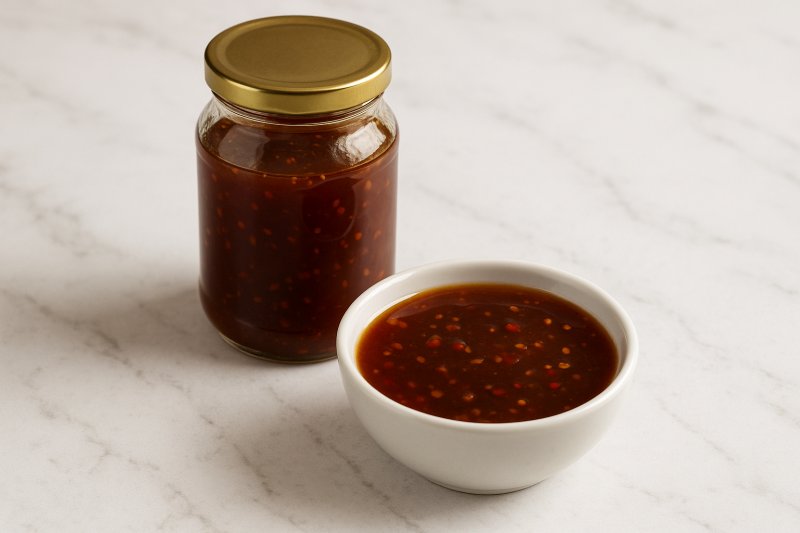
Glass jar with Asian sweet and sour sauce
I still vividly remember the first evening I uncorked a bottle of sweet and sour Asian sauce: it was late, I was tired and didn't want to cook anything elaborate. A few frozen vegetable cubes, leftover rice and a piece of tofu later, this sauce turned the whole thing into a little celebration on my plate. Since then it has been a reliable mood-lifter in my kitchen.

What I love about sweet and sour Asian sauce is its uncomplicated magic: it combines tangy and sweet notes with a subtle spice that recalls roasted ginger, garlic and sometimes a hint of chili. This balance makes it an all-rounder that complements different textures and flavors without dominating. In my experience it pairs as well with crispy fried chicken as with stir-fried vegetables, spring rolls or even as a dip for crispy tofu sticks.

Practical too is the variety of uses. I have used it in the following ways:

  • As a glaze for baked salmon that caramelizes shortly before the end of the cooking time.
  • In the wok with vegetables and noodles to give the dish depth and freshness.
  • As a marinade for chicken skewers that are allowed to soak in before grilling.
  • As a dip combined with a little sesame oil and spring onions for a quick starter.
Of course the composition varies by brand: some are sweeter, others emphasize vinegar notes or have additional flavors like peach or pineapple. I enjoy trying different bottles and sometimes mix them myself with soy sauce, lime juice or Sriracha to adjust the balance to my taste. A colleague of mine swears by enriching it with toasted sesame for more texture.

For me sweet and sour Asian sauce remains a kitchen helper that brings quick joy. It is not a substitute for fresh ingredients, but their best friend on days when creativity and time are scarce. Every time I open the lid, its scent reminds me of uncomplicated, warm meals and the many small culinary experiments that grew from it.

Availability & types

Availability and types

The sweet and sour Asian sauce is available in many supermarkets and food stores because it is very popular. You can buy it in large supermarkets, in Asian shops and often also in discount stores. Generally it is located in the sauces section, next to soy sauce and sweet chili sauces. Some stores even have a special international foods corner where different Asian variants are placed side by side.

The sauce often comes in glass bottles, plastic bottles or in bottles with a spout that make portioning easier. Glass bottles look nicer and do not absorb the sauce's smell, plastic bottles are lighter and more resistant if they fall. Sometimes there are also larger supply bottles for families or restaurants.

Origin and growing regions
The sweet and sour sauce, as we know it in Europe, is often a mixture of ingredients that originate from different parts of the world. Sugar, vinegar and fruits come from different countries. For example sugar is often produced from sugarcane, which is grown in tropical regions like Southeast Asia, Brazil or India. Vinegar can be made from rice (rice vinegar), and rice also comes from Asia. Ingredients like pineapple or mango, which are sometimes in sweet and sour sauces, come from tropical areas. That means the sauce is a kind of blend of products from warm, sunny regions around the equator, but the finished sauce is often prepared and bottled in many countries.

Available varieties and variants
There are many different versions of sweet and sour Asian sauce. Here is a simple overview to help you picture the differences:

  • Classic sweet and sour: This variant is the best known. It tastes balanced between sweetness (mostly sugar) and acidity (mostly vinegar), sometimes with a hint of pineapple. It goes well with fried vegetables or meat.
  • With fruit pieces: Some sauces have small pieces of pineapple, bell pepper or mango. It feels like eating a fruit spread, only it suits savory dishes.
  • Sweet and spicy: This one also contains chili. The taste is sweet at first, but then you notice a pleasant heat in the throat. For people who like spicy food.
  • Reduced calorie / Light: These varieties have less sugar or use sweeteners. They are slightly sweet in taste but often a bit thinner in consistency.
  • Organic variants: Ingredients come from organic farming, i.e. without certain chemical pesticides. Organic products are often more expensive, but important for people who care about that.
  • Gluten-free / allergy-friendly: Some brands advertise that they are without certain additives so that people with allergies can eat the sauce. The label then says "gluten-free" or "no preservatives".
You can also mix the sauce yourself: simply combine sugar, vinegar, some water, starch to thicken and depending on taste pineapple or orange juice. That way you know exactly what's in it. Ready-made sauces are practical because they save time and are often already well seasoned, but making it yourself is a simple alternative.

Overall sweet and sour Asian sauce is easy to get and there are many versions — from classic to fruity to spicy or low-calorie. So almost everyone finds the variant they like best.
Details & nutrition

Property Value
Unit ml
Calories per 100 120
Protein per 100 0.7
Carbohydrates per 100 28
Sugar per 100 25
Fat per 100 0.3
Saturated fat per 100 0.05
Monounsaturated fat 0.1
Polyunsaturated fat 0.15
Fiber per 100 0.5
Vitamin C (mg) per 100 2
Vitamin D (IU) per 100 0
Calcium (mg) per 100 10
Iron (mg) per 100 0.3
Nutri-Score D
CO₂ footprint 1.2
Origin Varies by manufacturer, typically Asia or Europe
Gluten-free No
Lactose-free Yes
Nut-free Yes
Vegan Yes
Note Nutritional values are average values for commercially available sweet and sour Asian sauce; exact composition may vary by brand and recipe.

Technical & scientific information

Sweet and sour Asian sauce refers to a commercially widespread seasoning and dipping sauce that combines typical sweet-and-sour flavor notes with influences from East Asian cuisines. It is produced industrially or offered homemade and is used for glazing, dipping or seasoning meat, poultry, fish and vegetable dishes. It is characterized by a balance of sweetening and acidifying components and a viscous consistency achieved through thickening agents.

Composition and ingredients
The standard formulation contains several functional classes of ingredients:

  • Sweeteners: Table sugar (sucrose), glucose syrup or corn syrup provide sweet and bulking properties. In diabetic or light variants sweeteners such as sucralose or steviol glycosides are often used.
  • Acidifying agents: Acetic acid (table vinegar), citric acid or ascorbic acid provide the characteristic acidic note. Vinegar also contributes to microbial stability.
  • Umami and flavoring agents: Soy sauce, yeast extract or monosodium glutamate (MSG) can be used to enhance flavor.
  • Fruit and vegetable components: Pineapple, tomato or bell pepper components provide fruit acids, pectin and specific aroma compounds as well as small amounts of micronutrients.
  • Thickeners: Corn starch, modified starches, xanthan or guar gum produce the desired viscosity and texture.
  • Preservatives and additives: Sorbates, benzoates, antioxidants or sulfites may be used for preservation and color stabilization.
Chemical and physical properties
The sauce is a dispersed aqueous solution with gel-like viscous rheology, often pseudoplastic (shear-thinning). The pH typically ranges between 3.0 and 4.5 depending on the recipe, which is one of the most important parameters for shelf life and taste. The osmotic activity is increased due to high sugar and salt contents, lowering water activity and inhibiting microbial growth. The color varies from light orange to brown-red, influenced by Maillard reactions during heating and by natural colorants from fruit or vegetable purées.

Nutritional values and nutrient profile
Sweet-and-sour sauces are typically energy-dense due to a high carbohydrate content, mainly in the form of sucrose and glucose. Fat and protein contents are negligible. A serving (e.g. 15 g) often provides between 30 and 60 kcal, mostly from sugar. Minerals and vitamins occur only in small amounts. Dietary variants reduce calories through sugar substitutes but may alter texture, which is why modified starches or sugar alcohol sweeteners are used.

Manufacturing process
Industrial production includes the following steps:

  • Dosing and dissolution of the sweetening and acidifying components in water.
  • Incorporation of soy sauce, fruit pastes or flavorings at controlled temperature to minimize unwanted aroma losses.
  • Addition of thickeners and emulsifiers under shear to achieve stable viscosity and homogeneity.
  • Heat treatment (pasteurization) for microbial stabilization and the development of Maillard aromas.
  • Filling into sterile containers and, if applicable, aseptic packaging.
Health aspects
From a nutritional perspective the key aspects are the high sugar content and the sodium content if soy sauce is used. High sugar intake contributes to weight gain and the risk of dental caries as well as metabolic diseases. High sodium intake can be problematic for people with hypertension. Preservatives, colorants or MSG may cause intolerance reactions in sensitive individuals, although scientific evidence for severe effects at typical usage levels is limited. Diabetics and people with special diets should check sauce labels and opt for reduced or sugar-free variants.

Storage and use
Stored cool and closed the sauce keeps longer; opened jars should be kept in the refrigerator and consumed within a few weeks. In the kitchen the sweet-and-sour sauce serves as a glaze, marinade or dip; its heat-resistant sugar fractions caramelize at higher temperatures and change aroma and color.

In summary, sweet and sour Asian sauce is a versatile food with clearly definable chemical, nutritional and technological properties. Its composition can be specifically adjusted to produce low-calorie, low-sodium or allergen-reduced variants, while sensory and physical properties must be carefully balanced when adapting formulations.

Wiki entry for: Asian sweet and sour sauce
Active now: 21 visitors of which 2 logged-in members in the last 5 minutes