Menu & categories

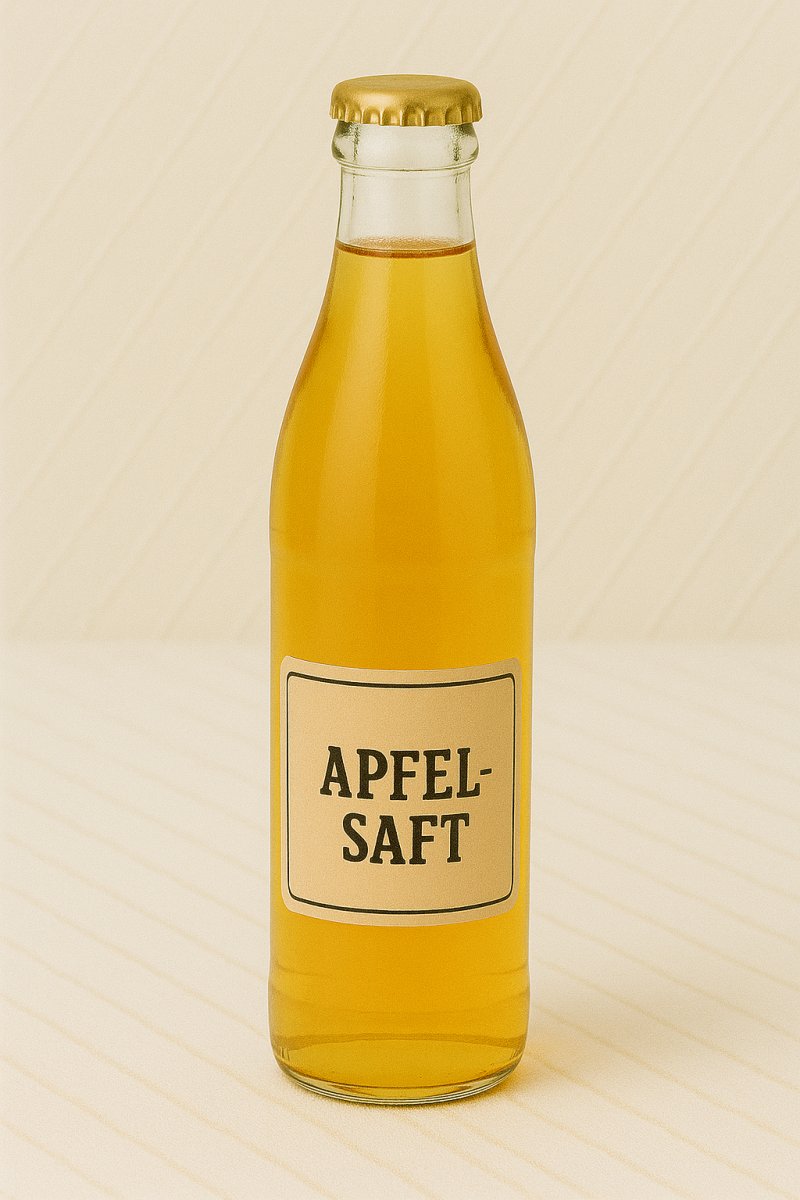
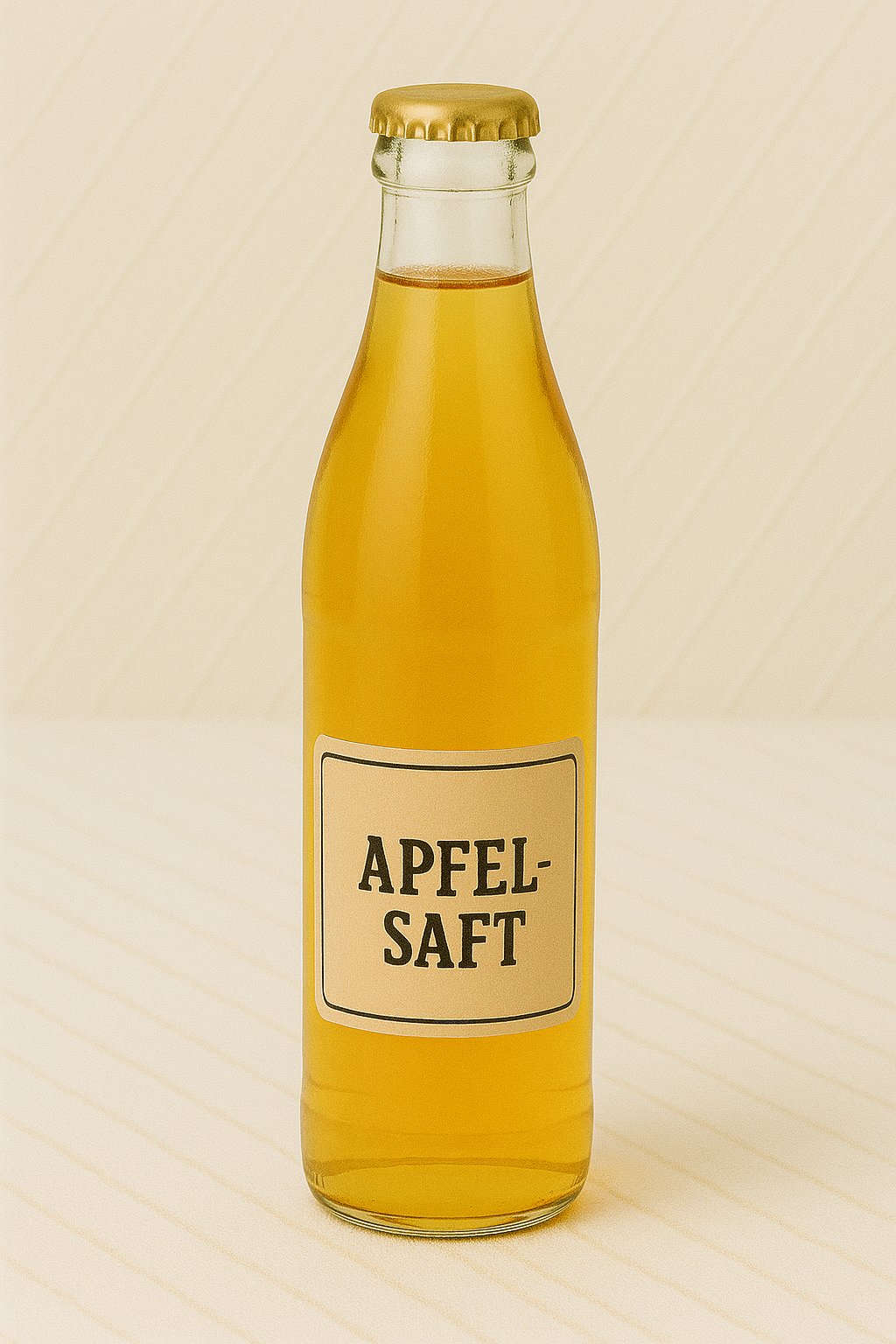
Apple juice

Fruity juice from apples – popular as a drink and for flavoring.

Wiki about apple juice Nutri-Score C Vegan Yes Gluten-free Yes Lactose-free Yes Nut-free Yes
NUTRITION / 100 ml
46 kcal 0.1 g Protein 11.3 g Kohlenhydrate 0.1 g Fett

Introduction

Glass with apple juice
I have a long, slightly affectionate relationship with apple juice. As a child I simply drank it; later I discovered it as a versatile kitchen ingredient and a small culinary secret weapon. At the market I remember a stall where the vendor pressed the juice right before my eyes; the aroma was so fresh that I impulsively ordered a glass and drank it with a broad grin. A colleague of mine swears by using apple juice in salad dressing – a small, surprising sweetness that holds everything together.

Apple juice comes in many varieties: clear or cloudy, pasteurized or cold-pressed, sweet or tart. When I buy it I pay attention to the color and smell; fresh juice seems lively, with floral and tart notes. Cloudy juice contains more pulp and often tastes more aromatic, while clear juice is subtler in flavor.

In my kitchen I use apple juice for pretty much anything that accepts liquid. Here are a few of my favorite uses:

  • For deglazing pans – it surprisingly and elegantly replaces wine or stock.
  • In sauces and vinaigrettes, combined with mustard and oil.
  • When braising pork or root vegetables for a natural sweetness.
  • As a base for non-alcoholic cocktails and for punch, spiced with cinnamon and star anise.
  • In baking: apple juice gives cakes moisture and softens bitter flavors.
Health-wise apple juice is a convenient vitamin supplier, but it contains concentrated fruit sugars, so I enjoy it in moderation. A trick I learned: mix juice with sparkling mineral water – it extends the enjoyment and reduces the sugar per glass.

When I have guests I like to offer two kinds: a freshly pressed juice for purists and a clearer variant for mixing. Both tell a story of orchards, handcraft and workmanship. In the end I love apple juice for exactly that reason: it's uncomplicated, adaptable and always manages to elevate small everyday moments.

Availability & types


Availability and types of apple juice

Apple juice is available almost everywhere and in many different forms. It comes from apples that grow on trees. These trees are cultivated in fields and orchards. Depending on where the trees are located and how the fruits are processed, the juice acquires different flavors and characteristics.

Origin and growing regions
Most apples for juice grow in countries with a temperate climate, meaning places where it is neither too hot nor too cold. Well-known growing regions include, for example:

  • Germany (particularly regions like the Altes Land or the Lake Constance area)
  • Across Europe (e.g. France, Poland)
  • North America (USA, Canada)
  • New Zealand and Chile (for export to other countries)
Many apple orchards are located close to cities so the harvest can be brought quickly to processing plants. Sometimes apples are flown in or imported as concentrates from distant countries, especially in periods when fresh fruit is not available locally.

Available varieties and variants
Apple juice is not just one type. Here are the main kinds, simply explained:

  • Direct juice: This is juice obtained directly from pressed apples. It is usually heated briefly to extend shelf life. You can think of it like freshly pressed juice from a farmers' market.
  • Juice from concentrate: In this process water is removed from the juice to reduce volume for transport. Later water is added back. It's similar to freezing fruit juice and thawing it later.
  • Clear juices: These look transparent because suspended particles have been filtered out. They are often lighter and smoother in taste.
  • Cloudy (naturally cloudy) juice: Here fruit pieces and suspensions remain. It often tastes more intense and gives the impression of drinking more "apple".
  • Organic apple juice: Made from apples grown without chemical pesticides and with more consideration for the environment. Many people perceive it as more valuable.
  • Sweetened or mixed variants: Sometimes sugar is added to the juice or it is blended with other fruits like pear, grape or currant.
  • Sparkling variants: Apfelschorle is a mixture of apple juice and mineral water – refreshing like lemonade but not as sweet.
How to recognize good quality?
The packaging often indicates terms like “Direct juice”, “from concentrate” or “100% juice”. “100%” usually means no added sugar. “Direct juice” generally sounds fresher. Organic labels indicate cultivation according to specific rules.

In summary: apple juice is available year-round and in many forms – clear or cloudy, freshly pressed or from concentrate, with or without additives. So almost everyone can find their favorite juice, whether they prefer something very fresh or something practical for on the go. Apple juice is therefore very versatile and remains a simple, well-known thirst quencher for young and old.
Details & nutrition

Property Value
Unit ml
Calories per 100 46
Protein per 100 0.1
Carbohydrates per 100 11.3
Sugar per 100 10.3
Fat per 100 0.1
Saturated fat per 100 0.0
Monounsaturated fat 0.0
Polyunsaturated fat 0.0
Fiber per 100 0.2
Vitamin C (mg) per 100 2
Vitamin D (IU) per 100 0
Calcium (mg) per 100 7
Iron (mg) per 100 0.1
Nutri-Score C
CO₂ footprint 0.03 kg CO2e/100 ml
Origin Germany/EU (depending on bottling)
Gluten-free Yes
Lactose-free Yes
Nut-free Yes
Vegan Yes
Note Naturally contains fruit sugars; nutritional values may vary slightly depending on variety and production method (clear/cloudy).

Technical & scientific information


Apple juice is a juice obtained from the flesh of Malus domestica, widely used as a beverage and food ingredient. It consists mainly of water and soluble carbohydrates as well as a complex mixture of organic acids, minerals, vitamins and secondary plant compounds. Apple juices are offered in various quality grades and processing forms, including direct juice, which is pressed and filled in producer countries without intermediate steps, and juice from concentrate, where water is removed and later re-added.

Chemical composition and nutritional values
Typical apple juices contain about 85–90% water and 9–13% soluble solids, mostly present as simple sugars (mainly fructose and glucose, partly sucrose). Energy content is roughly 40–50 kcal per 100 ml. Among characteristic organic acids, malic acid (malate) predominates, with smaller amounts of citric and ascorbic acids, giving a typical pH in the acidic range (around 3.2–4.0). Mineral-wise potassium is the dominant component; other trace elements include calcium, magnesium and phosphates. Vitamin C content varies greatly by variety and processing, usually in the low mg range per 100 ml. Phenolic compounds (flavonoids, phenolic acids) contribute to color, flavor and antioxidant activity.

Processing methods
Industrial production comprises several consecutive steps: washing, chopping/milling, pressing, enzymatic treatment (e.g. pectinases) to increase yield and reduce viscosity, sedimentation or centrifugation for clarification and filtration. For shelf life and food safety thermal treatment (pasteurization) or modern techniques like High-Pressure-Processing (HPP) are applied, which inactivate microorganisms while better preserving aroma and vitamin C. In concentrate production evaporation processes are performed gently under vacuum; reconstitution refers to restoring the original water content.

Analytical parameters and quality control
Quality assessment includes measurements such as °Brix (sugar content), titratable acidity (expressed as malate), pH, turbidity (NTU) and microbiological indicators. Chromatographic methods (HPLC) are used for chemical characterization to quantify sugar, acid and polyphenol profiles; spectrophotometry and colorimetric tests (e.g. Folin-Ciocalteu) are used for total phenolics and antioxidant capacity.

Health aspects
Apple juice provides quickly available energy in the form of sugars and contains bioactive polyphenols that may show antioxidant effects. On the other hand, juice lacks the fiber matrix of whole fruit, so its glycemic effect is more pronounced than consuming whole apples. Unpasteurized juice carries microbiological risks (e.g. yeast fermentation, occasional pathogenic contamination), which is why pasteurization or HPP is recommended. For infants and people who need to limit sugar intake, portion size and frequency of juice consumption should be considered.

Sensorics, storage and additives
Sensory-wise a balanced relationship between sweetness and acidity as well as the presence of typical volatile compounds determine aroma. Antioxidants like ascorbic acid are sometimes used to stabilize color and flavor; clarification can be achieved using fining agents or adsorbents. Shelf-stable aseptically filled juices can be stored at room temperature; opened bottles should be refrigerated and consumed quickly.

Overall, apple juice is a versatile product with clearly defined chemical and technological properties. The choice between direct juice, juice from concentrate, and clear or cloudy variants affects nutrient content, sensory properties and microflora, while modern processes like HPP and gentle evaporation aim to optimize quality and safety while preserving important constituents.
Wiki entry for: apple juice
Active now: 20 visitors of which 2 logged-in members in the last 5 minutes