Menu & categories

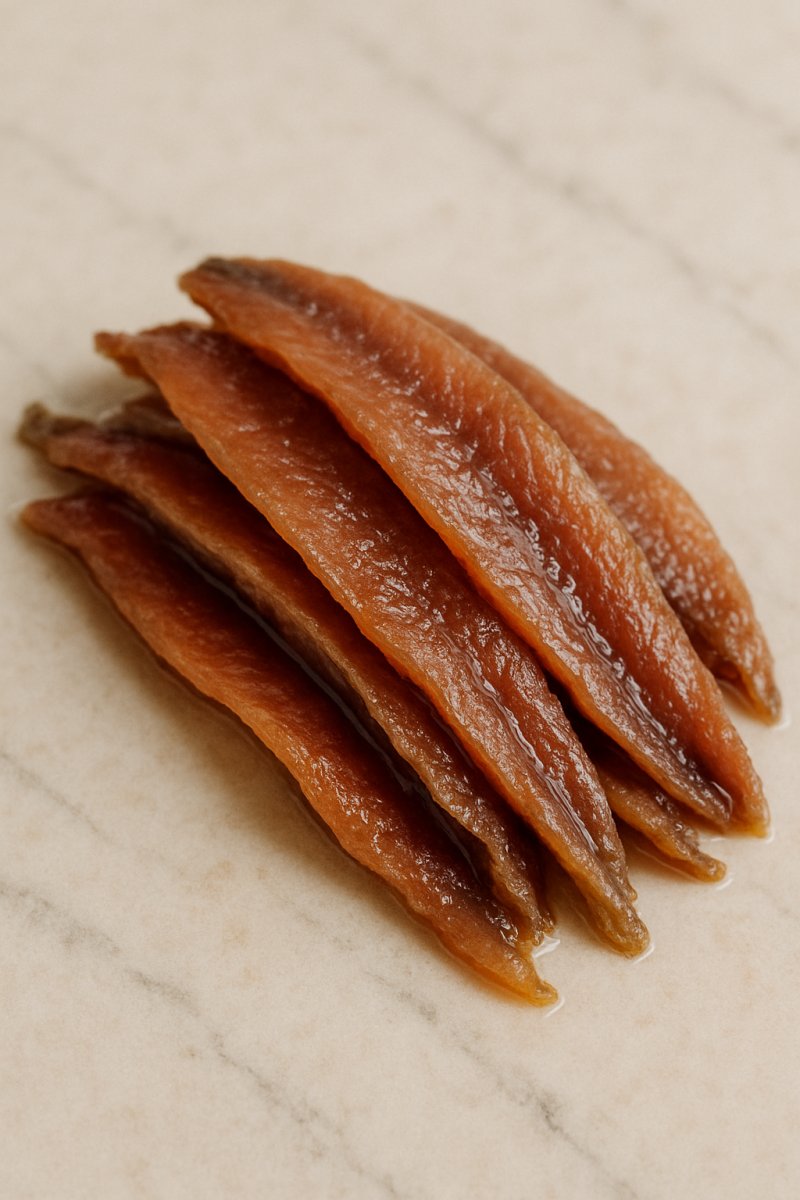
Anchovies

Aromatic small marine fish, rich in protein and omega-3 fatty acids

Wiki about anchovy Nutri-Score B Vegan No Gluten-free Yes Lactose-free Yes Nut-free Yes
NUTRITION / 100 g
210 kcal 29 g Protein 0 g Kohlenhydrate 10 g Fett

Introduction

Fresh anchovies on ice
I must admit: anchovies have completely changed my relationship with small fish. The first time I consciously bit into a freshly baked pizza topped with salty, tender anchovy fillets, I thought someone had secretly invented umami as an ingredient. Since then these little canned items have met me in kitchens and markets with a mixture of respect and curiosity.

I still remember a rainy afternoon in a Mediterranean town when a vendor opened a tin and handed me a piece. The aroma was intense, the texture surprisingly velvety, and the taste – salty, complex, almost nutty – lingered on the tongue. A colleague of mine swears anchovies are the secret tip for any bland sauce; he once saved an entire cooking show with just mashed potatoes and anchovies.

What distinguishes anchovies: They are small, oily fish that are often salted and preserved in oil or salt. This develops a strong, savory flavor that gives dishes depth without overpowering them. I like to use them in:

  • Spicy tomato sauces that instantly gain character.
  • Salads, where a finely chopped fillet lifts the vinaigrette to a new level.
  • Spreads and pastes, combined with butter or capers for surprising flavors.
A small tip from my kitchen: sometimes a crushed fillet melting in a hot pan with onions is enough to create a base that perfectly balances sweet and bitter components. I have learned that anchovies are not dominant divas; they work more in the background, blending with other ingredients and lifting the whole.

Of course they are not everyone's thing. I know a friend who still refuses the first bite because she finds the smell too intense. Still, I recommend trying anchovies in different ways – raw, heated, in small amounts, as a paste. Often it only takes a small experiment to recognize their versatility.

In the end anchovies are for me a small culinary miracle: unassuming but effective, steeped in tradition and yet modern in their application. They challenge you, open flavor spaces and make cooking more exciting in an unobtrusive but convincing way.

Availability & types

Availability and types of anchovies

Anchovies are small fish found in many seas and used in cooking in various ways. They are often available in supermarkets, fishmongers and delicatessens. You can buy them fresh, salted, preserved in oil or as a paste. Think of anchovies as tiny, very flavorful helpers in the kitchen – a bit like a spice mix, except they are made of fish.

Origin and fishing areas
Anchovies live in schools, mostly in coastal waters. The best-known species come from the Mediterranean, the Atlantic and parts of the Pacific. Some important regions are:

  • Mediterranean: Many traditional anchovy products come from here, especially countries like Spain, Italy and Greece.
  • Eastern Atlantic: Coasts of Portugal, France and the United Kingdom also supply many fish.
  • West Africa and the North Sea: Anchovies are also caught and processed there.
Unlike plants, anchovies are not "cultivated" but caught. Fishers use nets to capture the schools. Afterwards the fish are sold fresh or further processed to prolong shelf life.

Available varieties and forms
Anchovies come in several forms that differ in taste and use. Here are the most common variants, explained as if to a younger audience:

  • Fresh anchovies: These are the fish as offered immediately after the catch. They are juicy and mild in flavor, but should be cooked or chilled quickly.
  • Skinned and salted anchovies (anchovies in salt): This variant is first treated with salt and often aged in barrels. The salt preserves the fish and concentrates their flavor. They are like dried fruit for fish – longer lasting and very piquant.
  • Anchovies in oil: Here the fish, after curing, are packed in oil. The oil protects them and makes them more tender. This form is convenient because you can place them straight from the jar onto bread or into salads.
  • Anchovy paste or cream: Anchovies are sometimes made into a spreadable paste. This is useful when you want only a small fish flavor in sauces or sandwiches, without using whole fillets.
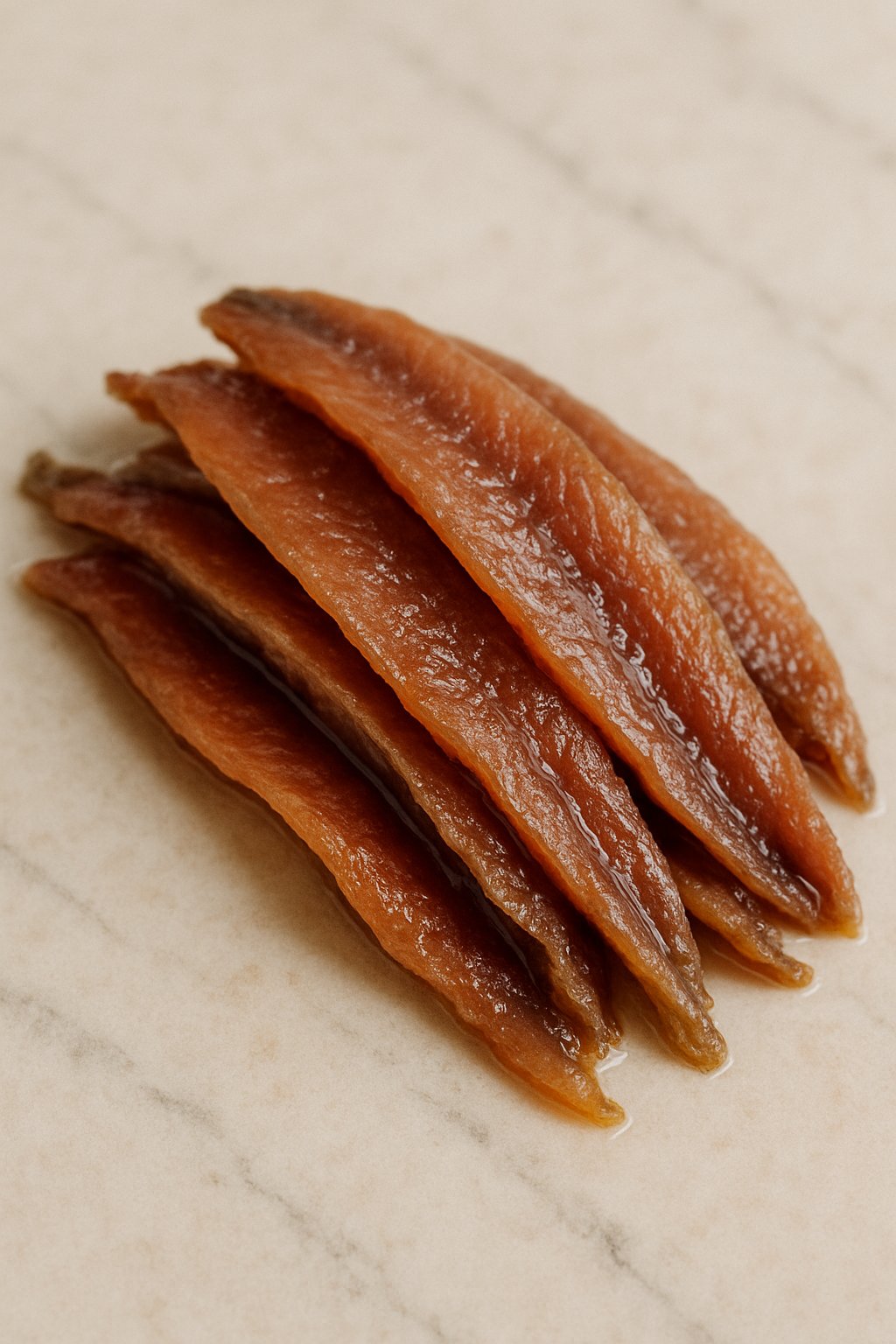
  • Fillets and pieces: Prepared boneless fillets are popular because they are easy to eat. You often find them in tins or jars.
Differences in taste and use
Depending on how they were treated, anchovies change their flavor. Fresh anchovies are milder like a juicy berry, while salted or cured anchovies are strong and piquant, almost like a savory candy. Anchovies preserved in oil are softer and somewhat milder than the pure salt version. The paste is practical for quickly flavoring soups, sauces or dressings.

Next time you buy anchovies, consider what you need them for: fresh anchovies for frying, salted ones as a flavorful ingredient or oil-preserved for bread. That way you can easily find the right variant for your dish and use the flavor purposefully.
Details & nutrition

Property Value
Unit g
Average weight per piece 15
Calories per 100 210
Protein per 100 29
Carbohydrates per 100 0
Sugar per 100 0
Fat per 100 10
Saturated fat per 100 2.3
Monounsaturated fat 3.0
Polyunsaturated fat 3.5
Fiber per 100 0
Vitamin C (mg) per 100 0
Vitamin D (IU) per 100 360
Calcium (mg) per 100 60
Iron (mg) per 100 2.7
Nutri-Score B
CO₂ footprint 2.5
Origin Marine fish, mainly from the Mediterranean and the Atlantic
Gluten-free Yes
Lactose-free Yes
Nut-free Yes
Vegan No
Note Nutritional values for fresh, raw anchovies without additives; salted or oil-packed products can contain significantly more salt and fat.

Technical & scientific information

Anchovies (usually referring to the preserved fillets of the European anchovy, Engraulis encrasicolus, or related species) are small, salt-preserved fish products used in cooking as intense flavor contributors. Biologically, anchovies belong to the family Engraulidae; they are rich in lipids that are prone to oxidation, contain significant amounts of high-quality protein and exhibit a characteristic profile of amino acids, minerals and fat‑soluble vitamins.

Composition and nutritional values
Fresh anchovies consist of about 15–20% protein and 5–15% lipids, with fat content varying by species, habitat and season. The lipid fraction contains mainly polyunsaturated fatty acids, particularly the long‑chain omega‑3 fatty acids EPA (eicosapentaenoic acid) and DHA (docosahexaenoic acid), which are considered beneficial for cardiovascular and neurological functions. Hydrophilic fractions supply B vitamins (especially B12), vitamin D and minerals such as calcium, phosphorus and iron. Preserved anchovies show significantly increased sodium levels due to the brine; canned products can contain several hundred milligrams of sodium per serving.

Chemical and microbiological aspects
Processing of anchovies affects their chemical stability: proteins undergo enzymatic hydrolysis by endogenous proteases and – in certain fermentation processes – also microbial degradation, leading to the formation of free amino acids and peptides that enhance taste components such as umami. Lipids are susceptible to lipid oxidation; in preserved anchovies this can lead to the formation of peroxides and secondary oxidation products such as aldehydes, causing sensory changes. Controlled salting and cooling reduce microbial growth; however, treatments such as heat processing or sterilization are not standard for all products, since high salt content and oil preservation lower the spoilage risk.

Processing methods
Common processing steps are: catch and immediate cooling, heading and gutting, filleting, salting or curing in salt barrels, and maturation and packing in oil or brine. Industrial processes use automated filleting lines and standardized salt concentrations, while traditional methods involve longer maturation times and sometimes fermentative steps. Marinades in oil (e.g. olive oil) create a water‑reduced, oxygen‑limited phase that slows oxidation but does not completely prevent it. In the production of anchovy paste or fermented products an enzymatically aided transformation of proteins is often sought to develop characteristic aromas.

Health aspects
Anchovies provide concentrated omega‑3 fatty acids, high‑quality protein and essential micronutrients, so moderate consumption is considered beneficial to health. Due to the high sodium content, people with hypertension or sodium‑sensitive conditions should limit their intake. As with many marine fish, contamination with environmental pollutants (e.g. mercury, PCBs) depends on species, size and fishing area; small pelagic fish like anchovies generally accumulate lower amounts of mercury than larger predatory fish. Allergic reactions to fish proteins are possible and require appropriate caution.

Sensory and culinary role
The intense, salty and umami‑rich character of anchovies is due to free glutamic acid and peptides formed during preservation. In the kitchen they function as flavor enhancers in sauces, dressings and braised dishes. Technologically, their role as a natural source of salt and umami is interesting, allowing the total salt amount in recipes to be reduced without loss of flavor.

Storage and safety
Preserved anchovies should be stored cool and protected from light. After opening it is advisable to cover them with oil and consume them soon to minimize oxidation and microbial spoilage. Industrial quality controls check for histamine‑forming organisms, microbiological parameters and sensory deviations, since improper processing can lead to scombrotoxin formation, especially if shelf‑life criteria are not met.

In summary, anchovies are nutritionally valuable, aromatically intense ingredients high in omega‑3 fatty acids and essential nutrients; their processing and storage largely determine quality, safety and sensory properties, and from a health perspective the elevated sodium content should be taken into account in cases of excessive consumption.

Wiki entry for: anchovy
Active now: 12 visitors of which 2 logged-in members in the last 5 minutes