Menu & categories

Anchovy fillet

Flavorful, salty fish fillet for pasta, pizza and sauces.

Wiki about anchovy fillet Nutri-Score D Vegan No Gluten-free Yes Lactose-free Yes Nut-free Yes
NUTRITION / 100 g
210 kcal 29.0 g Protein 0.0 g Kohlenhydrate 10.0 g Fett

Introduction

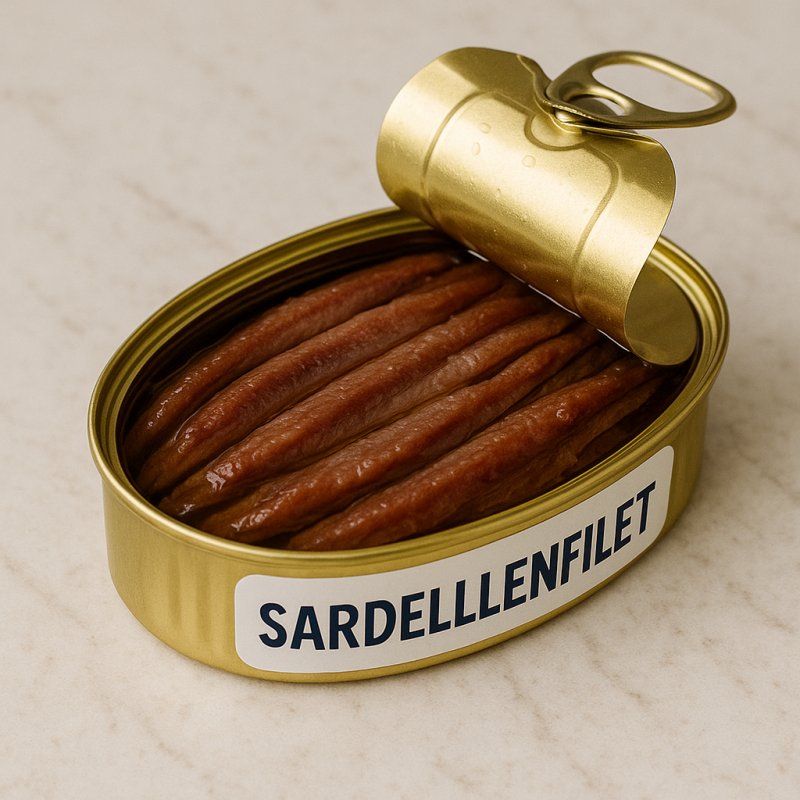
Close-up of anchovy fillets
I have a secret love: anchovy fillets. These little salty threads in the jar may seem unassuming at first, but as soon as I melt one in the pan I feel like a kitchen magician. I still remember a warm summer night when a simple tomato-and-olive pasta dish, thanks to a few anchovy fillets, suddenly tasted so deep and rounded that we all paused in surprise and then continued eating in silence.

Anchovy fillets come from small, oily fish and are usually cured or packed in oil. Their appeal lies in their intense umami power: they add savory depth without dominating the whole plate when used correctly. A colleague of mine swears by mixing a fillet into the butter of warm polenta, and suddenly every spoonful becomes a little celebration.

In practice there are a few simple rules I always follow:


  • If the fillets are very salty, soak briefly in cold water and dry with kitchen paper.
  • Melt them in a pan over low heat rather than burning them straight away.
  • Balance them with acidic ingredients like lemon, vinegar or tomatoes.
Popular uses are varied: on pizza, in pastas like puttanesca, in classic dressings like Caesar, as a base for bagna càuda or finely chopped on toasted bread. They pair excellently with capers, olives, ripe tomatoes and creamy polenta. From a health perspective, anchovies provide valuable omega-3 fatty acids and proteins; I always recommend choosing sustainably sourced and preferably certified products.

What always fascinates me: anchovies are a small culinary secret that transforms dishes without being loud. For me their aroma is a promise — often a spoonful is enough and the kitchen gains character. Once someone has learned to work with anchovy fillets, they rarely leave them out again.

Availability & types

Availability and types of anchovy fillets

Anchovy fillets are small, very flavorful fish fillets found in many supermarkets, delicatessens and markets. They usually come from wild fish living in the sea and are not farmed in ponds or tanks. This means: unlike chickens or vegetables, anchovies normally do not come from a farm but from the sea.

Origin
The best-known anchovies come from the Mediterranean and the Atlantic off the European coast. There are also large stocks off the west coast of South America. If you check the tin or jar, it often lists a country or sea area, for example Spain, Italy or Morocco. This information helps to know where the fish were caught.

Fishing areas (simply explained)
Fishing areas are the places in the sea where fishermen catch anchovies. You can imagine them like apple trees in a garden: some trees grow better in certain spots. Likewise there are sea areas where particularly many anchovies live.

  • Mediterranean – valued for particularly aromatic anchovies.
  • Atlantic off Europe – provides many classic varieties, often used for canning.
  • Pacific / South America – large quantities are caught there, often for fishmeal or paste.
Available types and variants
Anchovy fillets are available in different forms and preparations. Here is a simple overview so you know what to look for when shopping:

  • Salted anchovies – the fish have been preserved with a lot of salt. They are very strong in flavor and often kept in barrels. They are sometimes rinsed briefly before use.
  • Anchovies in oil – fillets in olive or sunflower oil are soft and convenient for pizza or salads. The oil helps to mellow the flavor and make the fillets more tender.
  • Cleaned, deboned fillets – here the bones (small bones) have been removed. This is particularly good for children because they can be eaten without worry.
  • White-marinated anchovies (boquerones) – these are fresh anchovies marinated in vinegar. They taste milder and slightly sour, like pickled cucumbers.
  • Anchovy paste – finely mashed, spreadable, like jam for bread but salty. Practical for seasoning sauces.
  • Rolled or filleted variants – some fillets are rolled or laid flat in jars; this is often just a matter of packaging.
Tips for recognition
On the label you will find important words: "in oil", "salted", "marinated", or the country of origin. You will also see "deboned" if there are no small bones. If you are unsure, ask in the shop — the staff will be happy to help.

In summary: anchovy fillets mostly come from the Mediterranean or Atlantic, they are caught rather than farmed. They are available salted, in oil, marinated or as a paste, and sometimes already deboned. These different types make them practical for many recipes and for people who enjoy intense flavor.

Details & nutrition

Property Value
Unit g
Average weight per piece 5
Calories per 100 210
Protein per 100 29.0
Carbohydrates per 100 0.0
Sugar per 100 0.0
Fat per 100 10.0
Saturated fat per 100 2.2
Monounsaturated fat 3.6
Polyunsaturated fat 2.4
Fiber per 100 0.0
Vitamin C (mg) per 100 0.0
Vitamin D (IU) per 100 200
Calcium (mg) per 100 150
Iron (mg) per 100 3.0
Nutri-Score D
CO₂ footprint 3.5
Origin Mediterranean Sea or northeastern Atlantic (depending on catch area/producer)
Gluten-free Yes
Lactose-free Yes
Nut-free Yes
Vegan No
Note Anchovy fillets are usually preserved in salt or oil and therefore quite salty; nutritional values may vary depending on drained weight and preservation method.

Technical & scientific information

Anchovy fillet refers to deboned and often salted or oil‑packed fillets of the European anchovy (Engraulis encrasicolus) or related species. As an ingredient anchovy fillets are widely used in cooking and are also the subject of technical and nutritional considerations. The characteristic savory flavor results from physical preservation as well as enzymatic and microbiological processes that alter proteins and lipids and release umami-rich compounds.

Chemical composition and constituents
Anchovy fillets consist mainly of water, proteins and lipids. Typical nutrient values (per 100 g, preserved in oil or brine) fall within the following ranges:

  • Moisture: 50–70 %
  • Protein: 20–30 g
  • Fat: 5–20 g, depending on preservation; high proportion of essential omega‑3 fatty acids (EPA, DHA)
  • Salt (sodium): highly variable, often 2–5 g or more due to curing salt
  • Vitamins and minerals: notable amounts of vitamin B12, vitamin D, niacin as well as calcium, iron and phosphorus
At the molecular level anchovies provide high concentrations of all essential amino acids. During salting and fermentation free amino acids such as glutamate and nucleotides (inosinate) are formed, which synergistically enhance umami taste. Lipids contain, besides saturated fatty acids, mainly monounsaturated and polyunsaturated fatty acids, with EPA and DHA being nutritionally significant.

Processing methods
Common processing steps include gutting, heading, scaling, filleting and subsequent preservation. Typical methods are:

  • Salting/curing: dry salting or brining; salt draws out water, inhibits microbial growth and promotes enzymatic maturation.
  • Fermentation: In traditional products lactic acid bacteria and endogenous proteases promote the formation of flavor compounds.
  • Pickling in oil or vinegar: Oils preserve by excluding oxygen; vinegar lowers pH and provides microbiological stability.
  • Heat treatment and sterilization: In cans pasteurization or sterilization is often applied to extend shelf life.
Health aspects
Anchovy fillets are a concentrated source of omega‑3 fatty acids, which are associated with positive effects on cardiovascular parameters. The high protein content makes them relevant for satiety. At the same time the salt content should be considered: people with hypertension or impaired kidney function should limit consumption. Anchovies also contain purines, whose breakdown can lead to uric acid; caution is advised for those with gout.

Microbiologically and toxicologically two points are important: improper processing can lead to histamine formation, which can trigger intolerances in histamine-sensitive individuals. As with other marine fish there is a small risk of contamination with environmental contaminants (heavy metals, PCBs), although anchovies generally show moderate to low levels due to their low trophic position. Allergens such as the muscle protein parvalbumin can cause strong reactions in people allergic to fish.

Quality attributes and storage
Fresh anchovy fillets show a firm texture and a neutral smell; preserved products are assessed by appearance (clear brine, clear oil) and declared manufacturing processes. Cold chain and hygienic processing reduce risks. Industrial quality controls use chemical analyses (sodium content, free amino acids), microbiological tests and sensory evaluations.

Overall anchovy fillets are a nutrient-rich, flavor-intense ingredient whose nutritional benefits must be weighed against aspects such as high salt content and possible histamine formation. Careful processing and moderate consumption make it possible to enjoy the positive effects of the contained omega‑3 fatty acids and proteins without unnecessary health risks.

Wiki entry for: anchovy fillet
Active now: 20 visitors of which 2 logged-in members in the last 5 minutes