Menu & categories

Amaretti

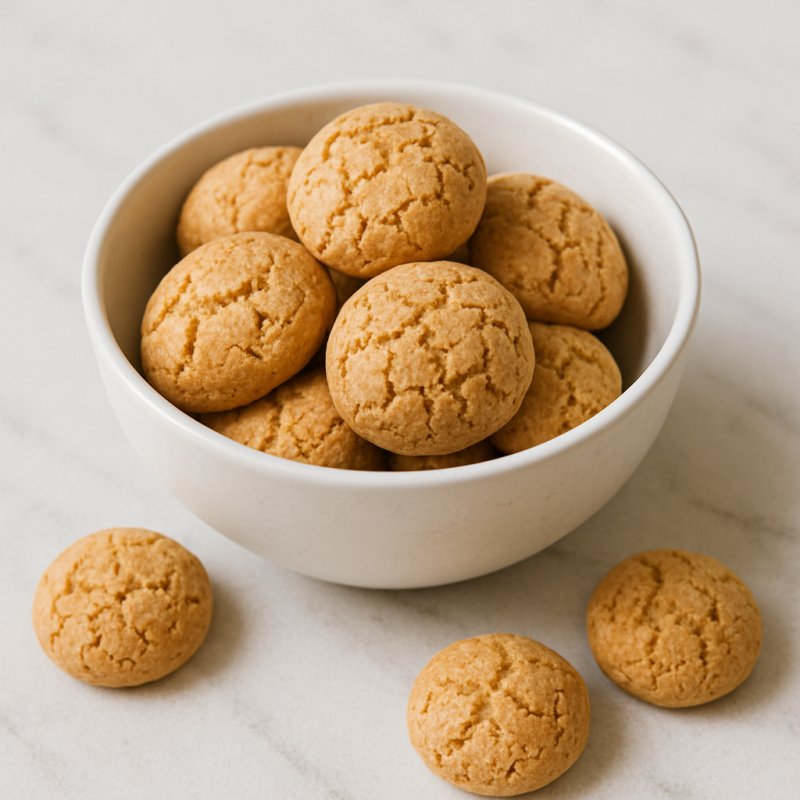
Italian almond biscuits with intense marzipan aroma

Wiki about amaretto Nutri-Score E Vegan No Gluten-free No Lactose-free Yes Nut-free No
NUTRITION / 100 g
420 kcal 9 g Protein 67 g Kohlenhydrate 12 g Fett

Introduction

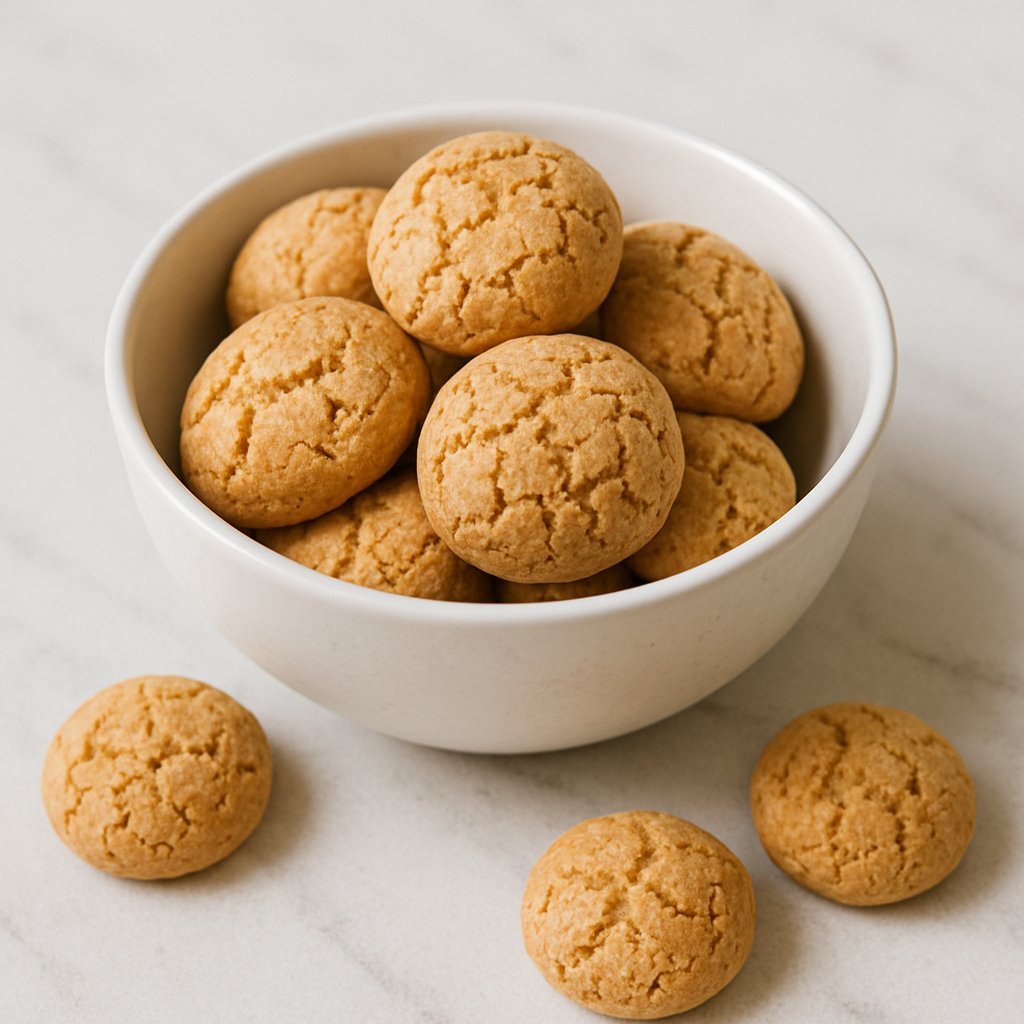
Several amaretti cookies on a plate
I still remember my first bite of an Amaretti well: crispy on the outside, surprisingly tender inside, with that unmistakable warm bitter-almond note that immediately evokes memories of long afternoons in an Italian kitchen. Amaretti are more than a pastry; they are a small, aromatic statement appreciated in many households and patisseries from northern Italy and far beyond. Even as a child I thought fragrance alone was one of the most important ingredients in baking, and Amaretti deliver that fragrance in concentrated form.

To me the essence of Amaretti is balance: between sweetness and bitterness, between a crunchy crust and a soft core. Traditionally they consist of almonds (sometimes bitter almonds or apricot kernels), sugar and egg whites. This simple trio creates textures and flavors that are remarkably versatile. I have crumbled Amaretti over panna cotta, incorporated them into tiramisù and even tried them as a crunchy counterpoint to aged cheeses. A colleague of mine swears by dunking them into espresso desserts — a simple trick that immediately delights.

There are different variants: soft Amaretti morbidi and the harder Amaretti secchi. Both have their place in the kitchen. I prefer the softer ones with coffee, while the firm ones are excellent for baking and further processing. When shopping I always check the ingredient list: pure almonds and few additives are a sign of quality. It is also fun to bake Amaretti yourself — the smell that fills the house is a little ceremony.

  • Taste: intense almond, slightly bittersweet
  • Texture: crispy outside, soft inside or completely dry, depending on the type
  • Use: as a snack, in dessert, crumbled as crunch, or incorporated into doughs
A small anecdote: in one of my first cooking classes the meringue didn’t turn out as planned, and instead of being embarrassed the instructor advised me to simply form Amaretti balls — the result was delicious and much less dramatic than I had feared. Since then Amaretti have been my perfect emergency recipe and at the same time an elegant detail for special occasions.

Next time you stand in a patisserie or experiment in the kitchen, give Amaretti a chance. They are uncomplicated, full of character and surprisingly adaptable. Sometimes it is precisely the small, unassuming ingredients that give a dish personality — and Amaretti undoubtedly belong in that category.

Availability & types

Availability and types of Amaretti

Amaretti are small, crunchy cookies with an intense almond flavor. Many people know them from the supermarket, the baker or as an accompaniment to coffee and ice cream. Here I explain in plain terms where Amaretti come from, where the ingredients are grown and which varieties you can buy.

Origin
Amaretti originally come from Italy. The name comes from the Italian word “amaro”, which means “bitter” — that is why many Amaretti taste a little like almonds and sometimes slightly bitter, because they were made from bitter almonds or almond flavoring. In the past Amaretti were baked in monasteries and villages; today they are popular throughout Italy and are also sold worldwide.

Growing areas of the main ingredient
The most important ingredient for Amaretti is almonds. Almonds grow on almond trees, which like warm, sunny locations. Important growing areas are:

  • Mediterranean region: This includes Italy, Spain and Greece. These countries are close to the origin of Amaretti and supply many almonds for traditional recipes.
  • California: In the USA a lot of fruit and especially almonds are grown. American almonds often appear in supermarket products worldwide.
  • Other warm regions: Countries like Australia or smaller growing areas in South Africa and South America also supply almonds.
You can think of it like apples: some grow better in a particular climate. Almonds need sun and little frost, so warm regions are ideal.

Available varieties and options
Amaretti come in several variants. Some are soft inside, some crunchy, and they can contain different ingredients. Here are the main types:

  • Amaretti morbidi (soft): These cookies are soft inside and slightly chewy, almost like marshmallows, but with almond flavor. They are commonly eaten with coffee or as a dessert.
  • Amaretti secchi (crunchy): These are hard and crunchy, similar to small biscuits that can be dunked in coffee. They keep longer and are convenient to take with you.
  • Amaretti with marzipan: Some contain more marzipan (a sweet paste of almonds and sugar), making them richer and softer.
  • Vegan or egg-free variants: For people who do not eat eggs there are Amaretti without eggs. They often have a slightly different texture but taste similar.
  • Flavor variants: Besides the classic almond flavor there are versions with chocolate, lemon or orange aroma. These are small reinterpretations of the original so everyone can find something they like.
  • Handmade versus industrial Amaretti: Handmade Amaretti from small bakeries are often softer and more intense in flavor. Industrial products from factories are more uniform in shape and have longer shelf life, sometimes with additives to keep them fresh longer.
How and where to find Amaretti
You can get Amaretti in many supermarkets, delicatessens, bakeries and of course online. Well-stocked stores carry both classic Italian brands and local versions. If you want something truly special, a visit to a patisserie or an Italian delicatessen is worthwhile.

Overall Amaretti are versatile: they come from Italy, the almonds for them grow mainly in sunny regions, and there are many types — from soft to crunchy, with different aromas or as a vegan version. That way almost everyone can find the Amaretti they like best.
Details & nutrition

Property Value
Unit g
Average weight per piece 8
Calories per 100 420
Protein per 100 9
Carbohydrates per 100 67
Sugar per 100 55
Fat per 100 12
Saturated fat per 100 1
Monounsaturated fat 8
Polyunsaturated fat 2
Fiber per 100 4
Vitamin C (mg) per 100 0
Vitamin D (IU) per 100 0
Calcium (mg) per 100 70
Iron (mg) per 100 2
Nutri-Score E
CO₂ footprint 2.5
Origin Italy and other European countries
Gluten-free No
Lactose-free Yes
Nut-free No
Vegan No
Note Nutritional values for classic Italian amaretti made from almonds, sugar and egg whites; exact values may vary depending on recipe and manufacturer.

Technical & scientific information

Amaretti are traditional Italian almond biscuits, used either as a standalone baked good or as an ingredient in desserts. They are primarily based on ground almonds (either sweet almonds or a blend of sweet and bitter almonds), sugar and egg whites. Texture and flavor range from soft and crumbly to crunchy and caramelized; characteristic is an intense almond and slightly almond-bitter flavor note, which is enhanced in variants with bitter almond or with Amaretto liqueur.

Composition and ingredients: The primary components of Amaretti are:

  • Almonds: provide protein, fat (predominantly mono- and polyunsaturated fatty acids, mainly oleic and linoleic acid), fiber, vitamin E (tocopherols) and minerals such as magnesium, potassium and calcium.
  • Table sugar: sucrose serves as a sweetener and, through crystallization and glass formation, influences crust and texture.
  • Egg white: whipped egg whites (or occasionally egg replacers) stabilize the mass, form a meringue-like structure during baking and contribute to pore formation.
  • Flavors and additives: bitter almond oil, natural bitter peels or marzipan extracts, occasionally vanilla, citrus zests or Amaretto liqueur as flavoring agents; industrial products may contain emulsifiers or preservatives.
Nutritional profile (typical values, variable by recipe): Amaretti are energy-dense due to high fat and sugar content. In 100 g of Amaretti there are approximately 450–520 kcal, 15–25 g protein (depending on almond content), 25–40 g fat (with a large share of unsaturated fatty acids) and 35–60 g carbohydrates, mostly sugars. Fiber is moderate (about 5–10 g/100 g) because of the almond flour content. Micronutrients such as vitamin E and magnesium are present in increased amounts, corresponding to the almond content.

Physical and chemical processes during baking: During drying and baking of Amaretti several relevant reactions occur. The egg white forms a protein network through denaturation and crosslinking, which fixes the foamy structure. Sugar caramelizes on surfaces, contributing to browning and crisp edges. Maillard reactions between amino acids from proteins and reducing sugars additionally contribute to color and aroma formation, especially in recipes with added proteins or at higher baking temperatures. Fats from the almonds locally increase Maillard reaction rates and modify texture and mouthfeel.

Processing methods: Classic production includes grinding the almonds into a fine flour or paste, whipping egg whites with sugar to a stable mass and gently folding in the almond components. The dough portions are shaped and dried or baked at moderate temperatures to create an outer crust and an interior with varying moisture levels. Industrial processes may additionally apply drying, surface treatments (sugar glazing), and standardization steps to homogenize size and moisture.

Sensory properties and quality indicators: High-quality Amaretti are characterized by pronounced almond aroma, balanced sweetness and a harmonious texture between a crunchy surface and a soft interior. Bitter almond notes should be used sparingly; an overly intense bitter taste can indicate excessive bitter almond content or the presence of bitter compounds such as amygdalin.

Health aspects and allergens: Almonds are nutrient carriers with a favorable fatty acid profile and beneficial micronutrients, but they also provide many calories. Important health points are:

  • Amaretti are calorie-dense; excessive consumption increases energy intake.
  • Almonds are among common food allergens; people with tree nut allergies can have severe reactions.
  • Bitter almonds contain amygdalin, which upon hydrolysis can release hydrocyanic acid (cyanide); in foods the amount is controlled and bitter almond oil is used in measured doses to minimize toxicological risks.
  • For people with gluten intolerance, classic Amaretti are often tolerable since they usually do not contain wheat flour, but manufacturers should still guard against cross-contamination.
Applications: Amaretti are eaten as biscuits, used in desserts such as tiramisù, crumbles or crumbled into ice cream bases, and employed in baked goods and confectionery where they provide texture, aroma and structural components.

Overall Amaretti are a technically interesting product whose properties strongly depend on almond variety, sugar-to-egg-white ratio and baking management. The combination of nut fat, protein framework and sugar phases produces the typical balance of aroma, structure and shelf life, while nutritionally both beneficial micronutrients and high energy density should be considered.

Wiki entry for: amaretto
Active now: 24 visitors of which 2 logged-in members in the last 5 minutes