Menu & categories

Amarena cherries

Sweet-tart cherries in syrup – a classic dessert and ice cream topping.

Wiki about amarena cherry Nutri-Score D Vegan Yes Gluten-free Yes Lactose-free Yes Nut-free Yes
NUTRITION / 100 g
240 kcal 0.7 g Protein 60 g Kohlenhydrate 0.2 g Fett

Introduction

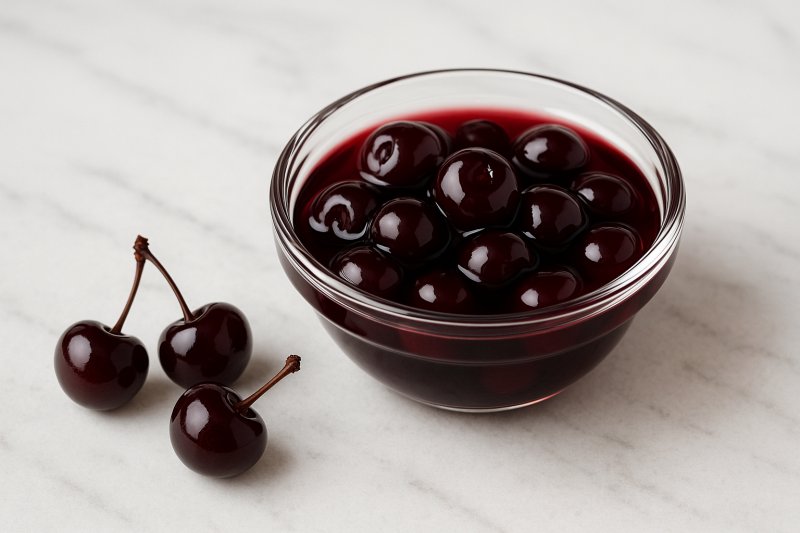
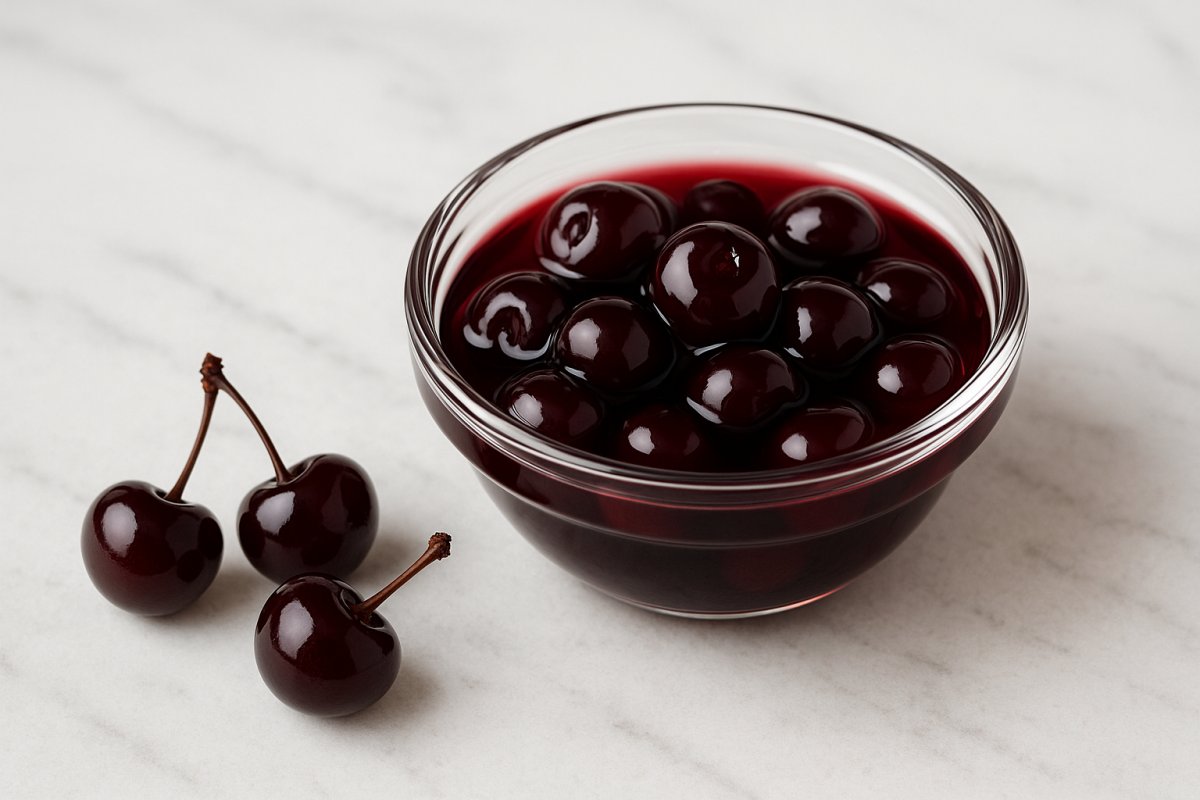
Amarena cherries in syrup in a bowl
I love Amarena cherries because they are so much more than just sweet fruit in a jar. At the first spoonful you encounter a compact, deep-red acidity embraced by a velvety sweetness, and suddenly every spoonful of ice cream becomes a small celebration. I still remember a rainy afternoon when I held an almost empty glass bottle in my hand and decided to pair it with vanilla ice cream and a shot of espresso – that’s how my personal dessert classic was born.

Origin and processing make the difference. Amarena cherries come from Italy and are typically preserved in sugar syrup. The result is a concentrated, aromatic fruit with a subtly tart note reminiscent of dark cherries and sometimes almonds. This is not an exaggeration: the natural acidity remains present and elevates desserts or drinks elegantly without overpowering them.

What I particularly appreciate about these cherries is their versatility. A colleague once called a plain yogurt with amarena syrup "office happiness" because the flavor immediately lifts the mood. In my kitchen they are regularly used for:

  • served with vanilla ice cream or panna cotta, as a classic contrast to sweetness
  • used in chocolate cakes and truffles, for depth and freshness
  • as a topping on pancakes or combined with ricotta and honey
  • as an aromatic addition to cocktails and long drinks
When I cook, I like to keep the jar open in the fridge – the syrup is often as valuable as the fruits. You can use it to thicken dessert sauces, soak cakes or crown a cheesecake with a dollop of intense fruit. For spontaneous, affectionate gifts I have filled small jars and surprised friends with them.

Amarena cherries are for me a small luxury that makes everyday things special. They don't require a big production: a splash on ice cream, a spoonful with chocolate or a dash in a drink are often enough to transform the ordinary into something unforgettable.

Availability & types


Availability and types of Amarena cherries

Amarena cherries are small, dark sour cherries traditionally from northern Italy. They are found especially in the Emilia-Romagna region around Bologna and Modena. There they have been collected and preserved since long ago. Because these cherries are small and very aromatic, they were particularly suitable for preserving. The result is the well-known sweet-and-sour jarred cherries often seen on ice cream, in cakes or in yogurt.

Where are Amarena cherries grown?
They originally come from Italy, but similar tart-fruited cherries also grow in other countries with warm springs and hot summers. These include parts of Spain, Greece, Croatia and, to a lesser extent, regions in Turkey or even fruit-growing areas in North America. Climate is important: cherries need cold winters to flower well in spring and mild, not too wet summers so the fruits can ripen healthily.

Why are fresh Amarena cherries rare?
Fresh Amarena are rarely seen outside Italy. There are several reasons: they are small, perishable and are traditionally processed immediately. Many farmers preserve the cherries or cook them with sugar before selling. This is practical because it lets you use them all year round, precisely when you need them for dessert.

What varieties and variants are available?
Amarena describes more the type of small sour cherry and the way it is processed than a single specific variety. However, there are different variants you can find in stores:

  • Jarred Amarena (in syrup) – The best-known form: whole cherries in a dark, sweet syrup. Perfect as a topping for ice cream and cakes.
  • Amarena in liqueur – Cherries preserved in alcohol. These are more aromatic and are often used in desserts or cocktails.
  • Amarena jam or marmalade – More spreadable, for bread or cake fillings.
  • Candied Amarena – Sugar-dried cherries that are longer lasting and can serve as sweets.
  • Amarena pastes and syrups – Thick sauces or syrups that flavor crepes, ice cream or drinks.
A simple comparison: fresh Amarena are like fresh summer berries – rare and short-lived. Preserved Amarena are like jam: you can use them year-round and they almost always taste delicious.

How do I recognize good Amarena products?
The label usually says “Amarena” or the brand name of a producer. Good products have a dark, glossy syrup and whole, firm cherries. If something looks very bright red or very dry, it may be a different, heavily sugared or artificially colored cherry variant.

In summary: Amarena cherries originally come from Italy and are rare in fresh form. They are most commonly found as preserved or processed products – in jars, in liqueur or as syrup. These variants make Amarena available year-round and very versatile.
Details & nutrition

Property Value
Unit g
Average weight per piece 4
Calories per 100 240
Protein per 100 0.7
Carbohydrates per 100 60
Sugar per 100 55
Fat per 100 0.2
Saturated fat per 100 0.0
Monounsaturated fat 0.1
Polyunsaturated fat 0.1
Fiber per 100 1.0
Vitamin C (mg) per 100 1
Vitamin D (IU) per 100 0
Calcium (mg) per 100 10
Iron (mg) per 100 0.3
Nutri-Score D
CO₂ footprint 1.8 kg CO2e/kg
Origin Italy (typical, varies by manufacturer)
Gluten-free Yes
Lactose-free Yes
Nut-free Yes
Vegan Yes
Note Nutritional values per 100 g (typical for Amarena cherries in syrup; values may vary depending on brand and drained weight).

Technical & scientific information

Amarena cherries refer to small, dark red to black sour cherries that are traditionally cultivated in Italy, particularly in the Emilia-Romagna region (areas around Bologna and Modena), and are usually preserved in sugar or cherry syrup. The term denotes both the fruit itself and the candied product commonly sold in jars or cans. Botanically, Amarena cherries belong to the genus Prunus within the Rosaceae family; they are closely related to the sour cherry (Prunus cerasus).

Chemical composition and constituents. Fresh Amarena fruits are composed mainly of water (typically 75–85 %) as well as carbohydrates, fiber, small amounts of protein and very little fat. Carbohydrates are made up largely of the monosaccharides glucose and fructose and to a lesser extent sucrose. Characteristic for dark sour cherries is a high content of secondary plant compounds:

  • Anthocyanins (e.g. cyanidin derivatives), responsible for the dark red to purple color and exhibiting antioxidant properties.
  • Hydroxycinnamic acids such as chlorogenic acid and other phenolic acids.
  • Flavonols (e.g. quercetin) and other polyphenols.
  • Water-soluble vitamins, especially ascorbic acid (vitamin C) in moderate amounts, and minerals such as potassium.
Nutritional values – typical figures (fresh fruit, rough estimates). Energy is around 50–70 kcal per 100 g, carbohydrates ~8–15 g/100 g, of which sugars 7–12 g/100 g, fiber ~1–2 g/100 g, protein ~0.8–1.2 g/100 g and fat <0.5 g/100 g. In sugar-preserved Amarena the energy and sugar content increase markedly, depending on the syrup concentration.

Processing methods. Industrial and artisanal procedures for making preserved Amarena include harvesting, sorting, blanching or brief heating, destoning (manually or mechanically), and preservation in hot sugar syrup. Key process-technical aspects are:

  • Osmotic preservation: When immersed in syrup, water diffuses out of the fruit tissue into the medium, lowering water activity and increasing microbial stability.
  • Syrup strength: Brix concentration typically ranges between 40 and 60 °Brix; higher concentrations increase shelf life and aroma.
  • Thermal treatment: Pasteurization or sterilization reduces microorganisms but can cause partial loss of heat-sensitive substances such as vitamin C and anthocyanins.
  • Stabilizers and additives: Occasionally acidulants (e.g. citric acid), preservatives (e.g. potassium sorbate) or sweetener blends are used.
Stability of bioactive compounds. Anthocyanins are sensitive to oxygen, pH, light and heat; lower pH favors color intensity, while thermal processing can lead to partial polymerization and degradation. The bioavailability of anthocyanins is limited; a substantial portion is metabolized in the gut by microorganisms into metabolites that can mediate antioxidant effects in the body.

Health aspects. Studies on sour cherries show potential anti-inflammatory and antioxidant effects, evidence of reduced muscle soreness after intense exercise and possible, though not yet fully established, effects on modulation of uric acid levels and sleep quality (due to melatonin presence in sour cherries). For preserved Amarena, it should be noted that high sugar content and thermal processing reduce concentrations of health-relevant micronutrients and phenolic compounds and increase caloric density. People with fructose intolerance, diabetes or specific dietary requirements should therefore limit consumption of sugared products.

Safety and storage aspects. Unopened, properly produced preserves have a long shelf life; after opening Amarena should be refrigerated and consumed within a few days to weeks. Allergic reactions are possible in persons with Rosaceae pollen or fruit allergies. Overall, Amarena are an aromatic ingredient with bioactive compounds, whose nutritional benefit depends strongly on the form of processing and sugar content.

Wiki entry for: amarena cherry
Active now: 20 visitors of which 2 logged-in members in the last 5 minutes