Menu & categories

Almond slivers

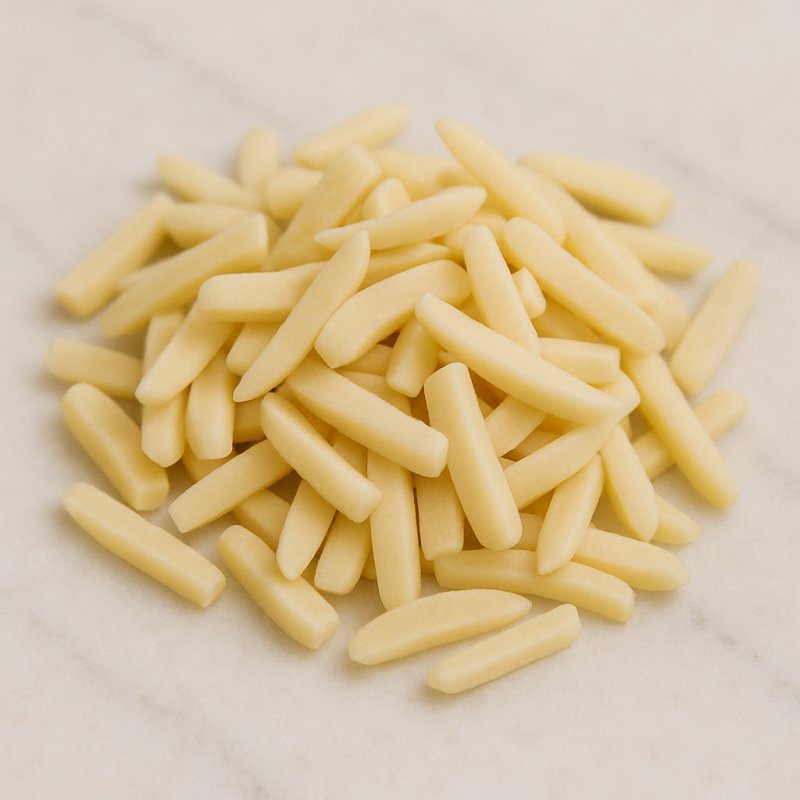
Almonds cut into fine slivers, ideal for baking and garnishing

Wiki about almond sliver Nutri-Score C Vegan Yes Gluten-free Yes Lactose-free Yes Nut-free No
NUTRITION / 100 g
575 kcal 21.0 g Protein 5.4 g Kohlenhydrate 49.0 g Fett

Introduction

Almond slivers on a wooden surface
I still clearly remember the first scent of roasted slivered almonds that drifted toward me in a small bakery on a side street: warm, slightly buttery and with that delicate, nutty sweetness that immediately makes you nostalgic for Sunday coffee. Since then slivered almonds have accompanied me on kitchen adventures because they are incredibly versatile. They are not just an ingredient, but a texture provider, an aroma booster and sometimes the little crunchy secret that gives a dish the finishing touch.

In my pantry slivered almonds are usually within easy reach next to flour and sugar. What I appreciate about them is their versatility:

  • As a topping they give pastries like croissants, muffins or crumb cakes an elegant crust.
  • In salads they provide a surprising crunch and pair wonderfully with citrus dressings.
  • In sauces and pestos they sometimes replace seeds or nuts and add a subtle, light note.
  • Roasted with honey or spices they turn into a quick snack I like to nibble on while out and about.
A colleague of mine was once skeptical when I suggested sprinkling slivered almonds over a skillet dish. He was quite surprised when the almonds gave the whole thing a refined crunch and nutty depth. That's the nice thing: slivered almonds bring texture without overpowering the main flavor.

I've picked up practical tips over the years. Briefly and gently toasted in a pan, they develop their aroma best. Those who enjoy experimenting can lightly caramelize them with maple syrup or season them with chili and sea salt. When baking I make sure to add them toward the end so they stay crisp and don't absorb all the moisture.

For me slivered almonds are a small, reliable ingredient that is often underestimated. Whether as a glamorous finish on desserts, as an unassuming hero in savory dishes or as a cozy afternoon snack — they belong to the basics I never keep out of sight for long. At the end of a long day of cooking it is these uncomplicated little things that bring joy and make dishes feel more lively.

Availability & types

Availability and types

Slivered almonds are thin, elongated pieces of almonds often used for baking or as decoration for cakes and desserts. But where do they actually come from and what kinds are there? Here I explain it simply and clearly.

Origin
Almonds grow on almond trees. These trees bear fruits with a hard shell. Inside that shell sits the almond we eat. Almond trees grow mainly in warm regions because they like a lot of sun and little frost. You can imagine almonds as small nuts enclosed in a hard shell – first on a tree, then they are harvested and processed until the fine slivered almonds are produced.

Growing regions
Almonds are grown worldwide, especially in countries with warm climates. Important growing regions include:

  • California (USA): One of the largest production regions in the world. Many of the almonds found in supermarkets come from there.
  • Mediterranean countries: These include Spain, Italy and Greece. Almonds have been grown there for a long time and are important in many traditional recipes.
  • Other regions: Australia, Chile and parts of the Middle East also cultivate almonds.
You can think of almond trees as sun-loving plants; they thrive in places that are warm and bright, almost like plants in a sunny garden.

Available varieties and variants
Slivered almonds come in different shapes and processing methods. Here are the most common types you find in stores:

  • Raw slivered almonds: These are sliced almonds without additives. They taste naturally of almond and are good for baking.
  • Roasted slivered almonds: These have been briefly heated in oil or dry, giving them more flavor and a crunchy note. They are well suited as a topping on salads or desserts.
  • Sweetened or caramelized slivered almonds: Here the slivered almonds are coated with sugar and are slightly crunchy. They are often used as a sweet decoration.
  • Blanched slivered almonds: These slivers no longer have the brown skin because it was removed beforehand. They look paler and are particularly fine for light cakes or delicate pastries.
  • Full-fat vs. reduced-fat variants: Some slivered almonds are offered partially defatted to contain less fat. They are then somewhat drier but still flavorful.
There are also differences in size: some are cut very thin, others somewhat thicker. Thin slivers work well when they need to be distributed evenly, thicker ones are more visible as decoration.

Availability in trade
Slivered almonds can be found in supermarkets, health food stores and specialty baking shops. In baking sections they are often placed next to other nuts and decorations. Many varieties are also available online. When buying, check the expiration date and that they are fresh and free from unpleasant odors.

In short: slivered almonds come from almond trees in warm regions, they are available in different variants such as raw, roasted or sweetened, and are easy to find in stores or online. That way you can choose the right type for your recipe or as a snack.
Details & nutrition

Property Value
Unit g
Calories per 100 575
Protein per 100 21.0
Carbohydrates per 100 5.4
Sugar per 100 4.4
Fat per 100 49.0
Saturated fat per 100 3.8
Monounsaturated fat 31.0
Polyunsaturated fat 12.0
Fiber per 100 12.5
Vitamin C (mg) per 100 0.0
Vitamin D (IU) per 100 0.0
Calcium (mg) per 100 260
Iron (mg) per 100 3.7
Nutri-Score C
CO₂ footprint 2.3
Origin Typical growing regions are the Mediterranean, the USA (California) and Central Asia
Gluten-free Yes
Lactose-free Yes
Nut-free No
Vegan Yes
Note Nutritional values refer to natural, unsalted almond slivers without any additional ingredients.

Technical & scientific information

Slivered almonds are thin, elongated pieces made from sweet or bitter almonds produced by cutting or splitting whole almonds. They are mainly used in bakery and confectionery as well as a garnish in sweet and savory dishes. In industrial and artisanal production almonds are first hulled, blanched and then cut or shaved into slivers. The term “slivers” primarily refers to the shape; technically they are cylindrical to slightly flattened flakes with varying lengths and cross-sectional dimensions.

Chemical composition and constituents
Almonds consist largely of fats, proteins and carbohydrates and contain a small amount of water. Typical nutrient proportions for almonds (per 100 g, rounded values) are: about 50–55 g fat, 20–25 g protein, 10–22 g carbohydrates including 3–12 g fiber and approximately 2–5 g water. The fats are composed mainly of mono- and polyunsaturated fatty acids, namely oleic acid (C18:1) and linoleic acid (C18:2). Almonds also supply fat-soluble and water-soluble micronutrients such as vitamin E (alpha-tocopherol), B vitamins, magnesium, calcium, phosphorus and iron. The mineral and vitamin profile varies slightly depending on variety and growing conditions.

Nutritional values and caloric density
Due to the high fat content, slivered almonds have a high energy density; 100 g typically provide around 560–600 kcal. Protein content and fiber contribute to satiety, while the ratio of mono- and polyunsaturated fatty acids is nutritionally more favorable than that of saturated fats. For portion recommendations in recipes it should be noted that even small amounts can significantly contribute to total calorie and fat intake.

Processing methods
Typical production steps usually include:

  • Hulling and blanching: removing the brown skin by briefly heating in hot water and subsequent cooling.
  • Drying: returning to a stable moisture content for storage.
  • Cutting/Shaving: mechanical size reduction into slivers with special cutting tools or shavers.
  • Roasting (optional): thermal treatment for flavor development, which promotes physical and chemical changes such as Maillard reactions on the surface.
The physical form influences texture and thermal response during baking; thinner slivers brown and become crisp faster than larger pieces.
Food safety and shelf life
Almonds are susceptible to oxidation of unsaturated fatty acids, which can lead to rancidity. Dark, cool and dry storage conditions minimize oxidative changes. In addition, almonds can be contaminated with molds and thus mycotoxins, which is why raw material is often microbiologically tested. In industrial processing HACCP-supported controls and traceability are essential.
Health aspects
From a nutritional science perspective, almonds are considered nutrient-rich and can have positive effects on cardiometabolic parameters, especially as part of an overall balanced diet. The content of monounsaturated fatty acids, vitamin E and magnesium is associated with favorable effects on lipid profiles and oxidative stress. Allergic reactions to tree nuts including almonds are clinically relevant; even traces can trigger severe reactions in sensitized individuals. Bitter almonds contain amygdalin, a cyanogenic glycoside that can release hydrogen cyanide upon hydrolysis; commercially available sweet almonds and processed products are generally free of toxic concentrations.
Applications and sensory properties
Slivered almonds serve as an optical and aromatic complement on baked goods, desserts and salads. They contribute to sensory complexity through their firm texture and nutty flavor. Thermal treatment changes the aroma through Maillard and roasting reactions and increases crispness.
Overall, slivered almonds are a versatile, nutrient-dense food with a characteristic composition and specific requirements for processing and storage. Their nutritional advantages should be considered alongside safety aspects such as allergies and the prevention of quality losses due to oxidation or microbial contamination.
Wiki entry for: almond sliver
Active now: 18 visitors of which 2 logged-in members in the last 5 minutes