Menu & categories

Almond macaroons

Sweet pastry made from almonds, sugar and egg white

Wiki about almond macaroon Nutri-Score D Vegan No Gluten-free No Lactose-free Yes Nut-free No
NUTRITION / 100 g
420 kcal 10 g Protein 48 g Kohlenhydrate 22 g Fett

Introduction

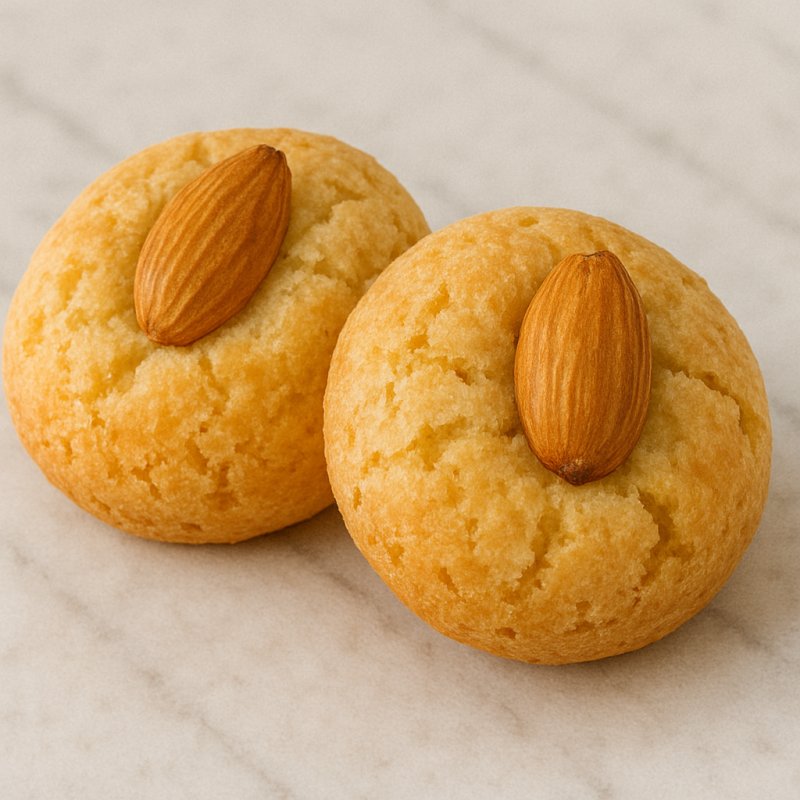
Several almond macaroons on a plate
I have a weakness for ingredients that appear so simple and yet appeal to all the senses — almond macaroons definitely belong to that group. When I stroll through a market and the scent of roasted almonds drifts by, I'm immediately reminded of old kitchens, warm hands and the familiar rustle of baking paper. A colleague once brought a bag of almond macaroons to the office, and within minutes the tin was empty; sharing those nibbles turned simple bites into a small celebration.

Almond macaroons are surprisingly versatile. At their core they consist of few ingredients: almonds, sugar and egg whites. It is precisely this reduction that makes them so fascinating. The texture can range from delicately crispy on the outside to powdery-soft inside, depending on how they are prepared. I still remember a Sunday breakfast when I sat with a cup of strong coffee and an almond macaroon on the plate, thinking that so little could achieve so much.

The almond ingredient keeps surprising with its variety: ground almonds for the dough, flaked almonds for decoration, and even almond flour for gluten-free variants. Once I baked an experimental batch where I replaced part of the sugar with honey — the result was a slightly caramelized note that paired well with a cup of tea. Such experiments show how adaptable the almond macaroon is.

To me almond macaroons are more than just a pastry; they are keepsakes. They are suitable for:

  • festive occasions, because they appear elegant yet down-to-earth;
  • afternoons with friends, when you want to offer something small and refined;
  • culinary experiments, when adding new flavors like citrus, rose water or cocoa.
I like that almond macaroons do not demand high culinary skills, yet leave room for perfection. Once you achieve the right consistency, you know why these small treats enjoy cult status. On your next visit to the baker or at your own oven it's worth keeping a bag of almonds ready — perhaps you'll create an anecdote that will become one of your favorite baking stories.

Availability & types

Availability and types

Almond macaroons are small sweet balls made mainly from ground almonds, sugar and egg whites. Although their name may bring marzipan to mind, they are lighter and airier. You can find almond macaroons in many bakeries, supermarkets or at Christmas markets – in short, wherever baked goods and pastries are sold. Sometimes they are freshly baked, sometimes packaged in tins or bags for longer shelf life.

Origin

The idea of making sweet pastries with almonds comes from various countries in Europe and the Mediterranean region. Almond-based pastries are especially popular in countries where almonds have long been cultivated. The modern form of the almond macaroon, as we know it, has strong roots in German and French baking traditions. In Germany they are often eaten at Christmas, while in France there are similar treats like the “macaron” (note: that is a different pastry, similar sounding but not the same!).

Almond growing regions

The main ingredient of the almond macaroon is almonds. Most almonds come from warm regions with plenty of sun. Major growing areas include:

  • California (USA): A large quantity of the world's almonds are grown here, accounting for almost half of global production.
  • Mediterranean countries such as Spain, Italy and Turkey: these countries also produce many almonds due to their warm, sunny climates.
  • North Africa and parts of the Middle East: almonds have long been cultivated in these areas as well.
You can think of almond trees like apple trees: they need sun, warmth and not too much rain. That's why they grow best where summers are warm and dry.

Available varieties and variants

Almond macaroons come in many shapes and flavors. Here are the main types you might encounter:

  • Simple almond macaroons: Only almonds, sugar and egg whites. They are slightly crispy outside and soft inside.
  • Dusted with powdered sugar: Some macaroons are sprinkled with powdered sugar before or after baking, making them sweeter and more attractive.
  • Filled variants: Some are split and filled with jam, chocolate or a cream. It's like a small cookie sandwich.
  • With chocolate: Some are dipped in chocolate or coated with chocolate glaze — many children particularly like these.
  • With other nuts: Sometimes hazelnuts or coconut are used instead of or in addition to almonds. These are then called hazelnut or coconut macaroons accordingly.
  • Gluten-free variants: Since almond flour contains no wheat, many almond macaroons are naturally gluten-free. This is important for people who cannot tolerate gluten.
  • Commercial packaged forms: Supermarkets often carry industrially produced macaroons with longer shelf life. They are convenient but often not as fresh as those from a bakery.
If you want to buy almond macaroons, you can find them in supermarkets, at the bakery, at weekly markets or at festivals. Freshly baked usually taste best, but packaged varieties are practical for on the go. Check ingredient lists if you have allergies or want to avoid certain items. Overall almond macaroons are versatile: they can be plain and traditional or colorful and creative — depending on how sweet or varied you like them.

Details & nutrition

Property Value
Unit g
Average weight per piece 15
Calories per 100 420
Protein per 100 10
Carbohydrates per 100 48
Sugar per 100 45
Fat per 100 22
Saturated fat per 100 2
Monounsaturated fat 14
Polyunsaturated fat 5
Fiber per 100 5
Vitamin C (mg) per 100 0
Vitamin D (IU) per 100 0
Calcium (mg) per 100 90
Iron (mg) per 100 2.5
Nutri-Score D
CO₂ footprint 2.1
Origin Europe
Gluten-free No
Lactose-free Yes
Nut-free No
Vegan No
Note Nutritional values are based on an average recipe of almonds, sugar and egg white; actual values may vary depending on recipe and manufacturer.

Technical & scientific information

Almond macaroons are a traditional baked product based on ground almonds, sugar and egg whites, characterized by a porous, slightly chewy structure and a nutty-aromatic flavor profile. In their classic form almonds are combined with powdered or granulated sugar and whipped egg whites to form a batter that often rests briefly before baking to homogenize moisture and promote the formation of an even crust. Variations can include additional flavors (e.g. vanilla, bitter almond oil or lemon zest), other nuts or chocolate coatings.

Chemical composition and constituents
The main component of almond macaroons is almonds, whose primary constituents are lipids (approx. 50 %), proteins (approx. 20 %) and carbohydrates (approx. 20 %, partly fiber). The lipophilic fraction is dominated by mono- and polyunsaturated fatty acids, notably oleic acid (C18:1) and linoleic acid (C18:2). Proteins provide essential amino acids, though not always in the complete balance found in animal proteins. Egg white consists mainly of water and proteins such as albumins and ovalbumin; when whipped it forms a stable foam structure through denaturation and network formation of the proteins. Sugar (sucrose or powdered sugar) affects sweetness as well as texture and moisture retention, while small amounts of minerals and vitamins from the almonds (e.g. vitamin E, magnesium) are nutritionally relevant.

Nutritional profile
Almond macaroons are energy-dense due to their high fat and sugar content. Typical macronutrient ratios per 100 g vary by recipe and range between 450–550 kcal, 25–35 g fat, 10–12 g protein and 35–50 g carbohydrates. The content of saturated fatty acids is relatively low compared to the healthier mono- and polyunsaturated fatty acids. Because of the fiber and protein content, macaroons may be more satiating than comparable pure sugar confections, yet they provide only limited amounts of micronutrients per serving.

Rheology and processing
The processing of almond macaroon batter relies on several physico-chemical processes. When grinding the almonds, particle size is controlled to achieve a smooth consistency and limit oil release; over-grinding can lead to paste formation. Whipping egg whites with sugar stabilizes air bubbles by increasing foam viscosity and surface tension. During baking water evaporates, protein-sugar interactions occur (Maillard reaction to a limited extent, depending on sugar content and temperature) and the characteristic crust forms through denaturation of proteins at the surface. A resting period before baking can slightly dry the surface and promote formation of a stable rind.

Food safety and allergies
Almond macaroons present typical risks associated with egg products and tree nuts. Raw or insufficiently heated egg whites can carry a risk of bacterial contamination (e.g. Salmonella); therefore adequate heating or the use of pasteurized eggs in industrial production is recommended. Almonds are a common allergen; traces can provoke severe reactions in sensitive individuals. Microbiological contamination or the use of poor-quality raw materials can lead to spoilage, although the high sugar and fat content tends to inhibit microbial growth to some extent.

Sensory properties and storage
Sensorily, almond macaroons are characterized by an intense almond aroma, a crisp surface and a chewy, slightly moist interior. Storage is ideally cool and dry, sealed airtight to minimize oxidation of the contained fats (rancidity) and moisture uptake that leads to texture loss. Added antioxidants or barrier packaging can extend shelf life.

In summary, almond macaroons combine simple base ingredients with complex chemical and physical processes that determine texture, shelf life and flavor. Their nutritional profile makes them energy-dense indulgences with dietary pros and cons, while food safety — particularly regarding egg and nut allergies — demands careful attention in production and consumption.

Wiki entry for: almond macaroon
Active now: 17 visitors of which 2 logged-in members in the last 5 minutes