Menu & categories

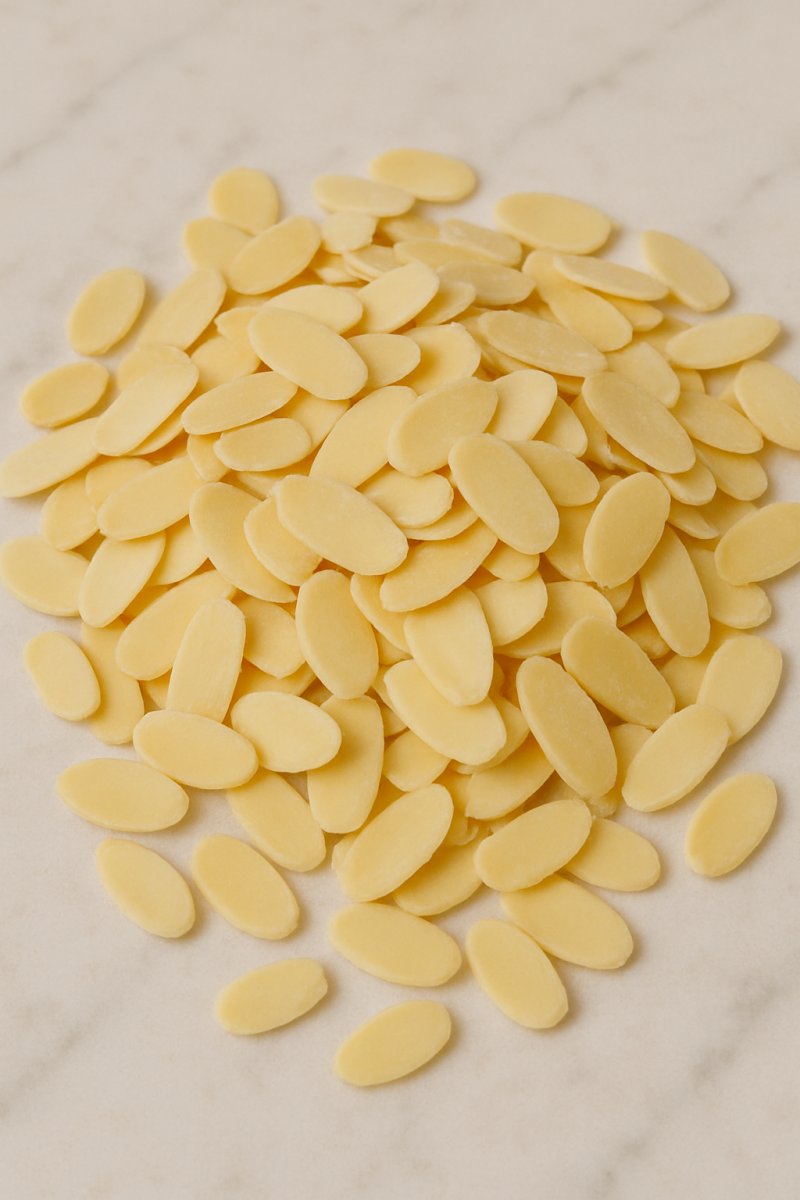
Almond flakes

Finely sliced almonds for desserts, muesli and baked goods

Wiki about almond flake Nutri-Score C Vegan Yes Gluten-free Yes Lactose-free Yes Nut-free No
NUTRITION / 100 g
575 kcal 21.0 g Protein 5.4 g Kohlenhydrate 49.4 g Fett

Introduction

Thin, sliced almond flakes in a bowl
I have a weakness for small things with big flavor, and almond flakes definitely belong to that. Even as a child, they were on the table at almost every family celebration: paper-thin, golden sprinkles that lifted cakes, salads and vegetable dishes in seconds. I still remember the scent of freshly roasted almonds filling the kitchen while someone swung the pan with growing enthusiasm — a simple but magical moment.

What makes almond flakes so appealing is their versatility. They are delicate enough to melt on a dessert, yet sturdy enough to become crunchy in a pan and add texture to warm dishes. I like to use them to create contrasts: a creamy purée with crunchy almonds, a buttery fish with a topping of roasted flakes, or a simple lamb's lettuce salad that gains instant character from a few shaved almonds. A colleague of mine even swears by finishing his vegetable pans with a handful of roasted almond flakes — he calls it his "crunch moment".

In addition to taste and texture, almond flakes offer practical advantages. They store well, are easy to handle and simple to portion. In the pantry they are a real all-rounder: quickly toasted, quickly chopped, quickly scattered over anything that deserves a bit of elegance. When I have little time I often reach for almonds, because they instantly give a simple dish depth.

When shopping I look for pale, evenly cut flakes without discoloration. At home I often toast them dry in a pan until they take on a light color and their aroma develops — that's when the kitchen suddenly smells especially cozy. They can also be toasted in butter or oil, depending on the flavor you want.

To me, almond flakes are more than just an ingredient; they are a little secret that gives dishes personality. Whether as a crunchy crown on a dessert, an aromatic contrast to delicate flavors or simply as a quick stock for unexpected guests — they are an indispensable part of my kitchen. I’m happy every time I open a bag and that fine, nutty aroma escapes, because it means: it will taste good.

Availability & types

Availability and types

Almond flakes are thin slices of almonds and therefore easy to find in many supermarkets and health-food stores. The main countries where almonds are grown are the USA (especially California), Spain, Italy and Australia. This is because almond trees like warm, sunny summers and mild winters — similar to many fruit trees. Therefore it is easier to grow almonds in regions with warm climates, and that is where they are usually harvested and processed.

If you are looking for almond flakes, you can find them in different forms and packaging. Sometimes they are with baking ingredients next to flour and sugar, sometimes in the nuts section or among healthy snacks. You can also order various varieties online. In some shops they are fresh in the bakery or in the refrigerated section, in other stores they are available in dry, airtight bags.

  • Varieties by color and flavor: There are light and darker almonds. Light almonds often taste a bit milder and nuttier; darker ones can be more intense in flavor. The difference arises from the almond variety and how they were processed.
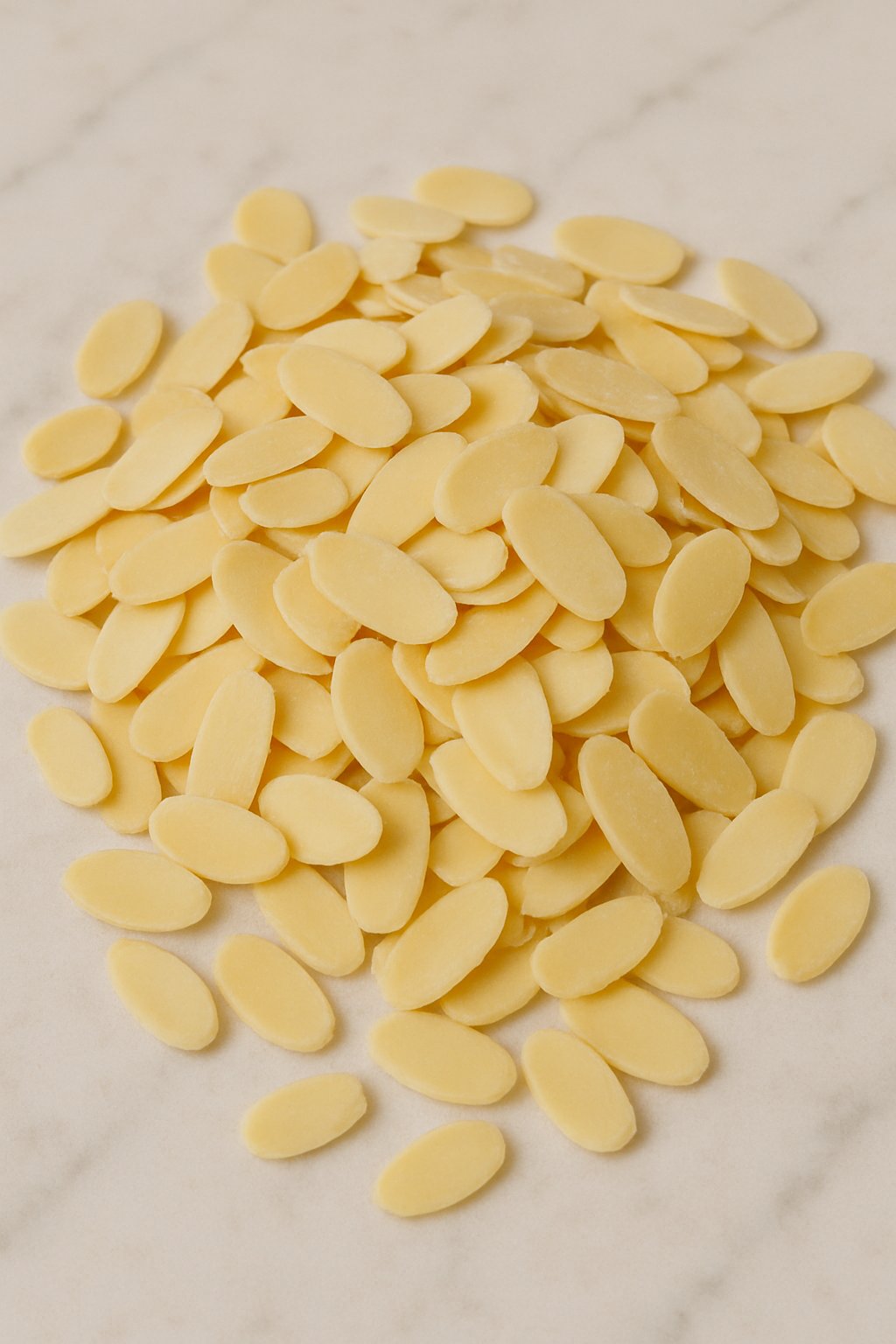
  • With or without skin: Some almond flakes still have the brown skin, others are blanched. "Blanched" means the skin was briefly put in hot water and then removed, so the slices are completely white. It's like peeling a potato: the skin is removed to reveal the inside.
  • Roasted or raw: You can find browned, lightly roasted almond flakes that are a bit crunchier and more aromatic, or raw ones that taste more neutral and are good for baking. Roasted ones are like chips for almonds — they have more flavor.
  • Salted or natural: Some varieties are lightly salted or coated with honey as a snack. For cakes and pastries one usually chooses unsalted, natural flakes.
  • Organic quality: There are also organically grown almond flakes. Organic means that fewer or no synthetic pesticides or fertilizers were used in cultivation. For people who care about sustainable agriculture, organic almonds are often a popular choice.
Simply put: when you buy almond flakes you first decide whether you want them for baking, decorating or snacking. For decorating cakes and desserts the white, blanched flakes are popular because they look neat. For baking in dough or muesli raw flakes are practical because they retain their mild flavor. As a snack people often choose roasted or seasoned varieties.

Availability may vary slightly with season and region. In countries with large almond production prices are often lower and there is more variety. In areas without local production imported almonds can be more expensive. Still, due to their long shelf life, almond flakes are usually available all year round. If you value special variants like organic or roasted, it's worth checking several stores or online, where the selection is often larger.

In summary: almond flakes come from warm-climate countries, are available in different colors, roasted or raw, with or without skin and even in organic quality. Depending on the intended use — baking, decorating or snacking — you can choose the appropriate variety, and usually find them year-round in trade.
Details & nutrition

Property Value
Unit g
Calories per 100 575
Protein per 100 21.0
Carbohydrates per 100 5.4
Sugar per 100 4.8
Fat per 100 49.4
Saturated fat per 100 3.8
Monounsaturated fat 31.6
Polyunsaturated fat 12.1
Fiber per 100 12.5
Vitamin C (mg) per 100 0.0
Vitamin D (IU) per 100 0
Calcium (mg) per 100 264
Iron (mg) per 100 3.7
Nutri-Score C
CO₂ footprint 2.1 kg CO2e/kg
Origin Mainly Mediterranean region, USA
Gluten-free Yes
Lactose-free Yes
Nut-free No
Vegan Yes
Note May contain traces of other tree nuts, peanuts or sesame, depending on processing.

Technical & scientific information

Almond flakes are thinly sliced pieces of sweet almonds (Prunus dulcis), widely used in the kitchen as an ingredient and garnish. Technically they are mechanically peeled or machine-cut almond kernels, whose shape and thickness are optimized for applications such as baked goods, desserts, salads and pestos. Because of the small thickness (typically 0.3–1 mm) almond flakes are particularly suitable for rapid browning, even texture and decorative use.

Chemical composition and constituents
Almonds consist mainly of lipids, proteins and carbohydrates; almond flakes retain this composition since they are obtained from the pure kernel. The fat content in sweet almonds is usually between 45 and 55% and consists predominantly of mono- and polyunsaturated fatty acids, especially oleic acid (C18:1) and linoleic acid (C18:2). Protein content is around 20–25% and provides essential amino acids, with almonds containing relatively high amounts of arginine compared to other nuts. Carbohydrates are present at about 10–20%, including dietary fiber (pectin and indigestible cell wall components), sugars (mainly sucrose) and small amounts of starch. Minerals such as magnesium, calcium, potassium and iron as well as fat-soluble vitamins, especially vitamin E (tocopherols), are present in notable amounts.

Nutritional values
As a guideline 100 g of unroasted almond flakes contain approximately 580–610 kcal, around 50 g of fat, 20–22 g of protein, 10–12 g of carbohydrates and 10–12 g of fiber. The vitamin E content can reach 25–30 mg per 100 g, making almonds a significant source of this antioxidant. These nutritional values vary with variety, origin and degree of processing.

Processing methods
The production of almond flakes includes several steps: harvest, drying, dehulling (if blanched), peeling and final slicing. Blanching (brief heating in hot water) serves to remove the brown skin, yielding paler, more neutral-flavored flakes. Afterwards the kernels are sliced in a cutting machine. For roasted variants a further thermal treatment at moderate temperatures is applied, which influences Maillard reactions and lipid oxidation, producing roast aromas and altered texture. Packaging is often done under protective atmosphere to slow fat oxidation and extend shelf life.

Sensory and technological properties
Almond flakes are characterized by a fine, slightly crunchy mouthfeel and a mild nutty flavor. Roasting develops more complex aroma compounds. Technologically they are used because of their low moisture and stable structure as providers of volume and crunch. In baked goods they function as a glaze or decorative element and influence moisture distribution as well as Maillard-induced browning. In emulsions and pastes, ground or moistened flakes can increase viscosity.

Health aspects
Regular, moderate consumption of almonds is associated with positive effects on cardiovascular risk factors, for example improved lipid profile (reduction of LDL cholesterol) and more favorable insulin responses. The combination of unsaturated fatty acids, fiber, plant protein, magnesium and antioxidants contributes to these effects. Allergenic proteins in almonds can, however, trigger IgE-mediated reactions in sensitized individuals; therefore almonds are declarable allergens in many countries. Another aspect is the high energy density: excessive consumption can lead to increased calorie intake, so portion sizes should be observed. Proper storage (cool, dry, airtight) can prevent lipid oxidation and thus quality loss.

Safety and quality
Quality criteria include freshness, smell (mild, without rancid notes), color and freedom from contamination. Contaminants such as molds or toxins (e.g., aflatoxins with improper storage) are possible risks that are reduced by hygiene controls and appropriate drying. For industrial applications standardized varieties and batch samples are often tested for moisture content, fat quality and microbiological parameters.

Overall, almond flakes are a versatile ingredient with characteristic nutritional benefits and specific technological properties that make them suitable for baked goods, desserts and savory dishes alike. Attention should be paid to storage, allergens and processing steps, which largely determine aroma, texture and shelf life.

Wiki entry for: almond flake
Active now: 11 visitors of which 2 logged-in members in the last 5 minutes