Menu & categories

Allspice

Aromatic spice with notes of clove, nutmeg and cinnamon

Wiki about allspice Nutri-Score A Vegan Yes Gluten-free Yes Lactose-free Yes Nut-free Yes
NUTRITION / 100 g
263 kcal 6.1 g Protein 72.1 g Kohlenhydrate 8.7 g Fett

Introduction

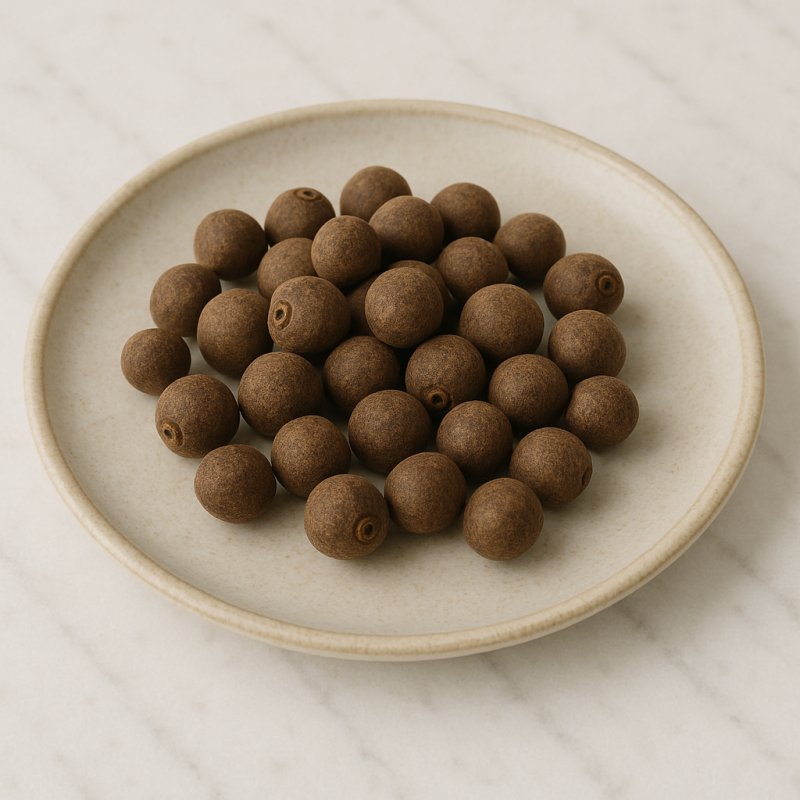
Dried allspice berries in a bowl
I still remember my first scent of allspice: a warm, spicy breath that immediately made me think of cinnamon, cloves and nutmeg at once. Back then I was standing in a small kitchen at a market in Andalusia; a vendor handed me a little bag of dark brown berries and smiled as if it were the most natural thing in the world that a spice could smell so complex. This experience shaped my relationship with allspice and since then I seek it out in recipes, spice blends and in that particular feeling of home that spices can convey.

Allspice, often also called Jamaican pepper or pimenta, originally comes from the Caribbean and Central America. Botanically it belongs to the myrtle family; culinarily it's a chameleon. I like to use it when I want to give depth to a braise or when I prepare a gingerbread-style base that mustn't be too sweet. The flavor unites the familiar notes of cinnamon, cloves, nutmeg and black pepper, while allspice remains distinct and earthy.

One of my favorite combinations is allspice with orange peel, rosemary and a little honey — surprising in a jar with baked cheese or as a crust for game. I also once experimented with a friend who has a liking for unusual cocktails: a splash of lime juice, brown sugar and a hint of allspice turn a classic rum cocktail into a small adventure.

For the home kitchen I clearly recommend whole berries instead of ground powder, because the aroma lasts much longer. Briefly toasted and then crushed they unfold their full power. Allspice is versatile:

  • Suitable for braised dishes and stews
  • Ideal in baked goods with autumn and winter character
  • Wonderful in marinades, chutneys and beverages
If I had to pick a spice as a bridge between sweet and savory, allspice would be my first choice. It has a familiar warmth that ties dishes together without being intrusive. And every time I open the berries, I remember that market stall and the small lesson: good spices are like good stories — layered, surprising and unforgettable.

Availability & types

Availability and types of allspice

Allspice is a spice plant often simply called "allspice" because its flavor reminds of many other spices. It grows on a tree that is at home especially in warm countries. If you want to buy allspice, there are different forms and names – here I explain where allspice comes from, where it's grown and which variants you find in the shop.

Origin
Allspice originally comes from the Caribbean and Central America. People there used the fruits of this tree as a spice long ago. The name "Piment" comes from French, and another common name is "Pimenta dioica". Imagine the spice as a traveler who was brought from these warm islands to many kitchens around the world.

Growing regions
Today allspice doesn't grow only in the Caribbean. You find allspice trees mainly in:

  • Caribbean islands like Jamaica – here allspice is especially well known.
  • Central America, meaning the countries between North and South America.
  • Southeast Asia and some parts of Africa, where it is also warm enough.
Allspice likes warm temperatures, plenty of sun and nights that are not too cold. Therefore it grows best in areas that are warm for most of the year. In our latitudes (where many countries in Europe lie) allspice is not grown outdoors but must be imported – that means it is brought here from other countries.

Available types and variants
In the store you see allspice in different forms. Here are the most common, simply explained:

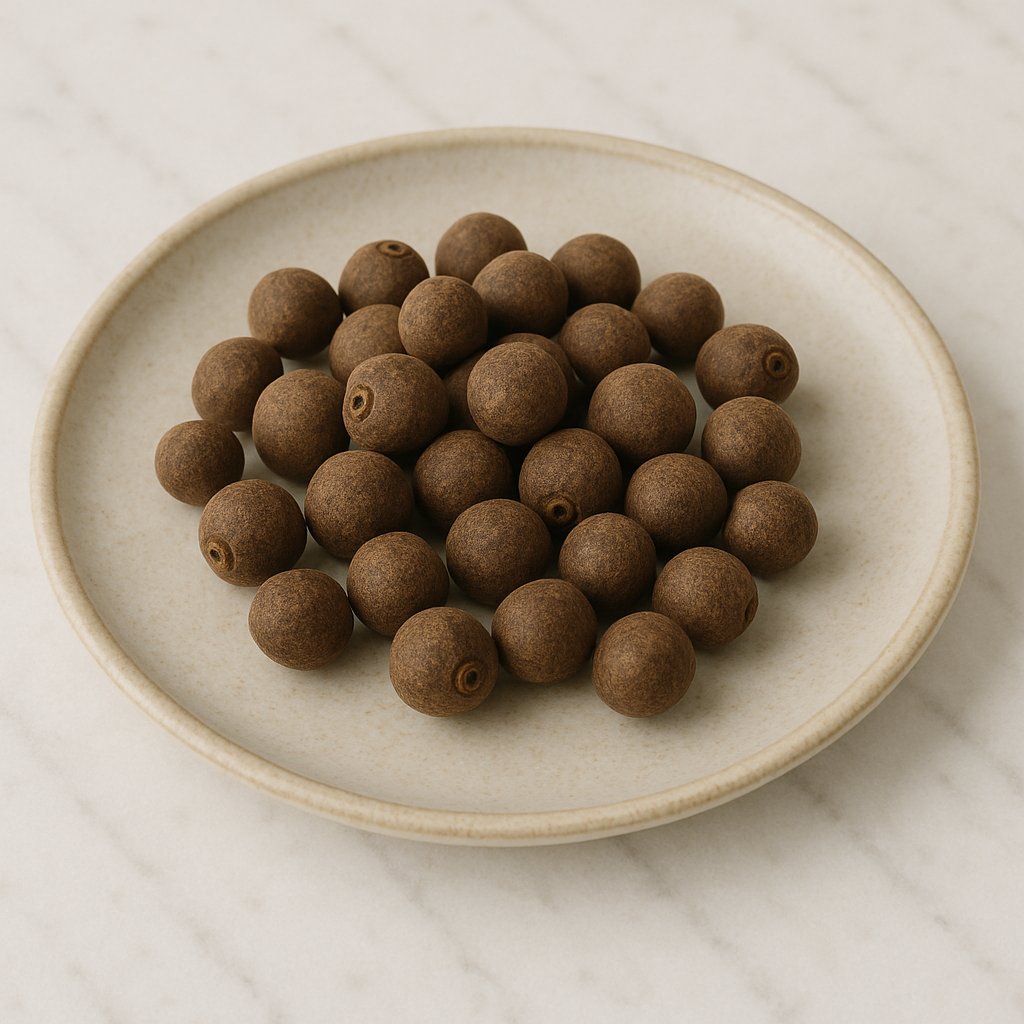
  • Whole berries: These are the dried fruits of the tree, which look like small brown spheres. They look a bit like peppercorns, but the flavor is different – a mixture of clove, cinnamon and nutmeg.
  • Ground allspice: This is powdered allspice, ready for cooking. It's practical if you want to use it quickly in dishes, but it loses its aroma faster than whole berries.
  • Oil or extract: Some food manufacturers use allspice oil or extract to add flavor, for example in sweets or beverages. This is very concentrated – like a drop of strong aroma.
  • Varietal differences: There are not as many official "varieties" as with apples, but allspice berries can taste slightly different depending on where they grew. Jamaican allspice is often described as very aromatic, while berries from other regions can be milder.
How to recognize good allspice?
Good allspice smells strong and pleasantly spicy, almost like a mix of cinnamon and cloves. Whole berries retain their scent longer than ground allspice. In the supermarket you usually find allspice in the spice aisle or in international specialty shops. Sometimes it is also sold under the name "Allspice" (that is the English name).

In summary: allspice originally comes from the Caribbean, today grows in several warm regions of the world and is available commercially as whole berry, ground spice or extract. Depending on what you want to cook, choose the form that fits best – whole berries for longer cooking times and more intense aroma, ground allspice for quick recipes.
Details & nutrition

Property Value
Unit g
Average weight per piece 0.2
Calories per 100 263
Protein per 100 6.1
Carbohydrates per 100 72.1
Sugar per 100 2.5
Fat per 100 8.7
Saturated fat per 100 2.4
Monounsaturated fat 1.6
Polyunsaturated fat 3.0
Fiber per 100 21.6
Vitamin C (mg) per 100 39
Vitamin D (IU) per 100 0
Calcium (mg) per 100 661
Iron (mg) per 100 7.0
Nutri-Score A
CO₂ footprint 4.5
Origin Tropical regions, particularly the Caribbean and Central America
Gluten-free Yes
Lactose-free Yes
Nut-free Yes
Vegan Yes
Note Mostly used as a spice in dried, whole or ground form; nutritional values based on 100 g of dried allspice berries.

Technical & scientific information

Allspice (botanically Pimenta dioica), often also called Jamaican pepper or allspice, is the dried berry of an evergreen tree in the myrtle family (Myrtaceae). Originally native to the tropical regions of Central America and the Caribbean, allspice is now cultivated in several subtropical and tropical growing regions. The spice received its English name "allspice" because of its combined aroma profile, reminiscent of cloves, cinnamon and nutmeg.

Botanical and physical properties
The allspice fruits are small, spherical berries with a diameter of about 5–7 mm. Harvest takes place when the berries are still greenish and unripe to ensure the highest aroma concentration. They are then dried in the air or in drying facilities until they reach a hard, dark brown to black surface. Ground allspice tends to lose volatile aroma compounds more quickly, which is why whole berries are preferred for longer storage.

Chemical composition and constituents
Allspice contains a complex mixture of volatile oils, phenolic compounds and other secondary plant metabolites. The essential oil typically makes up 8–16 % of the dried berry's weight and consists mainly of eugenol (30–80 %), caryophyllene, humulene, linalool as well as smaller proportions of methyl eugenol and α-pinene. Eugenol is responsible for the characteristic clove-like note and has aromatic and bioactive properties. Tannins and mucilaginous substances, small amounts of volatile fatty acids, sugars, minerals and vitamins are also present.

Nutritional values
Per 100 grams of ground allspice berries the energy value is roughly 250–300 kcal, while the share of utilizable macronutrients is rather low, since spices are used in small amounts. Typical composition includes fiber (approx. 30–40 g/100 g), protein (approx. 5–7 g/100 g), small fat content (approx. 10–15 g/100 g) as well as traces of carbohydrates and polyunsaturated fatty acids. Mineral-wise allspice contains potassium, magnesium, calcium and iron in variable concentrations.

Processing methods
Common processing steps are harvest, drying and sorting. Traditional drying is done in the sun; modern methods use controlled drying ovens to achieve consistent quality and lower residual moisture. Before sale berries are often sorted by grain size and checked for foreign matter. For essential oil production steam distillation is generally used; the resulting oil is used in the food and perfume industry.

Health aspects and safety
Allspice is described in traditional medicine systems as carminative, digestive and antimicrobial. The phenols contained in allspice, particularly eugenol, show in vitro antimicrobial, antioxidant and inflammation-modulating properties. Clinical data are limited, however, and effects in humans are often dose-dependent. Eugenol can have local anesthetic effects at high concentrations and may cause skin or mucous membrane irritation in sensitive individuals. In addition, excessive consumption could theoretically pose a risk of hepatotoxicity due to phenolic metabolites, which is why culinary amounts are considered safe while medicinal use should be discussed with healthcare professionals.

Sensorial properties and culinary use
Allspice gives dishes a warm, spicy aroma with sweet-resinous and slightly bitter nuances. It is used in savory dishes (stews, marinades, meat dishes), in baked goods, sweets and spice blends (e.g. Jamaican jerk, pumpkin spice). Due to its intense aroma, a small amount is enough to create depth of flavor; when heated the volatile oils can be released more strongly.

Summary
Allspice is an aromatic spice with a complex chemical composition, characterized by a high proportion of eugenol-rich essential oil. Its processing includes harvest, drying and optionally distillation to obtain the oil. Nutrient contributions are marginal due to low consumption, whereas bioactive constituents are relevant for traditional uses and industrial applications. In culinary and industrial practice allspice is valued for its versatile aroma; health risks are low at usual consumption levels, while therapeutic applications require further scientific evaluation.

Wiki entry for: allspice
Active now: 20 visitors of which 2 logged-in members in the last 5 minutes